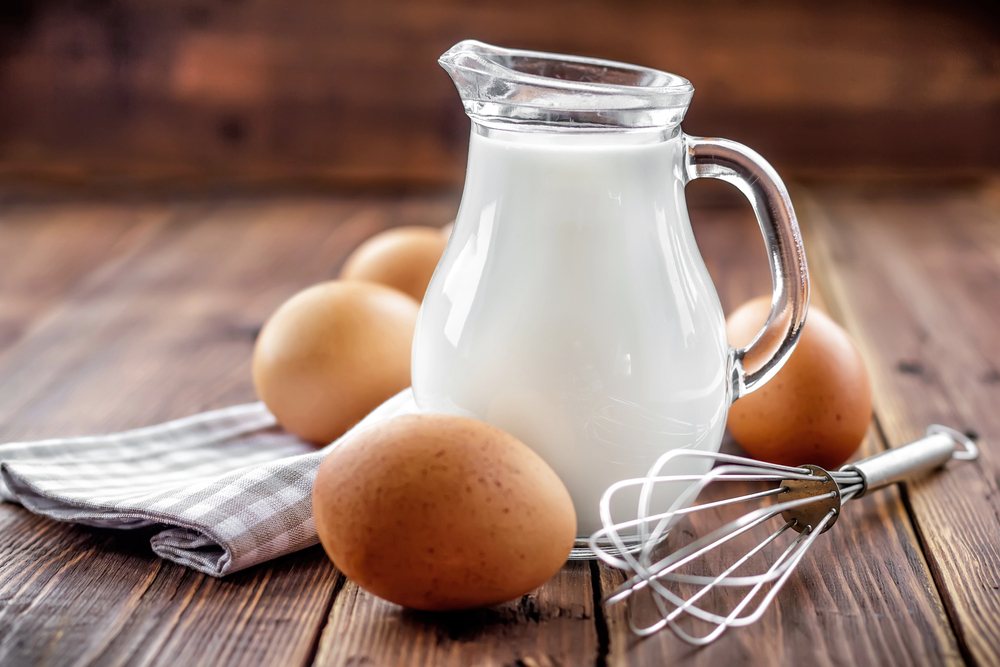
*The reason Americans refrigerate eggs and milk, unlike many other countries, lies in the way these products are processed.
As Fox 59 reports, in the U.S., eggs are washed and pasteurized to kill bacteria like salmonella, but this process removes their natural protective coating, making them more susceptible to contamination. To prevent spoilage, refrigeration is necessary. Conversely, many other countries leave the protective coating intact, rely on vaccinating hens, and shorten the supply chain to ensure fresher eggs. Therefore, refrigeration is not necessary.
“The egg is a marvel in terms of protecting itself, and one of the protections is this coating, which prevents them from being porous,” said food writer Michael Ruhlman, author of Egg: A Culinary Exploration of the World’s Most Versatile Ingredient, per NPR.
“Once you start refrigeration, you have to have it through the whole value chain, from farm to store. Because if you stop — if the eggs are cold and you put them in a warm environment — they’re going to start sweating,” said says Vincent Guyonnet, a poultry veterinarian and scientific adviser to the International Egg Commission.
For milk, the difference comes down to pasteurization methods. In the U.S., milk is typically pasteurized at lower temperatures, which kills harmful bacteria but doesn’t eliminate all microorganisms, requiring refrigeration to keep it fresh. In Europe and other regions, milk undergoes ultra-high temperature (UHT) pasteurization, which completely sterilizes it, allowing it to be stored safely at room temperature.
Scroll to continue reading









Learn more in the YouTube clip below.
READ MORE FROM EURWEB.COM: Transform Breakfast Eggs with BBQ Sauce! | WATCH