Sir Smallwood, Pioneer of Classical Gospel Music
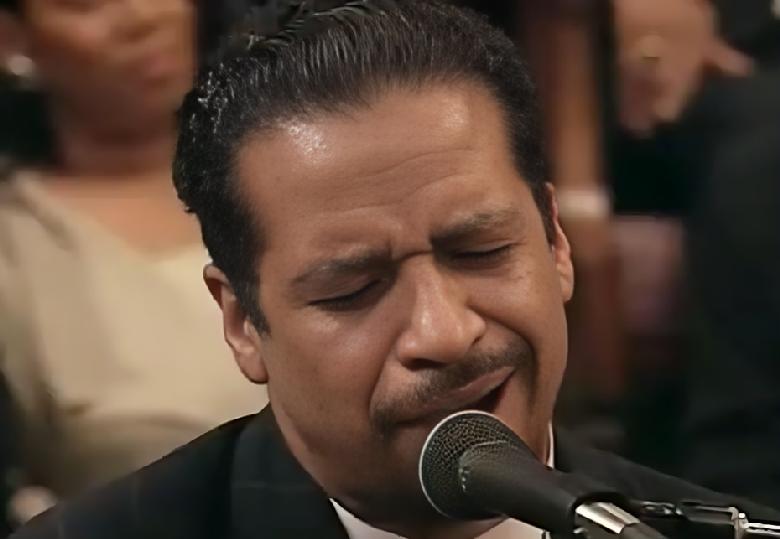
*Richard Smallwood, a virtuoso pianist, singer, arranger, and composer who is credited with pioneering and popularizing the classical Black gospel music sound, passed away on December 30. More than a performer, for 50+ years, the internationally acclaimed “piano praiser” used his genius to minister encouragement to the suffering and bring exuberance to the worship experience. Smallwood was a transformative music figure whose sophisticated recordings, blending traditional and contemporary gospel with classical piano arrangements, are canonized in American music history. This tribute feature is written to illustrate the scale of his contribution to the music world and the church as a whole, and to honor his legacy.
Regarded as a Maestro, having been a child prodigy who first began playing the piano by ear at 5 in his stepfather’s DC church, his distinct style was embraced as phenomenal. His mother, Mabel, had begun to purchase records for him between the ages of 4 and 5. The Smallwood sound was born out of the golden age of gospel and matured with formal degrees in vocal performance and piano as a cum laude graduate at Howard University, where he also earned a Master of Divinity. The Celestials, Howard’s first gospel choir, was founded by the singer.
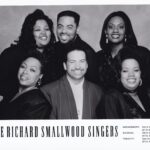
Surrounded by exceptional talent, Roberta Flack was his high school teacher, and he attended college with singer Donny Hathaway, was in a group on campus with Angela Winbush, who also joined him as an original in the Richard Smallwood Singers, where acting sisters Debbie Allen and Phylicia Rashad were his peers. He recorded ten studio albums throughout his career. His first album, “The Richard Smallwood Singers,“ was released in 1982, featuring clear soulful elements from the Motown recordings he would sneak into his home. From bell-bottoms and afros to bow ties, the episodes of the gospel impresario’s life found him creating and exalting the name of the Lord.

Scroll to continue reading



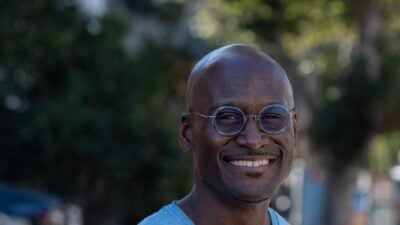




An avalanche of praise from fans and fellow artists poured in after Smallwood’s death from complications of kidney failure at a rehabilitation and nursing center in Sandy Spring, Maryland. Words like “gospel great,” “legend,” and “icon” were used to describe him. These adjectives are insufficient to reflect the true stature of Mr. Smallwood. Were there a Mt. Rushmore for musicians, Richard Smallwood’s image would be carved into it. Those who worked with him would agree. “He was beyond special, almost otherworldly if you ask me,” R&B and gospel vocalist Kelly Price, who performed some of his music, lauded on Facebook.
Spiritual healer Iyanla Vanzant described his impact thusly: “He gave a Holy language to suffering, structure to praise, and dignity to the ache of a people still believing God for more. Through every note, he reminded us that worship is not performance—it is practice. Practice of faith.”
“His anthem of Praise,” said the late Flack in introducing him at the Black Music Honors, ” is one of the most beautiful songs ever written.” This compliment is rich coming from the “Killing Me Softly” singer.
Georgia Senator Rev. Raphael Warnock noted that Smallwood “was a musical genius and a giant of a figure in the church and the gospel music world. He was an inspiration to all who encountered his music. His songs got us through tough times, dark and difficult days. No grave can silence his voice.”
The classic church anthems he produced decided the music canon for groups and choirs for generations, becoming modern hymns that influenced the music of several other artists. “Calvary,” “The Center of My Joy,” “I Love the Lord” (as sung by Whitney Houston in “The Preacher’s Wife”), “Angels,” “At the Table,” “My Everything,” “Psalm 8,” and “Total Praise” are broadly favored. The latter was performed at the White House when the late Pope Francis Bergoglio visited. Like a Black Handel, he collaborated on The Messiah with the late Quincy Jones, making it a Christmas classic at Black radio. He gained a Grammy and the first of several Dove Awards in connection with this soulful re-arrangement of the “Hallelujah Chorus” that was rendered by an all-Black celebrity choir. Numerous Grammy nominations and multiple Stellar Awards were among the Gospel Music Hall of Famer’s many accolades.
Richard Smallwood Over the Years
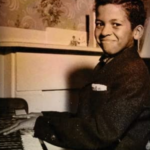
Legacy and Impact: More Than A Musician, A Minister, and an Innovator
Smallwood’s style of music was so unique that questions about where he drew inspiration from were common.
“I always thought the origin was from somewhere else, the spiritual realm. . . It didn’t come from me. God used me and used my gift to make it happen,” he once modestly explained in an interview with Yale University, unsurprisingly. Indeed, his music seemed divinely inspired with spiritual authority that compelled heaven to listen. More than making classical and gospel music coalesce, Richard Smallwood is independently responsible for creating the “Smallwood Way,” a sacredly soulful sound and delivery that is identifiable worldwide. It is not that he was the first to do it. The Fisk Jubilee Singers had been known for their classical delivery of hymns and spirituals. Yet, Smallwood’s interpretation of classical was distinct. The maestro brought a lasting sense of formality and discipline to liberal gospel music, redefining how the genre could look, sound, and be presented on stage, bringing Carnegie Hall to the church house.
At a time when gospel performance was often rooted in congregational call-and-response, Smallwood appeared in tuxedos and tailored suits, seated prominently at a grand piano, guiding his choir effortlessly. Commanding audiences of all races and ages, his arrangements drew unapologetically from European classical traditions—characterized by structural depth and soaring full-chested choral dynamics that could reach the rafters of the greatest cathedrals —while remaining deeply rooted in Black sacred expression.
The Maestro Instructing on Total Praise
The excellence Richard Smallwood exuded was palatable. Often, when he walked onto the stage, he drew the audience’s attention before playing a single note as a respectful hush blanketed the venue in anticipation. The dexterous accompaniment and choral leadership that followed was awe-inspiring. This visual and musical presentation augmented gospel to concert-hall caliber without extracting its spiritual power or its quintessential Blackness. The contrast of power and serenity was often felt in his music and noticed in the looks of admiration, worshipful murmurs, or the consumption of the Holy Spirit when witnesses danced or shouted. These elements of his existence positioned Smallwood not simply as a performer but as an innovator in ethnomusicology. His authoritative level of creative genius expanded the genre’s possibilities and permanently altered expectations for gospel music’s sophistication and cultural standing.
When he attended his favorite singer Aretha Franklin’s funeral, he was not slated to perform but was invited to play a selection and asked to stay throughout the service, a testament to the R-E-S-P-E-C-T he garnered in Christianity and music. Smallwood was also on deck when The Gospel Music Heritage Foundation honored Franklin posthumously, showing his deep commitment to the preservation of the genre.
In music, he didn’t act alone. Two groups, the Richard Smallwood Singers, a young aggregate formed in 1977, and Vision, a choir that began in 1995, were the vocal ensembles that helped bring Smallwood’s creations to life. Not every song was marked by the elegant signature glissandos in “Total Praise.” Smallwood and his singers were well-rounded. Music executives hadn’t expected his sound to resonate commercially, but fans embraced the many facets of his style.
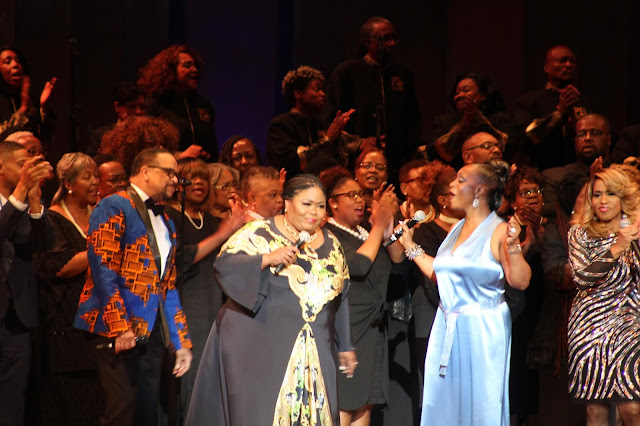
When He Gets to Heaven
Five years ago, in an interview, I asked the “Maestro” to describe the Smallwood sound, which he shared was a culmination of influence from the Roberta Martin Singers, Davis Sisters, Caravans, and the music of Broadway, as well as, of course, the classical giants.
“I came up as a kid listening to a lot of music. . . I think my music is a culmination of all those things I’ve been exposed to. Maybe it gives it a bit more rounded edge that will appeal to more people because there are so many influences.”
I also asked who would be in the room with him if he were to submit a song to God to set the atmosphere in heaven. He said he could not choose one genre but excitedly said he would start with German Composer Johann Sebastian Bach, exclaiming, “Lord, I would love to work with him!” Rachmaninoff, Davis Sisters, and Ella Fitzgerald, and would also be on Sir Smallwood’s select committee for producing heaven’s soundtrack.
“So many different people have influenced my style and love for music,” stated the artist.
Richard Smallwood Performs His Classic “Total Praise Live”
We discussed his book “Total Praise,” which was a candid autobiography about his career and family. Smallwood never married and had a close relationship with his mother, who preceded him in death.
He had assumed the role of mental health advocate later in life and, in the book, detailed how he overcame struggles with depression and anxiety.
“I think the subject of mental health is so important because we don’t talk about it in the church…Anxiety is something I have been dealing with since I was a child,” he shared and admitted that he had been dealing with depression for over 30 years. He said that he wanted to be a spokesperson to testify about how medication and faith combined had given him a “wonderful quality of life.” This encouragement helped diffuse the negativity around people of faith, depending on remedies outside of God.
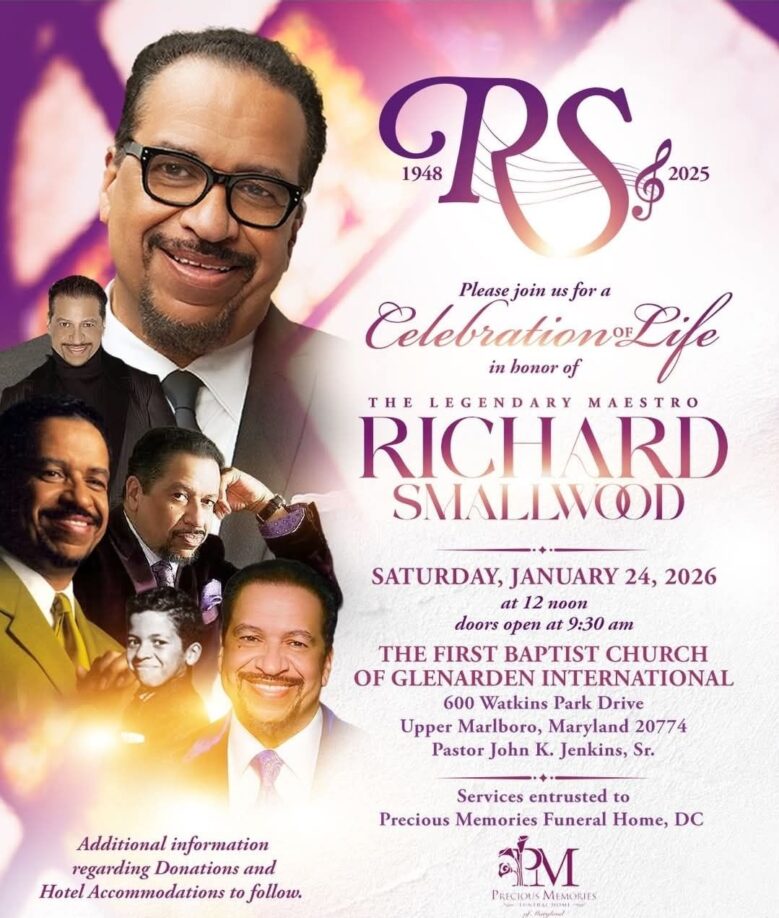
Mr. Smallwood had been battling illness for several years and was confined to a wheelchair during the latter part of his life. Fellow Washingtonian and long-time music publicist Bil Carpenter said he had been alerted to the prospect of the artist passing last year by his management. Carpenter, an acquaintance of Smallwood’s, said he had hoped for a miracle since he made it into 2025 and was nevertheless surprised to learn of his transition. Smallwood died at the Brooke Grove Rehabilitation and Nursing facility in Maryland in the early morning hours of Dec. 30, one month after his 77th birthday. While the deceased had served as the music director of Metropolitan AME Church in Washington, DC, funeral services will be held at the more sizeable First Baptist Church of Glen Arden on January 26 at noon with 9:30 AM as the gathering time.
(If You Like/Appreciate This EURweb Story, Please SHARE it!)
MORE NEWS ON EURWEB.COM: Gayle King Frustrated by Windowless Seat on United Polaris Flight | VIDEO
We Publish Breaking News 24/7. Don’t Miss Out! Sign up for our Free daily newsletter HERE.