*Duane “Keffe D” Davis has been found guilty of first-degree murder in the 1996 killing of Tupac Shakur, delivering the first conviction in a case that has haunted hip-hop for nearly 30 years.
A Las Vegas jury returned the verdict Monday after deliberating for about three hours following a weekslong trial. Davis, 63, was convicted of murder with the use of a deadly weapon and could face life in prison.
The verdict represents a dramatic conclusion to a prosecution built largely around something Davis had done for years: talk about what happened.
The Los Angeles Times reported that prosecutors presented jurors with Davis’ own statements from interviews and other accounts while arguing that circumstantial evidence tied him to the attack. The defense countered that there was no forensic evidence, eyewitness testimony or physical evidence placing Davis in the Cadillac from which the fatal shots were fired.
EURweb has followed the case through Davis’ pretrial legal battles and the trial itself, including questions raised in July about the prosecution’s reliance on his previous statements.
Scroll to continue reading


Prosecutors Said Davis Organized the Revenge Attack
Prosecutors argued the shooting was retaliation for a confrontation hours earlier inside the MGM Grand.
Shakur, Death Row Records co-founder Marion “Suge” Knight and others attacked Davis’ nephew, Orlando Anderson, after a Mike Tyson fight on Sept. 7, 1996.
Chief Deputy District Attorney Binu Palal told jurors that Davis, then a leader in the South Side Compton Crips, could not allow the beating to go unanswered.
Prosecutors said Davis obtained a .40-caliber handgun, assembled a group and went looking for Shakur or Knight. The men eventually encountered the BMW carrying Shakur and Knight near the Las Vegas Strip.
Shakur was shot multiple times and died six days later at age 25. Knight survived.
Davis was not accused of pulling the trigger. Under Nevada law, prosecutors could hold him responsible for the killing if jurors concluded he participated in the conspiracy and helped orchestrate the attack.
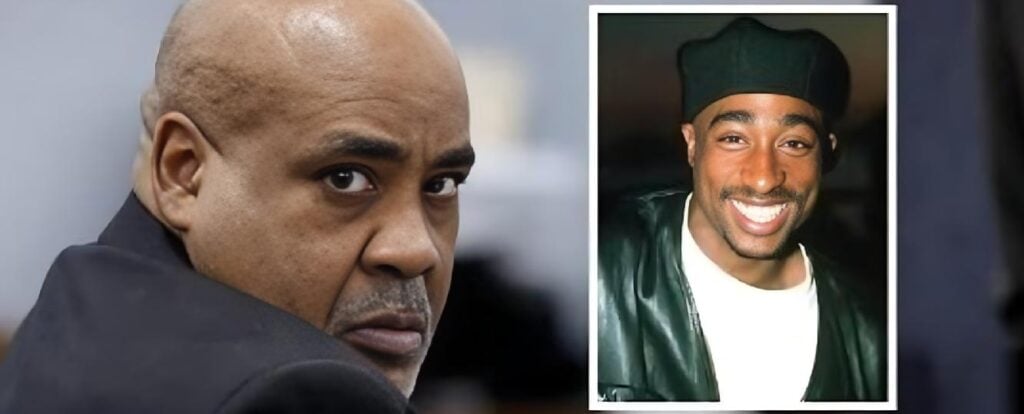
His Own Words Became Central Evidence
Davis’ previous accounts became the heart of the government’s case.
In a recorded 2008 interview played for jurors, Davis described riding in the front passenger seat of the Cadillac and said Terrence Brown was driving, with Anderson and Deandrae “Big Dre” Smith in the back.
Davis said he handed the gun to Smith, who did not want to fire it, before Anderson took the weapon.
“If it had been on my side, I was going to blast,” Davis said in the recording played during the trial.
Davis also discussed the killing publicly over the years and wrote about it in his 2019 memoir, “Compton Street Legend.”
That history had already emerged as a critical issue before the trial. In July, EURweb reported that filmmaker and Tupac investigator RJ Bond questioned whether Davis’ memoir and old statements could support a murder prosecution without physical evidence placing him in the vehicle.
The jury ultimately concluded the evidence was enough.
Defense Said the Confessions Were Fiction
Davis’ attorneys offered an unusual response to years of incriminating statements: they argued he made the stories up.
Defense attorney Anthony Sanft told jurors that Davis fabricated his account during the 2008 interview while cooperating with authorities and later repeated sensational versions of the story to help sell his memoir.
“You’re reading a book that is fiction and not fact,” Sanft told the jury.
The defense stressed that prosecutors had no DNA, fingerprints, murder weapon or eyewitness who could independently place Davis inside the Cadillac.
Sanft also attacked the investigation and pointed to inconsistencies in Davis’ accounts, including an occasion when Davis incorrectly identified the location of the shooting.
Prosecutors answered that the case was “drenched with circumstantial evidence” and argued that details Davis supplied supported their contention that he was there.
Nearly 30 Years Later, a Historic Verdict
The conviction does not mean jurors found that Davis personally shot Shakur.
It means they accepted the prosecution’s case that he participated in and orchestrated the murder.
That distinction is important in a case that has generated decades of theories about who actually fired the fatal shots.
For years, Tupac’s killing existed as one of music’s most notorious unsolved murders. Davis eventually became the only person ever charged in the case — and nearly three decades after Shakur’s death, the first person convicted.
The same interviews and stories that kept Davis’ name attached to the mystery ultimately followed him into a Las Vegas courtroom.
His lawyers told jurors those stories were fiction.
The jury decided otherwise.
(If You Like/Appreciate This EURweb Story, Please SHARE it!)
MORE NEWS ON EURWEB.COM: Keffe D’s Tell-All Book Unpacks His Link to Tupac’s Murder
We Publish Breaking News 24/7. Don’t Miss Out! Sign up for our Free daily newsletter HERE.