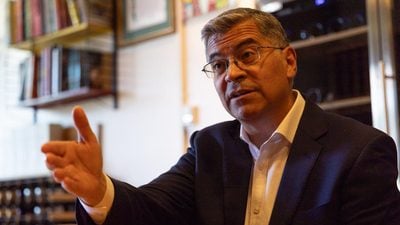
*On the latest episode of the Allison Interviews Podcast, host and entertainment journalist Allison Kugel sits down with NY Times bestselling author Jeff Pearlman to discuss his new book – Only God Can Judge Me: The Many Lives of Tupac Shakur (Mariner Books, on sale 10/21).
During the interview, NY Times Bestselling author Jeff Pearlman shares never-before-heard stories about Tupac Shakur and the Shakur Family. Why actress Lela Rochon turned him down for a date on the 1996 Gang Related set, Tupac’s financial desperation confided to co-stars and crew, the surprising way his mother Afeni Shakur named him Tupac Amaru, how he prepped to transform into Bishop for 1992’s Juice, the murder that always haunted him, being stood up by his biological father Billy Garland while in prison, his sister Set Shakur’s own trauma and details of the siblings’ grim living conditions as kids, how he rose above poverty as a teen, and other shocking details.
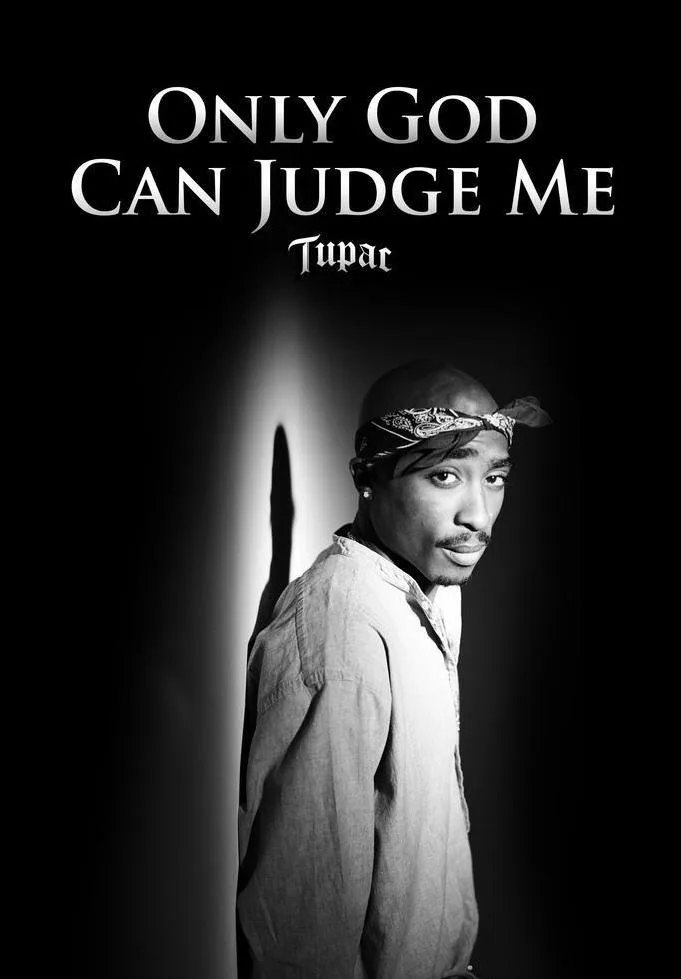
On the surprising never-before-heard story behind Tupac’s name:
“Yaasmyn Fula, mother of the late Yaki [Kadafi] from The Outlawz, she helped me a lot with this book, and she said to me early on, ‘You need to talk to Karen [Kadison]. Karen is the one who came up with the name Tupac [Amaru] Shakur. You’ll like her. She’s a Jewish woman.’ And I’m like, ‘Wait, the person who came up with the name Tupac Shakur is a Jewish woman?!’ And Yaasmyn said, ‘Yeah, you gotta meet her. She’s the coolest chick ever.’”
Scroll to continue reading








“Basically, I flew to see Karen. There were a decent amount of white people who were supportive of The Black Panther movement, who were giving money and going to meetings, and [Karen] was one of them. She was a Brooklyn College professor who just knew a lot about the history of 16th century revolution in Spain. There were two different Tupac Amaru’s. Both of them wound up being tied to horses and having their arms ripped apart. One of them had his head put on a stake after his family’s tongues were cut out. And the name came to really symbolize, not just a revolutionary, but a revolutionary who, in Tupac vernacular, wouldn’t take any shit and would stand up. Karen told the stories to Afeni, and Afeni named the baby boy based on that inspiration.”
On how he tracked down the real baby from Tupac’s 1992 classic hit Brenda’s Got a Baby:
“Tupac is filming Juice in 1992 and he reads a copy of the New York Daily News and there is an article on page 7, in that day’s New York Daily News while he was filming, and the headline is, Cries in the Night. The story is about a 12 year old girl in Brooklyn in the Noble Drew Ali Public Housing Projects who was pregnant. She didn’t tell anyone. She delivers the baby on the floor, wraps the baby in a plastic bag and throws the baby down a trash shoot. It’s the day the incinerator is supposed to go off. A guy down there working in the basement of the building, he hears crying, goes over and sees this little baby in a plastic bag, and the baby winds up in custody. Tupac reads this article, goes into his trailer and writes the lyrics for Brenda’s Got A Baby. Tupac was moved by that story to write that song.”
“I have a very good friend from my hometown by the name of Michele Soulli who might be the best genealogist researcher in the country. I told her that I would love to find the baby. One day my friend texts me a phone number and she says, ‘I think I found the guy.’ I texted him and said, ‘By any chance is this you?’ and I sent him that original New York Daily News article from 1992. He writes back saying, ‘Oh My God, Holy Sh*t, give me a call tomorrow.’ I wound up calling him and going to see him. He lives in Las Vegas and he’s in his thirties. He’s definitely the guy who was thrown down the trash heap. He was adopted, his family moved to Vegas and his adoptive parents died. He does an Ancestry.com search and all these relatives pop up from Noble Drew Ali Public Housing in Brooklyn. He reaches out to them and they’re all like, ‘We’ve been looking for you! Do you know who you are?’ They asked him if he liked Tupac. He says, ‘I love Tupac.’ His relatives told him, ‘Well, that’s you. You’re the baby in the song Brenda’s Got A Baby.’ He flies to Brooklyn and he takes a photo in front of that trash heap. It then led to a reunion with his birth mother who my genealogist also found. They met up in Las Vegas and had a reunion.”
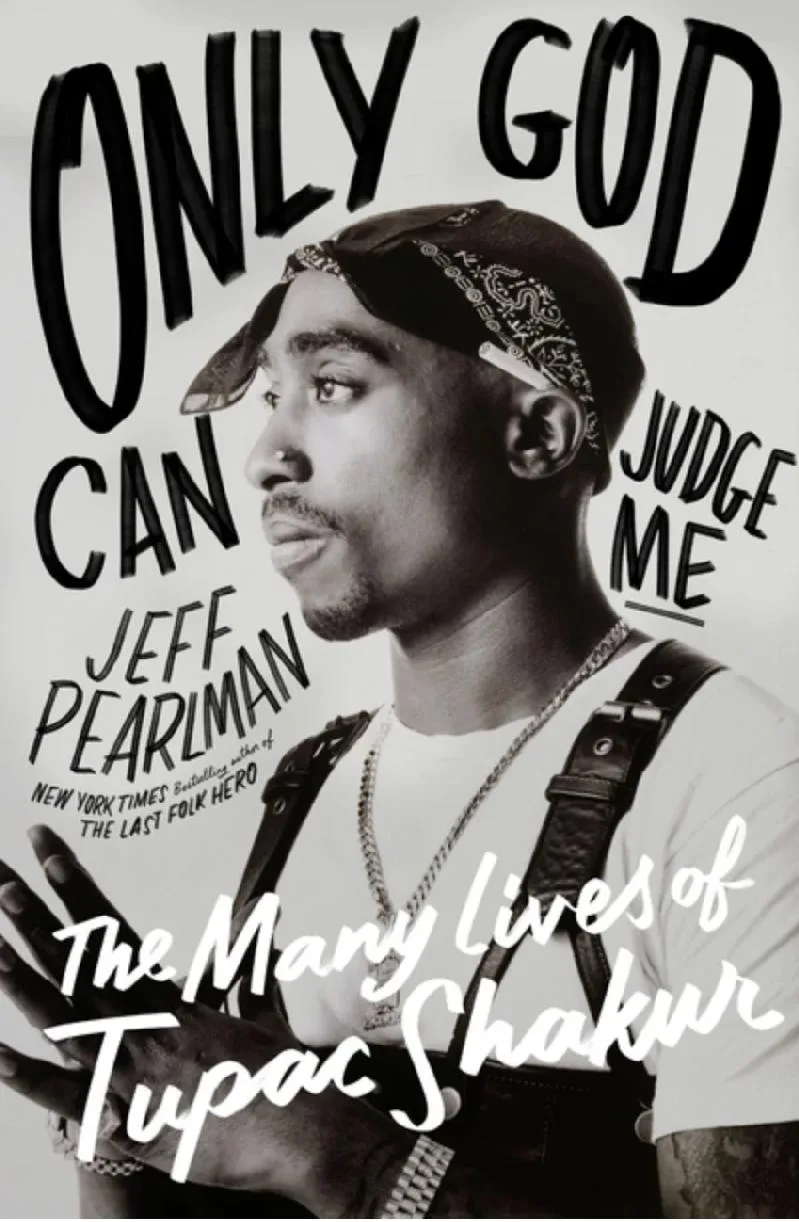
On Tupac’s transformation in Marin City and becoming Bishop in Juice:
“Around this time Tupac was living in Marin City. It’s a little earlier than Juice, and he has a rap battle with a 13 year old rapper named Tack, in front of a bunch of other people, and Tupac gets his ass kicked. It’s the first time he got, what he felt, was publicly humiliated like that. He goes back to the apartment he’s living in with [his roommate] Demetrius Striplin and a bunch of other guys, and then he vanishes for a week. No one knows where Tupac is. He comes back, and one of the guys was like, ‘Yo, Pac, where were you?’ And Tupac says, ‘I was following around Bobby Burton.’ Bobby Burton was the crack kingpin of Marin City during this time period. Tupac asked this guy if he could follow him and take notes about what street life was really like, because when he lost that rap battle it was to a guy who knew the streets better than Tupac did. Tupac was this theatre arts kid moving out there from Baltimore. He had a rough upbringing, but he didn’t know the streets. So Tupac follows this guy for a week; takes fastidious notes and then he writes a song called All In The Daze of a Criminal. And I feel like him having that exposure, taking the notes, learning from a guy he admired and feared at the same time, and then doing Juice and embodying Bishop, those kinds of moments flipped him a certain way.”
On his experience interviewing Tupac’s sister, Sekyiwa “Set” Shakur for his book:
“I traveled to New Orleans to sit down with Set. I called her on the phone and I was in Lumberton, North Carolina where Afeni was raised for much of her life. Set was like, ‘Well, if you’re nearby, you can come and I’ll talk to you.’ And I said, ‘I’m nearby! Even though I was a 13 hour drive away.’ Set [Shakur] is like interviewing, and I say this in an entirely endearing way, she was like interviewing shattered glass. Her life has been so traumatic. And now, in a way, she’s the living embodiment of her brother. She’s as close as you can be. She’s the closest living relative to Tupac, and she has to walk with that all the time. She radiated this humility and this pain. When I talked to her, every word was like pieces of shattered glass. At one point I asked her about moving to California. I said, ‘What about when you guys moved to Marin City?’ And she said something like, ‘That’s such a white way of looking at this. We didn’t move. We were relocated. There’s a big difference.’”
“Set really understood [her brother’s] impact, and she understood how lonely he was. Very few people really understood how lonely he was and how tortured he was.”

On Tupac and his sister Set waiting for Tupac’s biological father, Billy Garland, to visit him at Clinton Correctional Facility for Father’s Day:
“I don’t know what Billy Garland is thinking when he doesn’t show up. I highly doubt Afeni intercepted the visit, because Set and Tupac expected him to be there and Afeni would have at least let them know. I don’t know if he chickened out, if he got his scheduling wrong and thought it was another day. I just know that according to [Tupac’s sister] Set Shakur, they are sitting there waiting and waiting and waiting, and Tupac feels like his heart is carved out, because he’s giving this guy another shot, and he doesn’t show up.”
On actress Lela Rochon turning Tupac down for a movie date on the set of their 1996 film, Gang Related:
“Lela [Rochon] is someone who gave me one of my all-time favorite quotes for this book. She said they’re filming Gang Related (Shakur’s last film) and there’s a delay on set. Tupac says, ‘Hey, you want to go to a movie?’ He was just being nice, he wasn’t hitting on her. And she goes, ‘Hell No! I am not going to see a movie with you.’ Tupac was like, ‘Why not?’ and Lela says to him, ‘Because I don’t feel like getting shot!’”
On Tupac confiding in his Gang Related co-stars and crew about Suge Knight and Death Row:
“Tupac became the cash cow of Death Row. Tupac was everything Suge Knight wanted Death Row to be. He was straight out of prison, so he had a street cred about him. He was a west coast rapper who just walked around with a big d*ck. He wasn’t afraid of anything. He was big d*ck energy before that was even a phrase. He gets out of Clinton, flies back to L.A., goes to a steak house, goes to Can Am Studios, takes a nap, and then records seven songs that first day, including Ambitionz [Az A Ridah] and I Ain’t Mad At Cha. He was kinetic energy, productive, and brilliant. And Suge Knight knew he had this guy for a three record deal and he clearly didn’t want to let him go, and he always would shadow him.”
“To me, the Suge Knight moment in this book is when Tupac is filming Gang Related. Suge shows up on set with a new car. Suge gets out of the car in the middle of whatever they are doing on the set in L.A. and says, ‘Yo, Pac! I want to give you this [car] as a gift, cause you’re killin’ it! We’re giving you this car. It’s for you!’ Tupac then says, ‘Thanks Suge!’ and Tupac hugs him. Suge Knight drives off, and Tupac turns to someone on set and he’s like, ‘I don’t own this. This isn’t my car. This is leased. I don’t own anything; I literally don’t own anything.’”
On Suge Knight’s recent jailhouse interviews about his close relationship with Tupac:
“I feel like Suge Knight, with his prison podcasting, there’s a lot of revisionist history there. And that happens. In his defense, it’s thirty years. People forget things, people put on the best spin, but there is a lot of revision going on there.”

On Tupac being haunted by the shooting death of a 6 year old boy at a ‘92 Marin City Festival:
“Tupac is now becoming famous. Every year there’s this festival in Marin City. All these guys in Marin City now felt abandoned by Tupac. He’d made it, he’s in Juice and there’s this rumor around that he was talking sh*t about Marin City in an MTV interview, which wasn’t true. [His former manager and friend] Leila Steinberg is begging Tupac not to go to the festival. Tupac goes, some people see him and start chanting, ‘F*ck Tupac.’ An old [Marin City] roommate and deejay, Demetrius Striplin, who’d helped him immensely when he was kicked out of Afeni’s apartment, sees him and walks up to him. Demetrius felt like Tupac abandoned him. He walks up to Tupac and smacks Tupac across the face. Tupac falls backwards, and he had a gun with him. Tupac’s gun falls to the ground. Tupac yells, ‘Someone pick up the gat!’ Someone picks up the gat and shoots it into the air, and it kills a six year old boy named Qa’id Walker-Teal who was on his bicycle, and he dies in someone’s arms. People are screaming and Tupac and the people he was with go running and they get into his van. They’re in the van trying to get away and the police show up. Tupac tears off and he throws the gun out the window. But for the rest of his life, without question, and he mentions Qa’id Walker in songs, he carries this guilt with him.”
“One of Tupac’s flaws, and people who knew him will tell you a million times over, this is not coming from me, was his need to be the center of attention, his need to be seen, his need to peacock and show his feathers. It made him a great performer and great artist, but it led to things like Orlando Anderson, like the death of Qa’id Walker-Teal. Sometimes you don’t need to do things that you feel a compulsion to do.”
On who Tupac Shakur really was:
“My favorite quote in the entire book is a quote that nobody would even pay attention to, but it was my favorite quote. And it was a classmate of his when he was at Tam[alpais High School] in Marin City. A classmate of his, this woman named Chava Bramwell, she said, ‘He was the type of guy who would pick up a ladybug and put it to the side.’”
“The word I’ve been using for him, more than anything, is lonely. I think he had a lonely life. I think he had a chaotic life and an explosive life, and he had a lot of people around, but I think he was lonely. [His sister] Set talked about this a lot. When you always have people asking, asking, asking, and taking and taking… during his time at Clinton Correctional Facility, Yaasmyn Fula was going up to Clinton to visit Tupac and Afeni wants her to ask Tupac if he can buy her this house in Georgia. Yaasmyn says to Afeni, ‘He’s in prison. I’m not going to ask him if he can buy you a house while he’s in prison.’ He’s caretaking for everyone. The weight of it was just incredible. When I think of Tupac in the aftermath of writing this book, I don’t think of him as I Get Around Tupac. I think of him as a sad, alone, isolated beautiful spirit; a gifted artist and maybe the best writer I’ve ever written about. But a really sad, contemplative, solitary figure.”

View this post on Instagram
On Tupac beating up Southside Crip Orlando Anderson in the MGM Grand lobby in Las Vegas, on Sept. 7, 1996:
“My favorite guy to talk to about this was James McDonald who went by the name Mob James. He worked for Death Row and Suge, and he said to me, ‘You wanna know why Tupac died? He died because he wanted to be like the sh*t he saw; the sh*t that was told to him. Suge sold him a dream and he allowed Tupac to start participating in some of the bullshit we were doing to people. He died because he thought he was a thug. Well, Tupac was no f*cking thug. He died a wannabe thug; a damn wannabe. How f***ing pathetic is that?’ Every time I read that quote, my heart sinks a little bit, because it’s so sad.”
On the biggest takeaways from Only God Can Judge Me: The Many Lives of Tupac Shakur:
“To me, Tupac Shakur is an historical figure in American culture. The biggest takeaway is all the shit he had to overcome to get here, and the poverty he endured. [Tupac’s sister] Set Shakur talked to me about their time in Baltimore, and the rats that she’s still haunted by; the sound of rats scurrying across the floor boards at night and the rats taking their food. She talked to me about Tupac being embarrassed to have a friend use the bathroom in the winter because they had no heat in the house, and because the house was a sh*thole. People should admire him more for all he overcame. It would have been easy for him not to be Tupac. It would have been easy for him to just never go for it, never aspire to it, and just accept the bleakness around him. But he didn’t. It’s a story of struggle, and a story of a guy overcoming a ton of hardship.”
“Him showing up to audition for the Baltimore School for the Arts when he has nothing. His family is broke. His mom is an addict and he walks into that building… and every now and then you meet someone like this, but rarely… with that sparkle. He had this self-belief, this self-knowledge. It was not like, ‘I hope I nail this audition,’ but, ‘I’m going to nail this audition.’ Not, ‘I hope I’m a superstar one day,’ but, ‘I’m going to be a superstar one day.’ There is a moment when he is with Ray Luv, another rapper in Marin City who he had teamed up with, and they were paying for something with food stamps. Ray Luv was just tired of it and the looks you got from people. Tupac said to him, ‘Ray, do not let that get you down! We’re gonna be in the history books one day!’ When Ray Luv told me that story, I was like, wow! [Tupac] just knew. He had that thing about him.”
About Journalist and Podcast Host Allison Kugel
Allison Kugel is a veteran entertainment journalist and host of the Allison Interviews podcast. Watch and embed the entire interview video with New York Times bestselling author of Only God Can Judge Me: The Many Lives of Tupac Shakur, Jeff Pearlman on @YouTube. Listen to the audio podcast on Apple Podcasts, Spotify. Follow Allison Kugel on Instagram @theallisonkugel and at AllisonInterviews.com.

(If You Like/Appreciate This EURweb Story, Please SHARE it!)
MORE NEWS ON EURWEB.COM: Diddy Warned of Violence at FCI Fort Dix by Former Reality Star Amid Prison Request
We Publish Breaking News 24/7. Don’t Miss Out! Sign up for our Free daily newsletter HERE.