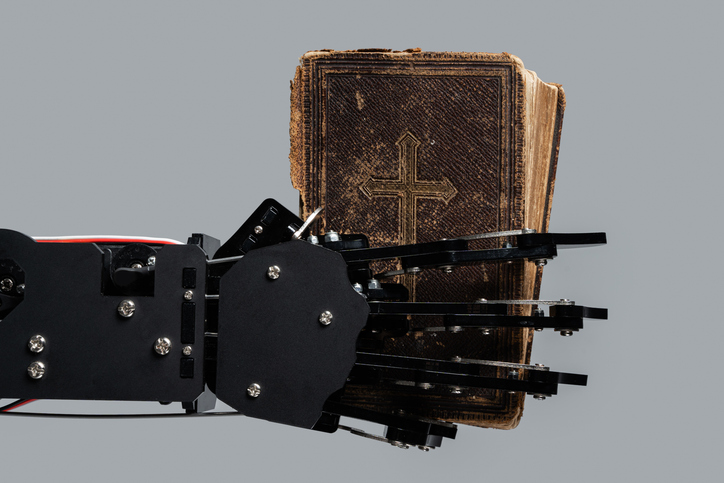
*A growing number of churches are embracing artificial intelligence as part of their spiritual outreach, using everything from prayer generators to AI-designed chatbots that mimic religious figures.
As Axios reports, supporters say these tools help them reach people in a time when in-person attendance is shrinking and online engagement continues to rise. Several new platforms allow users to “text with Jesus” or “talk to the Bible.” Other apps take a more personalized approach, offering custom prayers and opportunities to confess sins. The trend is pushing faith leaders and worshippers to reconsider what it means to receive guidance from a nonhuman source.
Many churches are starting to rely on AI to manage basic communications with congregants or analyze attendance patterns so leaders can better connect with their communities. Still, it is the technology that imitates the voice of a divine presence, a clergy member, or even someone who has passed away that has generated the most attention.
Not everyone sees this direction as spiritually healthy. The Right Rev. Jennifer A. Reddall, bishop of the Episcopal Diocese of Arizona, told Axios that creating AI messages from the dead sidesteps an essential truth of the human condition. She stated that using these tools in that way avoids “the reality of death” and added, “As a Christian, I can’t believe in resurrection without also believing in death.”
Scroll to continue reading









Reddall acknowledged that AI can be a helpful administrative asset, noting its usefulness for tasks such as budgeting or analyzing data. In her view, no matter how advanced AI becomes, it will never replace the spiritual connection that defines ministry. As she put it, “AI cannot hold your hand. AI cannot love you. AI cannot have a relationship with God.”
As advances in artificial intelligence accelerate, faith leaders worldwide are considering how these tools might support ministry work while still protecting vulnerable communities. During remarks at the Apostolic Palace, Pope Leo XIV noted that “Artificial intelligence is transforming many aspects of our daily lives, including education, entertainment and the safety of minors.”
He addressed attendees at a conference focused on safeguarding children in a digital age, emphasizing that the technology “raises important ethical questions,” particularly around “the protection of the dignity and well-being of minors,” who he said are “particularly vulnerable to manipulation through AI algorithms that can influence their decisions and preferences.”
Pope Leo stressed that the issue requires a coordinated response. He stated that “Governments and international organizations…have a responsibility to design and implement policies that protect the dignity of minors in this era of AI.”
He also called for updated data-protection measures “to address new challenges posed by emerging technologies,” and encouraged the creation of “ethical standards for the development and the use of AI,” though he did not provide detailed guidance.
MORE NEWS ON EURWEB.COM: AI-Generated Music Artists Now Chart Weekly on Billboard as Industry Trend Accelerates
Sign up for our Free daily newsletter HERE.