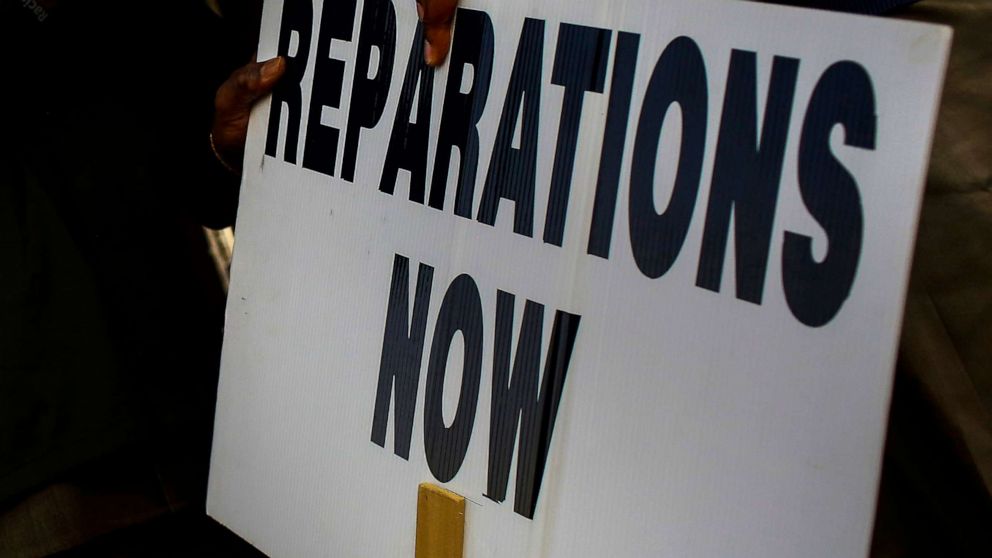
*A new reparations plan in Alameda County is moving forward without an immediate promise of direct payments to Black residents, the New York Post reports.
County supervisors voted unanimously on June 30 to adopt the proposal, making Alameda the first California county to approve a reparations program of this scope. The decision followed more than two years of study, public meetings and community input.
The framework directs county leaders to examine changes across housing, healthcare, education, criminal justice and economic development. That includes support for affordable housing, greater investment in Black-owned businesses and broader efforts to improve financial stability.
A permanent committee will now guide the next phase and determine how the recommendations should be implemented.
Scroll to continue reading






The vote arrived during a difficult budget cycle. Alameda County began the process facing a projected $91 million deficit for fiscal year 2026–27. Officials eventually approved a balanced $6.7 billion spending plan after cutting 45 vacant jobs, trimming department budgets and revising contracts.
Those financial pressures have raised questions about whether the county could eventually fund cash reparations. Supervisor Nate Miley said direct payments are still possible, but he cautioned that money alone would not address the disparities county leaders hope to reduce.
“And once again, that’s why a cash payment isn’t necessarily always the objective,” Miley told Fox News. “The objective is: How do we get people to have housing? How do we get people to be economically stable? How do you deal with criminal justice reform?”
“A cash payment doesn’t always mean that those things will occur,” he continued. “We have to change policies, and we have to change programs. I think that’s where we need to invest our resources.”
The plan has also drawn sharp political opposition.
During an appearance on “Varney & Co.,” California Post opinion editor Joel Pollak described the effort as a “bait and switch,” arguing that politicians often create reparations panels but avoid issuing payments.
“They talk about reparations. They set up committees to study reparations. And then when it comes to paying cash reparations, they never deliver,” Pollak said.
He also questioned the logic of pursuing reparations in California and Illinois, noting that both entered the Union as free states. Pollak called the Alameda County initiative “virtue signaling” and argued that economic growth would do more to improve opportunity.
County officials, however, are presenting the plan as a long-term effort to change systems and programs rather than a single-payment solution.
“California was never a slave state and I don’t see anything in the plan where they actually look to make sure that the people who are having this so-called redress actually descended from slaves,” said black conservative political commentator Stacy Washington, per the New York Post.
“What could help is if they focused on actual programs that get parents involved in reading to children from zero to age three, and then children who are enrolled in preschool programs having direct reading intervention,” Washington added.
MORE NEWS ON EURWEB.COM: Ghana Pushes UN Resolution on Slave Trade Reparations
We Publish Breaking News 24/7. Don’t Miss Out! Sign up for our Free daily newsletter HERE.