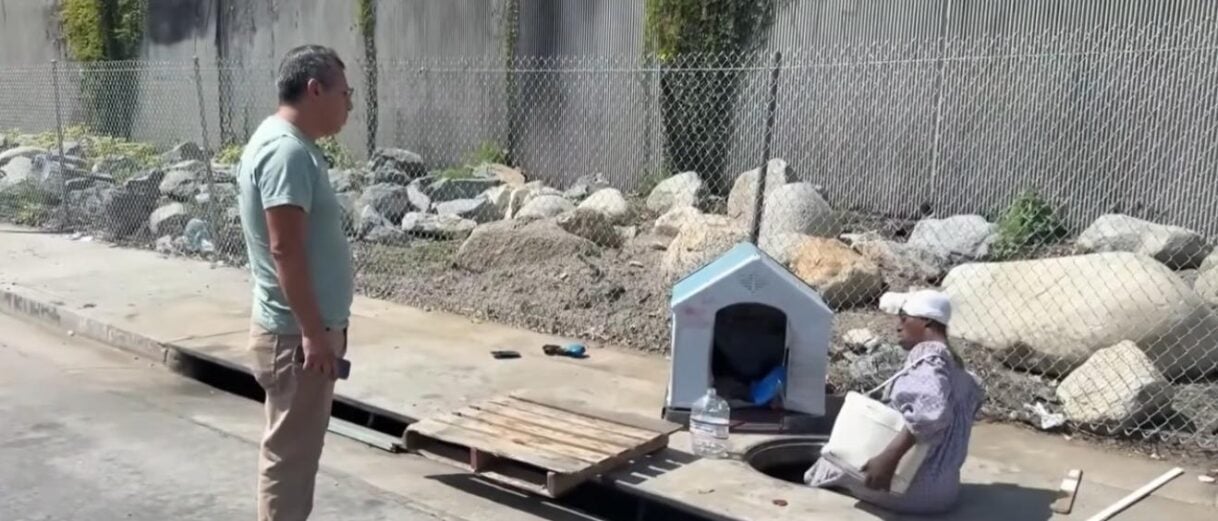
*People are now living inside storm drains beneath South Los Angeles—sleeping in narrow tunnels near the 110 Freeway where a single rainstorm could turn deadly in minutes.
Recent reports from local outlets, including KTLA 5 and FOX 11 Los Angeles, revealed that unhoused individuals have been entering underground drainage systems in the Broadway-Manchester neighborhood. Access points include manholes and street-level openings, where makeshift shelters have been set up inside spaces never designed for human life.
A Hidden Crisis with Immediate Danger
The risks are not hypothetical—they are immediate.
Storm drains are built to move water quickly during rainfall. Even a moderate storm can flood these tunnels in minutes, creating a life-threatening situation for anyone inside.
In some areas, the tunnels are only a few feet wide, with little to no ventilation. That raises the danger of toxic air buildup or dangerously low oxygen levels—conditions that can become fatal without warning.
Scroll to continue reading









There are also serious sanitation concerns. These systems often connect to infrastructure near sewage flow, exposing occupants to bacteria, waste, and harmful contaminants.
City Response Raises Bigger Questions
According to reporting by the Los Angeles Times, city crews have begun installing reinforced covers and heavy-duty lids on manholes in affected areas to prevent access.
While the move may reduce immediate risk, it does not address the larger issue—why people are turning to such dangerous spaces for shelter in the first place.
Advocates say blocking access without providing viable alternatives simply pushes the problem elsewhere, often into even less visible—and more dangerous—conditions.
Why This Is Happening
The situation highlights the severity of the housing crisis in South Los Angeles, where many residents already face limited access to affordable housing and support services.
When shelters are overcrowded, restrictive, or perceived as unsafe, some individuals choose alternatives that offer privacy or autonomy—even if those options come with extreme risk.
This reality reflects a deeper breakdown in the systems meant to provide safety, stability, and accessible housing.
A Pattern Seen in Other Cities
Los Angeles is not alone. Similar situations have been documented in cities like Las Vegas, where communities of unhoused individuals have lived for years in flood tunnels beneath the Strip.
These patterns point to a growing trend: when traditional housing options fail, people will find shelter wherever they can—no matter how dangerous.
What Happens Next
The images and reports coming out of South Los Angeles are difficult to ignore. They show a crisis that is no longer out of sight—it has simply moved underground.
City officials now face a critical challenge: not just removing people from these hazardous spaces, but ensuring there are safer, realistic alternatives available.
Until long-term housing solutions catch up with the scale of the crisis, situations like this are likely to continue—raising urgent questions about safety, dignity, and how cities respond to those with nowhere else to go.
(If You Like/Appreciate This EURweb Story, Please SHARE it!)
MORE NEWS ON EURWEB.COM: California Addresses Growing Homelessness Issue Among Older Adults
We Publish Breaking News 24/7. Don’t Miss Out! Sign up for our Free daily newsletter HERE.