*One of the biggest surprises in Questlove’s new documentary “Earth, Wind & Fire (To Be Celestial vs. That’s the Weight of the World)” comes from none other than Stevie Wonder.
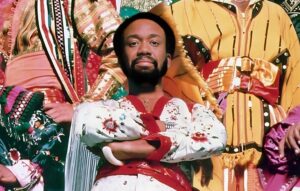
The documentary, now airing on HBO and streaming on Max, explores the life and legacy of Earth, Wind & Fire founder Maurice White. Among the revelations highlighted in Erin Maxwell’s TV Insider coverage of the film, one moment stands above the rest.
While discussing Earth, Wind & Fire’s classic hit “Shining Star,” Wonder acknowledges that the song directly influenced one of his own signature recordings.
“Jesus Christ! So you’re saying ‘I Wish’ was inspired by ‘Shining Star’?” Questlove asks in disbelief.
Wonder’s response is simple.
Scroll to continue reading






“It was. That was definitely an influence.”
The admission reinforces the documentary’s central message: Maurice White’s impact extended far beyond Earth, Wind & Fire’s own success, influencing generations of artists and helping shape the sound of modern music.

The Power Of Representation
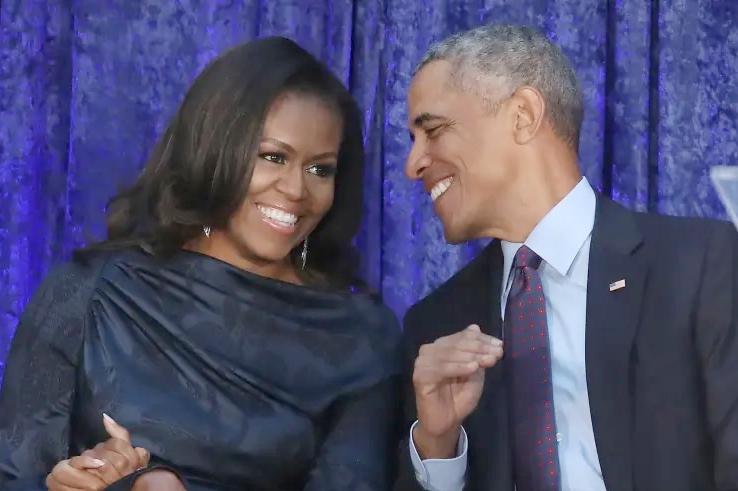
The film features appearances from former President Barack Obama and former First Lady Michelle Obama, who reflect on the group’s cultural significance.
For Obama, Earth, Wind & Fire represented possibility.
“I’m a Black kid in Hawaii, you don’t have a lot of people who look like you and are achieving,” Obama says. “And I’m saying to myself, if they can do that, what can I do?”
The documentary presents the band as a symbol of Black excellence, optimism, and achievement during a time when many Black Americans faced discrimination and limited opportunities. Their success became a source of inspiration for countless young people looking for examples of what was possible.
How Failure Helped Create A Legend
Questlove also revisits the setbacks that helped transform Earth, Wind & Fire into a musical powerhouse.
One of the most important came in 1972 when the group opened for Parliament Funkadelic. While Earth, Wind & Fire received a respectable response, Parliament completely overwhelmed the audience with its funk-driven energy.
The experience reportedly left Maurice White determined to evolve.
“Never again,” he vowed.
Soon afterward, White recruited guitarist Al McKay with a specific mission: find the funk.
The documentary also reveals that Earth, Wind & Fire’s original lineup was largely dismissed before the band found success. Concerned about the group’s lack of progress, manager Leonard Smith fired most of the members. White avoided taking part in the confrontation but agreed to rebuild the band, retaining only his brother, Verdine White.
Another memorable story involves a difficult 1972 performance at Philadelphia’s Uptown Theater. Faced with a hostile crowd, White instructed the band to sit silently in the lotus position before gradually beginning the performance. By the end of the night, they had won the audience over.
As Stevie Wonder says in the film, “People are afraid of change. And through all that, they won them over through a new experience.”

Family Secrets and Band Tensions
The documentary does not avoid the more complicated aspects of White’s life.
Through interviews with his son KB White, viewers gain insight into both the triumphs and tensions that existed behind the scenes. Later in the film, another son, Eden White, is introduced and jokingly identifies himself as “Maurice’s youngest son, that we know about.”
The documentary reveals that White maintained a long-term relationship with Eden’s mother while also remaining involved with longtime partner Marilyn White.
Financial tensions within the band are also explored. Former keyboardist Larry Dunn discusses frustrations surrounding publishing rights and compensation, while KB White offers insight into his father’s leadership style.
“These guys were a family that he created,” KB White says. “He left them before they could leave him.”
The Legacy Lives On
Despite setbacks, lineup changes, and personal struggles, Earth, Wind & Fire’s influence never disappeared.
The documentary recounts how the group found new audiences through television, film, commercials, and hip-hop. Appearances in “Seinfeld,” “Happy Feet,” and “Austin Powers in Goldmember,” along with samples by artists such as Ol’ Dirty Bastard, A Tribe Called Quest, the Fugees, and Missy Elliott, introduced the band’s music to younger generations.
For Verdine White, that renewed appreciation validated Maurice White’s vision.
“That victory lap in the ’80s that we didn’t get a chance to do, we took it in the ’90s,” he says. “And we’ve been taking it ever since.”
Questlove’s documentary ultimately argues that Earth, Wind & Fire’s legacy cannot be measured solely by record sales or chart success. Its true impact can be found in the artists it inspired, the barriers it broke, and the generations that continue to discover its music decades later.
(If You Like/Appreciate This EURweb Story, Please SHARE it!)
MORE NEWS ON EURWEB.COM: Simone Biles’ Health Scare, Chris Brown Custody Fight and ‘Scary Movie’ Box Office Shock Lead Entertainment News
We Publish Breaking News 24/7. Don’t Miss Out! Sign up for our Free daily newsletter HERE.