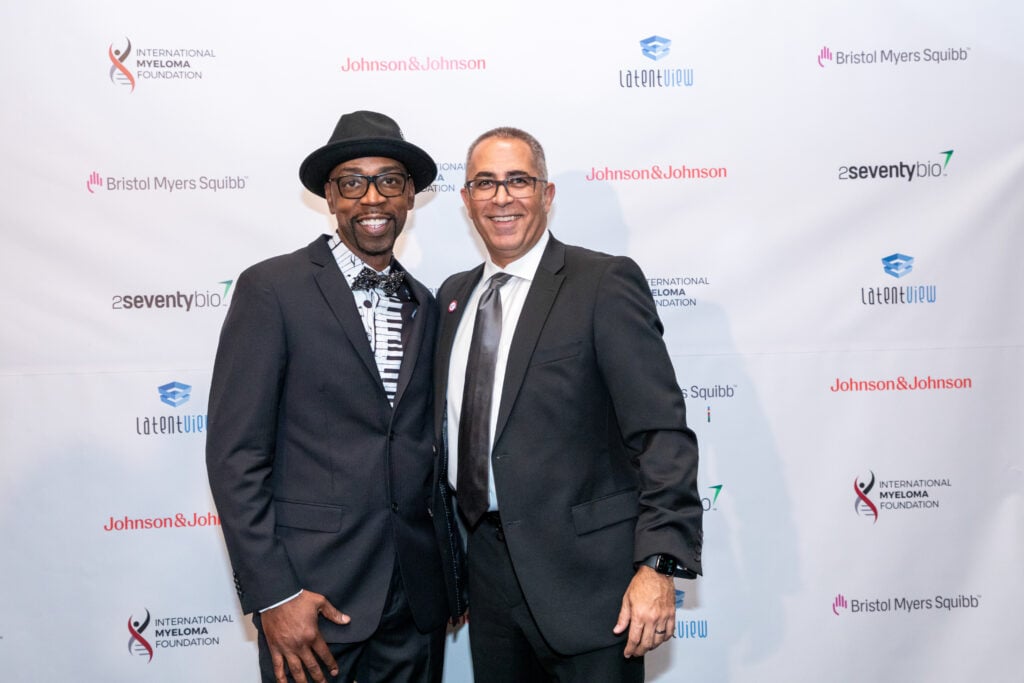
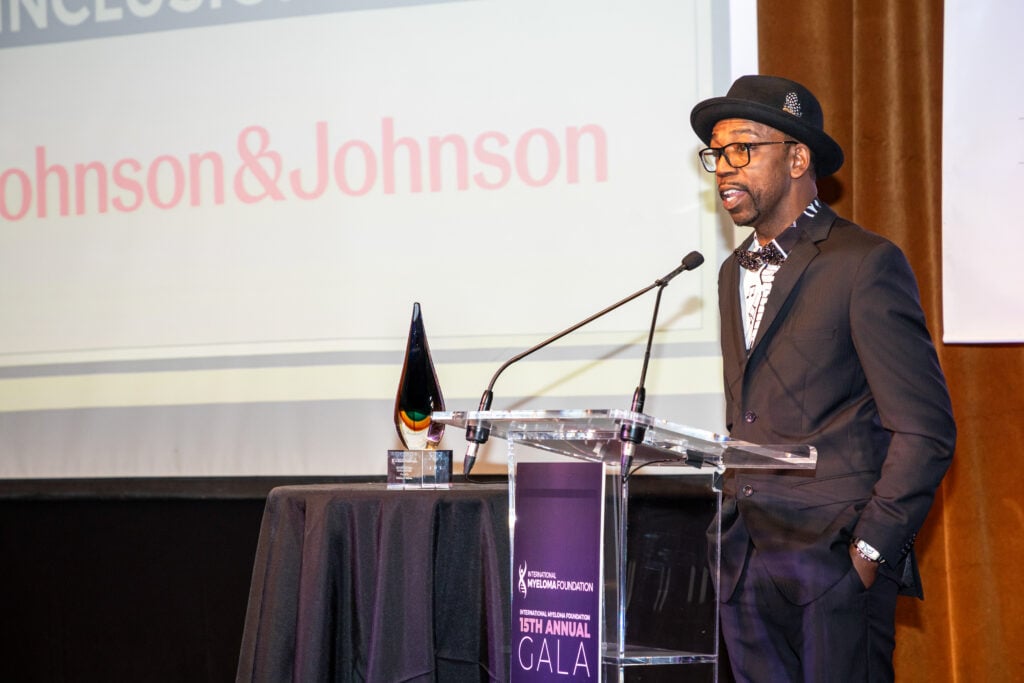
*Oya Gilbert is bringing his “Mic Check Myeloma” tour to Chicago. The free event lands at mHub on Saturday, Oct. 24, with music, food, and a frank conversation about a cancer that hits Black communities hardest.
Gilbert founded the Health, Hope & Hip-Hop Foundation, which is producing the national tour with the International Myeloma Foundation. Together, they pair hip-hop and R&B culture with education on multiple myeloma, an incurable blood cancer. The disease strikes Black communities at nearly twice the rate of the general population, yet early detection remains low.
Gilbert, who lives with multiple myeloma, spoke with EURweb about the Chicago stop, his own fight for a diagnosis and why hip-hop is the right messenger. Asked what Chicagoans can expect, Gilbert made clear this won’t feel like a doctor’s office.
“Chicago’s in for a treat. This isn’t your ordinary health panel. This is an experience, and it’s centered around the culture of good energy,” he said. “We try to put people in a more receptive position to receive information.”
Scroll to continue reading
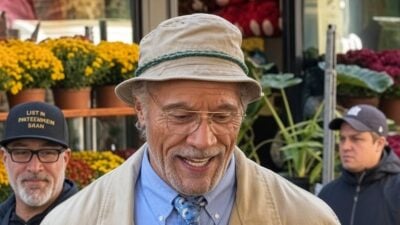

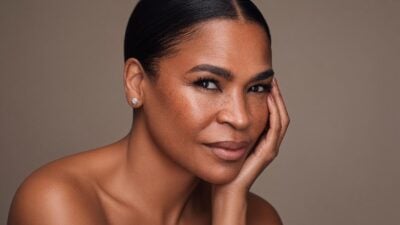



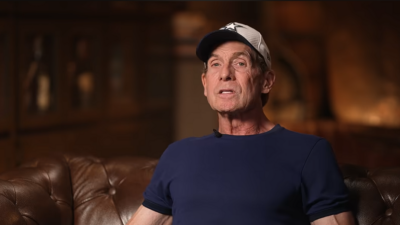
He compared the six-person panel to a music group, with each member covering a different piece of the myeloma journey. “Each person is not going to tell their full story,” he explained. “Collectively, as a band, sort of like an R&B group going on tour, each person plays their part to create this beautiful music.”
Dr. Joseph Mikhael, the International Myeloma Foundation’s chief medical officer, will cover the science. A Black woman living with myeloma will share her experience, and a representative from Blood Cancer United will bring resources. Gilbert will speak to delayed diagnosis.
Each city also adds a local care partner. In Chicago, that’s Michelle Ware-Ivy, who lost her husband to myeloma and started a foundation in his name. V103’s Sonya Blakey will moderate.
“You’re going to get great food. And it’s free. Everybody likes free,” Gilbert said. He described the format as one “where we talk about entertainment and education, meeting in the middle to create edutainment.”
The hip-hop approach is personal for Gilbert. He said the music carried him through a difficult childhood.
“Hip-hop saved my life when I was younger. I grew up in a tumultuous household and community. And the hip-hop culture and its music was my escape,” he said. “It’s a voice from the underserved community. It is storytelling.”
He pointed to classic records like “Self Destruction” and “911 Is a Joke” as proof the music once taught its audience. “It’s not like I’m reinventing the wheel,” he said. “Why not use it intentionally to teach health and be serious about it, not make it so Sesame Street? Why can’t we make a song that’s banging that you want to play in your car? But it teaches us stuff about different situations of early detection and all the importance of it, because we used to do that and it was well received.”
His road to a diagnosis explains why early detection matters so much to him. Gilbert, who lives in rural Pennsylvania, said he was healthy until 2015. “I’ve never had a major illness, never broken a bone. And then all of a sudden in 2015, I started experiencing symptoms of back pain and fatigue. And the main thing was shortness of breath,” he recalled.
When he went to the emergency room believing he was having a heart attack, doctors told him it was anxiety. As tests kept coming back negative, his symptoms worsened.
“Eventually the doctors here started labeling me as a hypochondriac, and like I was looking for drugs,” he said. “So now two years have progressed. I’m now sick every day, all day long. And I knew I was going to die.”
Convinced he was running out of time, Gilbert tried to increase his life insurance. “I said, ‘Man, if I’m going to check out, let me try to get as much money as I can for my kids,'” he said.
That decision changed everything. “The thing we hate about life insurance companies not wanting to cover pre-existing conditions is actually the thing that saved my life,” he said. “They checked for everything and discovered the protein in my blood and urine, which this disease leaves as a remnant.”
A bone marrow biopsy confirmed the diagnosis the day after Christmas in 2017. “I can’t really tell people how alone and deflated I felt because they really had me thinking I was crazy,” he said.
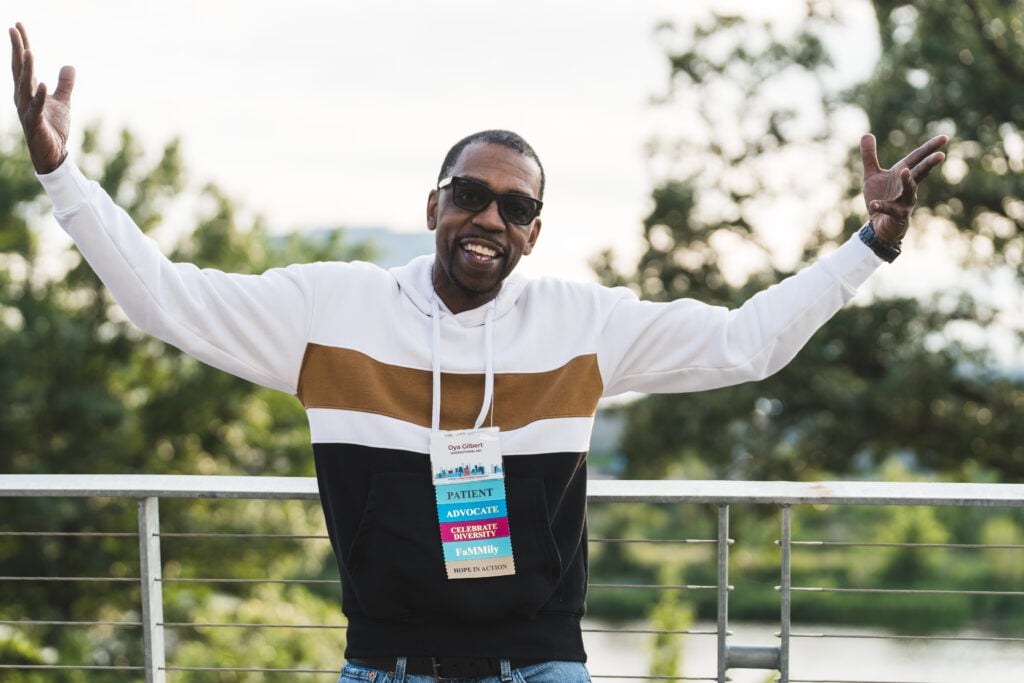
Gilbert acknowledged that the reason myeloma hits Black and Brown communities harder isn’t fully understood. “There is no science that really says why,” he said. But he stressed one statistic that shifts the conversation.
“Even though it affects us two to one more than others, when we do receive treatment, we tend to do better than others,” he said. “And that’s an important key to this disease, especially when it’s incurable.”
For people facing a new diagnosis, Gilbert offered advice from his own experience. He remembered blacking out when he first heard the news. “I heard the word cancer attached to another word that doesn’t go well, which is incurable,” he said. “I would tell them to give themselves grace because it is a lot to take on.”
He also wants patients to know that treatment has come a long way. “We’re living in a time where there are so many treatments, and there’s been so much success with people living not only a longer life, but even a great quality of life. And I’m an example,” he said. “I’m almost nine years in.”
That lived experience shapes the event itself. Gilbert said everyone on his staff has myeloma, from the newly diagnosed to people living with it for 20 years. “We call ourselves the tribe,” he said. “We welcome you into our tribe, and we love on you.”
The goal, he said, is simple. “I don’t want anybody to leave this room not knowing something about multiple myeloma,” Gilbert said.
He shared one moment from the Philadelphia stop. A newly diagnosed Black woman was searching for a doctor who looked like her, and Dr. Mikhael connected her with a recommendation in her city. “That’s what this is all about,” Gilbert said.
He hopes guests leave with more options and resources “that can give them some sense of peace, a different type of peace than they had walking into the room.”
The response so far has surprised him. At the Philadelphia stop, a four-hour Saturday event in good weather, attendees stayed engaged from start to finish, and several asked questions during the Q&A.
“You can tell that it hit different, if I could say it from a slang term,” he said. “This is an event that is completely curated by Black and Brown folks from start to finish.”
Chicago is the third of five stops this year, following Philadelphia and Atlanta. The tour heads to Houston next and wraps in Los Angeles. Gilbert plans to run five cities a year for the next four years.
“All people have to do is register at healthhopehiphop.org,” he said. “Everything you need to know about not only this tour, but what the foundation is doing overall.”
“Mic Check Myeloma” takes place Saturday, Oct. 24, from 12 to 4 p.m. CT at mHub, 1623 W. Fulton St., Chicago. The free event includes a reception, panel discussion, and meet-and-greet. Register at healthhopehiphop.org.
MORE NEWS ON EURWEB.COM: Jay-Z Reportedly Picks Himself for 2027 Super Bowl Halftime Show
Sign up for our Free daily newsletter HERE