*During her 1994 single, “I Apologize,” Anita Baker sings the narrative of a heavy-hearted woman trying to reach her lover on the phone. “Operator, get my baby on the line,” begins Baker, “’Cause just the other night we had a horrible fight.”
Baker is reaching out to apologize, but until that call goes through, the person who has to hear about her troubles is the telephone operator.
“I Apologize” earned Ms. Baker her eighth Grammy award (Best Female R&B Performance). Because of its release date, it was also one of the last of a pop music trend: the fabled “operator” song.
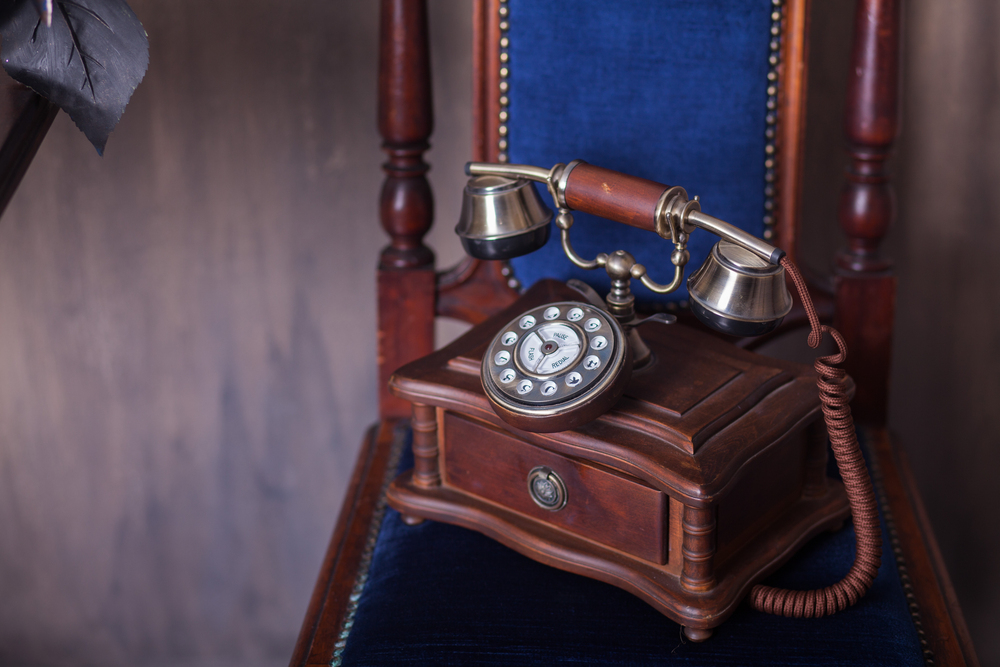
Generations of cell phone users may have no idea what I’m talking about; modern technology has all but eliminated the operator’s duties. But a lifetime ago, when the landline telephone system was all the world had, The Operator—women and men whose job is to assist a caller with their phone communication needs—was an indispensable feature of telephone use.
Scroll to continue reading






The telephone was invented in 1870. But until 1919, when the rotary telephone went into service, you couldn’t make a phone call without an operator (hence, the old movies, where a character picks up the receiver of an antique telephone and says, “Operator, get me…” and then recites to the operator a phone number).
Love is pop music’s favorite muse, and communication is essential to romance. It makes sense that pre-cellular love songs feature storylines with operators. I grew up listening to operator songs; they were just another pop subgenre, like the countless songs about the rain.
Most Operator songs share a standard format: the singer portrays an emotionally troubled caller seeking the operator’s assistance to reach a party. But the caller frequently ends up revealing everything to the operator.
You rarely hear an operator’s voice on these recordings. Their silence is a stylistic device for the songwriter or artist to tell their story. Endowed with a therapist’s patience, the operator quietly listens to the singer’s dilemma, verse after heart-rending verse.
Folk singer/songwriter Jim Croce crafted the quintessential operator song. “Operator (That’s Not the Way It Feels),” a top 10 hit in 1972, is a poignant ballad about a man trying to track down the new phone number of his ex-lover, who has left town and become involved with his former best friend. Croce wants to convey to them that he has moved on from their betrayal but confesses to the operator that he hasn’t.
Chuck Berry’s 1959 single, “Memphis, Tennessee,” presents a twist. After several verses in which he shares with the operator his urgent search for his girl Marie, Berry’s final verse reveals that Marie is not a lover, but his six-year-old daughter, separated from him by his ex-wife.
No telephone professional is exempt from hearing a lover’s dilemma in operator songs. During New Edition’s 1984 hit “Mr. Telephone Man,” written and produced by Ray Parker Jr. (he produced the song on teen singer Junior Tucker a year earlier), a hard-hat phone technician must listen to an anxious, clueless guy’s complaint that, “when I dial my baby’s number, I get a click every time.”
Glen Campbell’s 1968 classic, “Wichita Lineman,” is a different kind of phone song. It features a telephone lineman high on a pole, conversing with the love of his life on his work phone.
Songwriter Jimmy Webb, who wrote “Lineman,” was inspired to create the song while in his native Oklahoma, driving along a lonely stretch of highway where telephone poles lined the road. The only human present was a lineman perched high on a pole, talking on his work phone. Lyrically, Webb envisioned the man casually burning up the line with such prose as, “I need you more than want you/and I want you for all time.”
When landline technology reigned supreme, telephone operators held significant power. With the help of an operator, you could make a long-distance call “collect,” meaning the recipient would pay for the call.
In 1976, I interviewed singer Johnnie Taylor, who was then at the top of the charts with his hit, “Disco Lady.” Columbia, his label, instructed me to call Taylor collect in Dallas. Apparently, Taylor wasn’t informed about this arrangement. He only took the operator’s call to chew me out for calling collect.
After he calmed down, we had a pleasant conversation during which he mentioned the rhythm section on “Disco Lady,” produced at Detroit’s legendary United Sound studio by his longtime producer and influential motor town music fixture, Don Davis, included members of Parliament/Funkadelic—Bootsy Collins on bass, Bernie Worrell on keyboards, Glen Goins on guitar, and Tiki Fulwood on drums.
A couple of weeks later, I received my phone bill. Taylor had contacted the operator after the interview and reversed the charges. The operator’s true superpower was interrupting an ongoing call and requesting that the person on the line hang up, allowing the caller to connect. This service was meant for emergency use, though people often misused it. I used the service once in the ‘90s. After my girlfriend’s line had been busy for over two hours, I asked the operator to free the line so I could call. After more time than it should have taken, the operator returned.
“I couldn’t do it.”
“Really? Why?”
“Sir,” said the operator, sounding slightly amused, “whoever is on that line is having some serious phone sex.” The one time I used the service—the one time—was the one time I shouldn’t have. Let’s see: hot, landline-scorching phone sex, a dispassionate telephone operator, and an embarrassed, abruptly broken heart. That’s a hit.
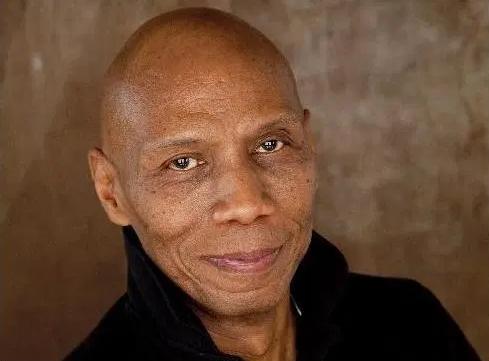
Steven Ivory, veteran journalist, essayist, and author, writes and talks about popular culture across a spectrum of media, including the Internet, TV, radio, documentaries, magazines, and newspapers. The Last Man on AOL is at [email protected]
MORE NEWS ON EURWEB.COM: Grammy Award-winning Singer/Songwriter Faith Evans Celebrates 30 Years of Music and Entertainment at NYC’s Town Hall | PICs
Sign up for our Free daily newsletter HERE.