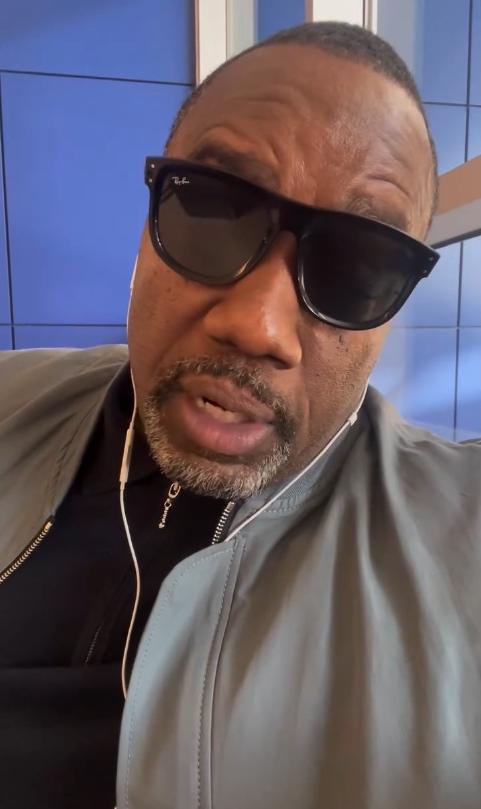
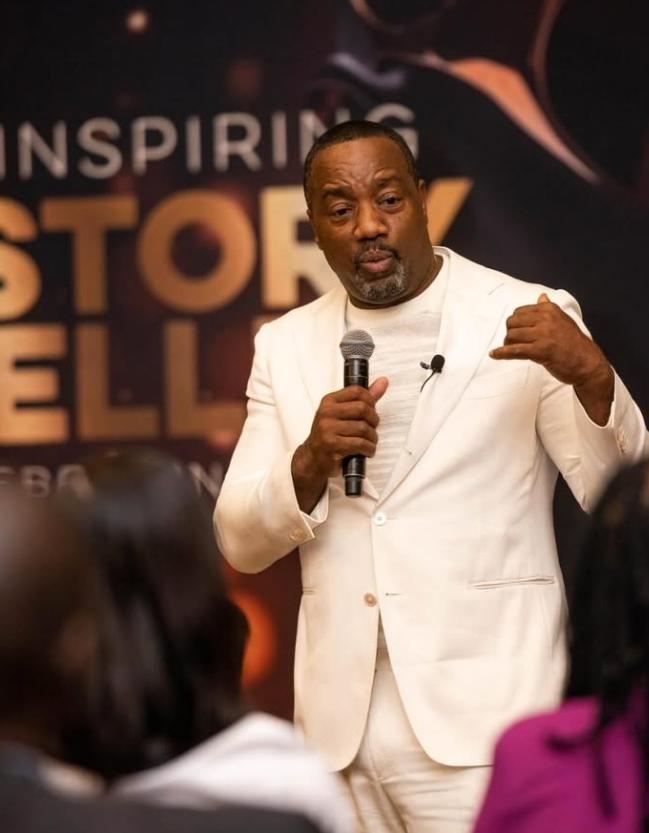
*Whoo Lawd! Once again, Malik Yoba has seemingly come from out of nowhere to drop a bomb on social media. The actor/singer has publicly declared that he no longer identifies as a Black man or a person of color. Instead, he has opted to refer to himself as a “Non-White Man.”
This provocative assertion seems intent on challenging the societal constructs of racial identity and classification, raising questions about the relevance and impact of such labels in contemporary discussions on race.
Yoba, celebrated for his roles in popular series like “New York Undercover” and movies such as “Cool Runnings,” brought attention to his newly adopted identity in a post that has stirred widespread online commentary. His proclamation included a pointed message directed at the constructs of race:
“So what’s up, America? I decided that I’m no longer a black man, no longer a person of color. … We just all walk around like, I’m not a black man. I’m a non-white man.”
This statement not only redefines his personal racial identity but also implies a call for others to abandon conventional categorizations in favor of a more unified identifier.
Scroll to continue reading






Actor Malik Yoba announces he’s no longer a Black man or Person of Color and reveals he now prefers to be called a ‘Non-White Man’.
(? Malik Yoba/Instagram) pic.twitter.com/tA59XiFbx5
— The Art Of Dialogue (@ArtOfDialogue_) March 22, 2025
The motivations behind Yoba’s radical reclassification remain an enigma, as he has not elaborated extensively on the rationale behind this provocative decision. Nevertheless, several interpretations arise from his call to action. Some observers propose that Yoba is attempting to instigate conversations around diversity, equity, and inclusion (DEI) policies, especially considering the ongoing debates about their implications and the current atmosphere of racial discourse in America.
His choice to identify as a non-White individual suggests a desire to emphasize a shared experience among diverse racial groups rather than allowing traditional racial categories to divide them.
Reactionary posts on social media reflect a spectrum of responses, from disbelief and confusion to amused critique. Comments on X and Lipstick Alley such as “What is this ni*ga talking about?” and “MALIK YOBA, a mf with one of the blackest names in the history of Negros no longer identifies as Black” indicate that some perceive his declaration as tongue-in-cheek or even satirical.
This contradiction showcases the polarized reactions and the confusion surrounding the contemporary conversations about racial identity, suggesting that for many, Yoba’s assertions may add more questions than answers.
View this post on Instagram
Yoba’s assertion could also be interpreted as a critique of the very labels that have traditionally framed racial identity. By choosing terms like “non-White,” he may be attempting to redefine and challenge societal norms regarding race, encouraging individuals to confront the limitations and implications of such classifications. The notion of rejecting the term ‘Black’ or ‘Person of Color’ might be seen as an invitation to rethink how society categorizes people based on skin color, ethnicity, and cultural heritage.
His previous engagements on complex issues of identity resonate with his current declarations, hinting at a broader philosophical stance rather than simply a personal rebranding. In 2019, Yoba openly discussed topics of identity and attraction, reflecting his ongoing exploration of race and societal constructs. Thus, he may be leveraging his platform in ways designed to spark dialogue, albeit in an unorthodox and controversial fashion.
Social media conversations surrounding Yoba’s declarations are a testament to the intricate landscape of identity politics in America today. Reactions on platforms include dismissive proclamations such as “I don’t even know how to react to this dumb sh!t” and sarcastic quips regarding heterosexual identity. Such responses highlight the diverse interpretations and levels of acceptance of Yoba’s initiative, illustrating that concepts of race and identity continue to elicit strong emotional reactions, particularly from communities of color.
Ultimately, the full implications of Malik Yoba’s self-identification as a “Non-White Man” remain to be seen, as the conversation around identity continues to evolve. His provocative statement has undoubtedly opened the door for discussions around race, privilege, and the frameworks through which society understands these elements. With time, the discourse may clarify whether this is merely a personal decision or a significant social statement meant to provoke deeper reflections on the nature of racial identity.
MORE NEWS ON EURWEB.COM: Malik Yoba Storms Out of Interview After Being Pressed About Trans Teen Sex Allegations [WATCH]
We Publish News 24/7 – Don’t Miss Out! Sign up for our Free daily newsletter HERE.