*The time of bipartisan politics has ended and civic awareness is at an all-time low as conservative interests led by former President Donald J. Trump and the Supreme Court have rendered many of the hard-fought gains of the Civil Rights Movement moot. With each generation, the need to codify Black dignity into the fabric of the United States is met with resistance.
Often historical context is lost amid mainstream news talking heads and podcasts.
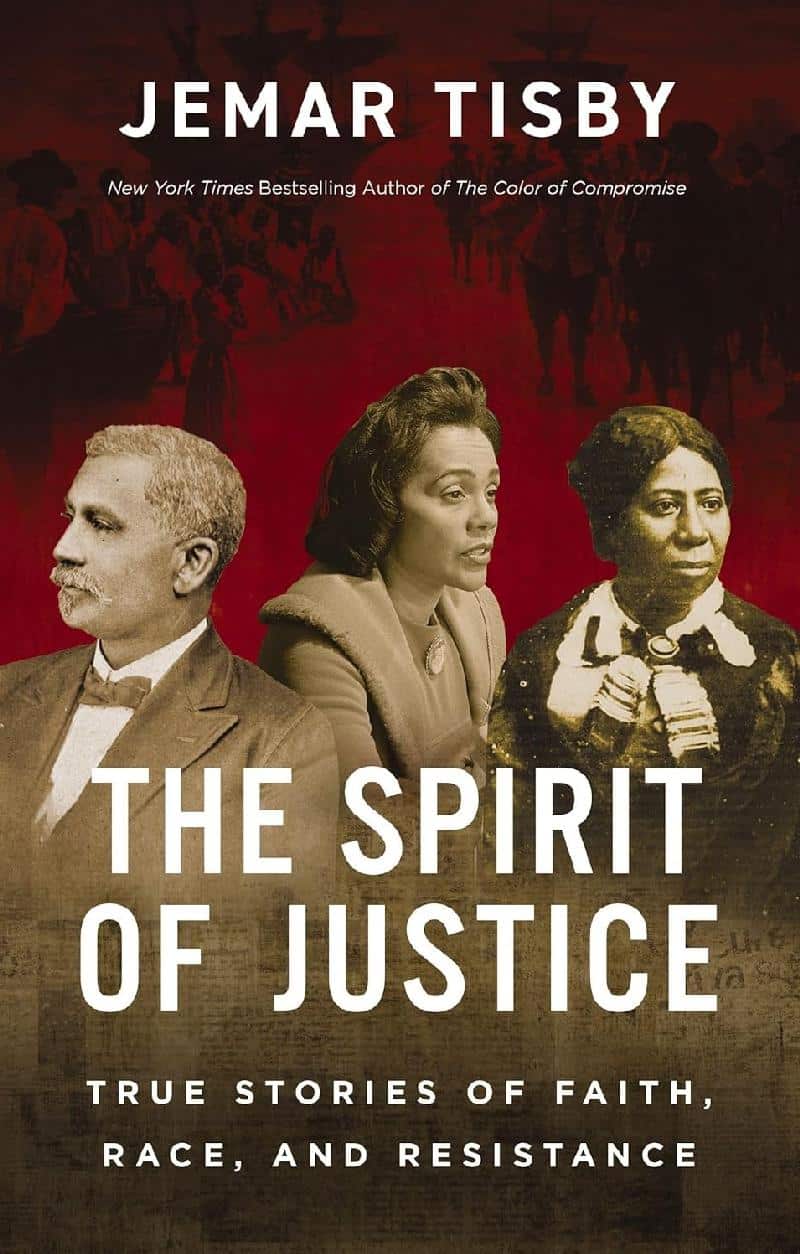
Recently, EURweb talked with New York Times bestselling author Jemar Tisby, PhD about his new work “The Spirit of Justice: True Stories of Faith, Race and Resistance” juxtaposed against the contemporary reality of Black Lives in America.
EURweb: How is The Spirit of Justice in alignment with politically Black aspirations?
Jemar Tisby: African Methodist Episcopal Minister, abolitionist, and Florida state senator, Charles H. Pearce, said, “A man in this state cannot do his whole duty as a minister except if he but looks out for the political interests of his people.” Studying this history reveals a Black Christian pantheon of people who actively worked in politics to pass laws, win elected office, and advocate for voting rights because of their faith. The spirit of justice in the Black Christian tradition demonstrates that African-descended people in the United States had a clear-eyed assessment of politics. There were often no good options, so they voted for whomever they might more reasonably persuade on issues of Black civil rights. Black people often saw it as their Christian duty to participate in voting and politics as a way to work for the common good.

Scroll to continue reading









EURweb: Is the romantic idea of Black resistance being usurped by the reality of conservative chess moves that have erased Affirmative Action and banned Black books in schools?
Jemar Tisby: Recent events have shown that even the hard-won gains of the past can be stripped away at any moment. No progress is permanent without persistent pressure. Examining the history of the Black freedom struggle strips away any romantic notions of ultimate victory.
These are stories filled with struggle, setbacks, and dashed hopes. For instance, the Mississippi Freedom Democratic Party—an interracial, grassroots coalition of activists—waged a valiant campaign to unseat the all-white delegation in the 1964 elections, only to be undercut at the last moment by establishment politicians from their own party. Yet the spirit of justice strengthens people who get knocked down on the freedom trail to get back up and keep taking steps toward progress.
EURweb: The title of one of your chapters is Women of the Movement. Women have always been the foot soldiers of many organizations of Black liberation, but much of that energy has been absorbed by mainstream corporate and political organizations. Does that harm or hurt the movement?
Jemar Tisby: The movement overall has been subject to the effects of desegregation. By removing Jim Crow laws, Black people gained advantages such as more access to a broad array of organizations and positions—elected office, the corporate world, colleges and universities, and more. The unintended consequence was Black people left some historic institutions such as the Black church and Black neighborhoods. This diluted the concentration of Black people who could help each other and develop a shared sense of identity and priorities. Yet Black women have continued to advocate for Black men, themselves, and the uplift of all people, often from within those same historic Black organizations and communities. While reinstituting legal segregation is not a desirable goal, Black people should recognize the value of Black-centered and Black-led institutions and make a concerted effort to lend their time, talents, and treasures to those endeavors.

EURweb: What is the next justice generation? What must they do that the current movement/generation has failed to do?
Jemar Tisby: The next justice generation is comprised of Millennials and Gen Z activists working in a variety of areas to promote racial justice. In the chapter about this generation, I discuss activists, ministers, and a new class called “creators” who use their talents on social media to raise awareness and mobilize movements. This generation has the power to beam vital information into the palms of people’s hands through smartphones and they can spread knowledge globally at the speed of the internet. They are mobilizing across racial and ethnic groups to form a more diverse coalition of racial justice advocates than ever.
EURweb: Do you believe the fight for justice is being won or lost in America? Why or why not?
Jemar Tisby: As activist and professor Angela Y. Davis said, “Freedom is a constant struggle.” Right now, we are seeing the forces of recidivism repressing an accurate understanding of racial history. Whether it’s by defunding DEI programs, decrying Critical Race Theory, rolling back Affirmative Action provisions, or blocking Advanced Placement African American Studies courses—they are making this history harder to access precisely when we need it most. We need this history to combat white Christian nationalism—the greatest threat to democracy and the witness of the church in the United States today. We stand at the precipice of installing an authoritative, Christo-fascist government for the few or a participatory, multiracial democracy inclusive of the many. What path we will go down as a country is entirely up to us and our choices in the next few months. But history teaches that no outcome is inevitable, and the spirit of justice in a small group of people can change the tide of national events.
EURweb: Do you feel a Black presidency can help the Black liberation accomplish its goals?
Jemar Tisby: Looking at this nation’s long history of presidents, people hoping for massive gains with a Black president should temper their expectations. The hope is that a Black person in the White House will more accurately understand the priorities and challenges of Black people. But the question is whether that will have much effect on their policies. That remains to be seen, but no matter who is in the White House, people who desire racial progress must be ready to exert ongoing political pressure on elected officials to heed the will of the people.
EURweb: Do you feel the institutionalization of Black movement edicts will ever be safe when conservative political elements can always reverse the clock with planted judges and paid-off leaders?
Jemar Tisby: The white supremacist playbook is adaptive, but we’ve seen these patterns before. In 1896, the Supreme Court issued the Plessy v. Ferguson decision, effectively legalizing racial segregation. It took half a century, but another set of Supreme Court Justices ruled that “separate was inherently unequal” and reversed the decision. At the same time, progress can always be rolled back. We can’t become complacent about our freedoms because that is precisely when they are the most precarious. The Black freedom struggle has been going on for centuries, and it will continue long into the future. But the spirit of justice gives us the faith, courage, imagination, and resilience we need to persevere in this work.
Historian Jemar Tisby, PhD is the author of the New York Times bestselling book; The Color of Compromise, How to Fight Racism, and his latest work The Spirit of Justice. Tisby studies race, religion, and social movements in the twentieth century and is a professor at Simmons College of Kentucky.
MORE NEWS ON EURWEB.COM: Justice Ketanji Brown Jackson Hitting the Road to Promote New Memoir | Video