*I first met D’Angelo in 1995 at a record label’s offices here in Los Angeles. I was there for a meeting when music executive Kedar Massenburg, who managed the 21-year-old at the time, introduced us.
With his debut album, Brown Sugar, and its likewise-titled first single climbing the charts, D’Angelo’s career was heating up by the hour. Massenburg—who later coined the term “Neo-soul” to describe the work of emerging acts like Erykah Badu, Lauryn Hill, Jill Scott, Maxwell, and D’Angelo, among others known for progressive Black pop rooted in a melange of soul, jazz, and hip-hop—brought his client out west from New York to capitalize on his rising fame.
D’Angelo was signed to EMI Records as an artist, but it was rumored that he also had a three-act production deal with Atlantic Records. Label execs were lined up, bags of dough in tow, offering D’Angelo side deals to produce girl groups, bands, singing parakeets—anything that would bring them closer to the artist poised to become Black music’s Next Big Thing.
The afternoon I met him, D’Angelo was friendly but reserved, like someone who tags along to a party with a friend but doesn’t know anyone there. (As I recall, Smokey Robinson, whose song, “Cruisin’,” D’Angelo had covered on his album, was at the office, too. I didn’t get the impression he was there with D’Angelo and Massenburg.) He received the praise I and others there heaped upon him for “Brown Sugar” with a kind of aw-shucks grace, but he seemed embarrassed by the accolades.
Scroll to continue reading



I’d see D’Angelo again months later, backstage, after his powerful, funky performance at the House of Blues on Sunset Blvd in Hollywood. He acted as if he remembered me, but you never know. In certain situations, people can courteously greet total strangers as if they were old friends.
He was sociable and confident as he greeted the stream of well-wishers, celebrities, and glad-handers, but he appeared suspicious of his remarkable new fortuity.
After that night, D’Angelo never looked back professionally. The Brown Sugar album, propelled by its title track, the singles “Cruisin’” and “Lady” (a song Raphael Saadiq says he “couldn’t give away” before D’Angelo heard its demo, liked it, and the two collaborated to finish it), sold a million copies and was certified platinum. Voodoo, his second album, featuring the dramatic ballad “Untitled” (“How Does It Feel”), also sold over a million copies.
In no time, D’Angelo became one of the most influential figures on the Black music scene. Every label wanted an artist and/or producer who created music that echoed his sound, and plenty tried to do so. Internationally, his live shows became highly sought-after events. Prince, an idol of a young D’Angelo who later became a friend and mentor, spoke of him, D’Angelo, and Lenny Kravitz forming a power trio. “D” was on fire.
And yet D’Angelo’s acceptance of his wonderful bounty seemed…complicated.
Globally, D’Angelo’s fans continue to mourn his passing on October 14, 2025, at the age of 51 after a long, grim secret battle with pancreatic cancer. Since most of them were unaware of his illness, the sudden news of his death stunned them into an especially deep bereavement. (By the way, never let it be said that privacy can’t be maintained in this age of the Internet and social media. D’Angelo’s family, close friends, and associates did a truly commendable job of keeping his illness private.)
If D’Angelo could somehow witness the outpouring of grief on his behalf, I believe he’d appreciate it, but he would also question whether he deserved it.
One of the oldest myths in show business—and, in fact, in life—is that fame and fortune change a person. The truth is, your new circumstances simply magnify your emotional core.
As a music journalist, I’ve seen it over and over: some people’s kindness and integrity stay strong despite the pressures of the entertainment industry. In contrast, the achievements of others expose behavioral traits they bring with them, such as insecurity, a lack of self-control, and narcissism.
In show business, there’s the artist and the star. The artist is driven by a genuine desire to create, whereas the star’s success primarily stems from the popularity of their persona. Someone can be an artist or a star, or they can be both.
D’Angelo struck me as a curious, emotionally tender soul whose greatest passion and joy was creating music. A talented musician, songwriter, expressive singer, and eventually a skilled bandleader, he aimed to be an artist in the truest sense of the word.
However, D’Angelo struggled with the tedious routine of reaching and maintaining “stardom.”
He was more interested in making music than doing press interviews, felt uncomfortable with the often treacherous politics of the music industry, and eschewed the “Neo-Soul” label (“It just puts Black music in another box”). D’Angelo came to view himself within the star-making machinery as an “unwilling participant.”
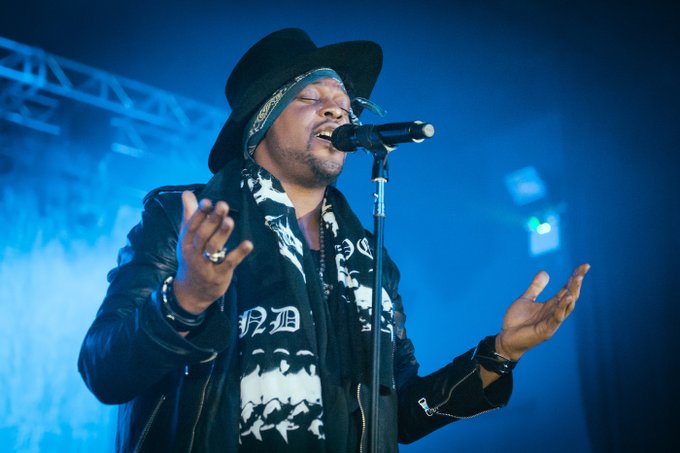
This kind of vacillation regarding his career led D’Angelo, on one hand, to showcase his muscular, seemingly nude body in the video for “Untitled (How Does It Feel),” and then ultimately resent being viewed as a sex symbol.
On stage, when he took off a jacket or layer of clothing to cool down, his expression sometimes showed his frustration with females’ swoons and chants of “Take it off!”

D’Angelo wasn’t the first artist to grapple with artistic integrity versus chasing celebrity for its own sake. In entertainment, it’s not uncommon. Historically, Marvin Gaye, Sly Stone, Miles Davis, and Jimi Hendrix, among others, fought that same battle.
D’Angelo’s personal challenges significantly affected his creative output. Substance addiction, DUIs, encounters with the law, and a car accident that left him critically injured all took an emotional and physical toll. Besides his musical contributions to the projects of others, D’Angelo released only three albums (Brown Sugar, Voodoo, and Black Messiah) over a 20-year period.
During his battle with cancer, in March 2025, D’Angelo suffered yet another blow: the tragic, sudden loss of his ex, singer/songwriter Angie Stone, 63, who died in a car accident. She was the mother of one of D’Angelo’s three children.
It’s a gift to his fans that D’Angelo left behind unreleased music, in various stages of production, that will soon see the light. I’ve heard some of it. Hearing it only underscores our loss.
I’ve always believed that, no matter how untimely it seems, none of us leaves this life until our work is finished. However, when it comes to D’Angelo’s departure, I can’t help but feel the world was robbed.
Steven Ivory, a veteran journalist, essayist, and author, writes and discusses popular culture across various platforms, including the Internet, TV, radio, documentaries, magazines, and newspapers. The Last Man on AOL is at [email protected]
(If You Like/Appreciate This EURweb Story, Please SHARE it!)
MORE NEWS ON EURWEB.COM: Sherri Shepherd Honored with Hollywood Walk of Fame Star | Video
We Publish Breaking News 24/7. Don’t Miss Out! Sign up for our Free daily newsletter HERE