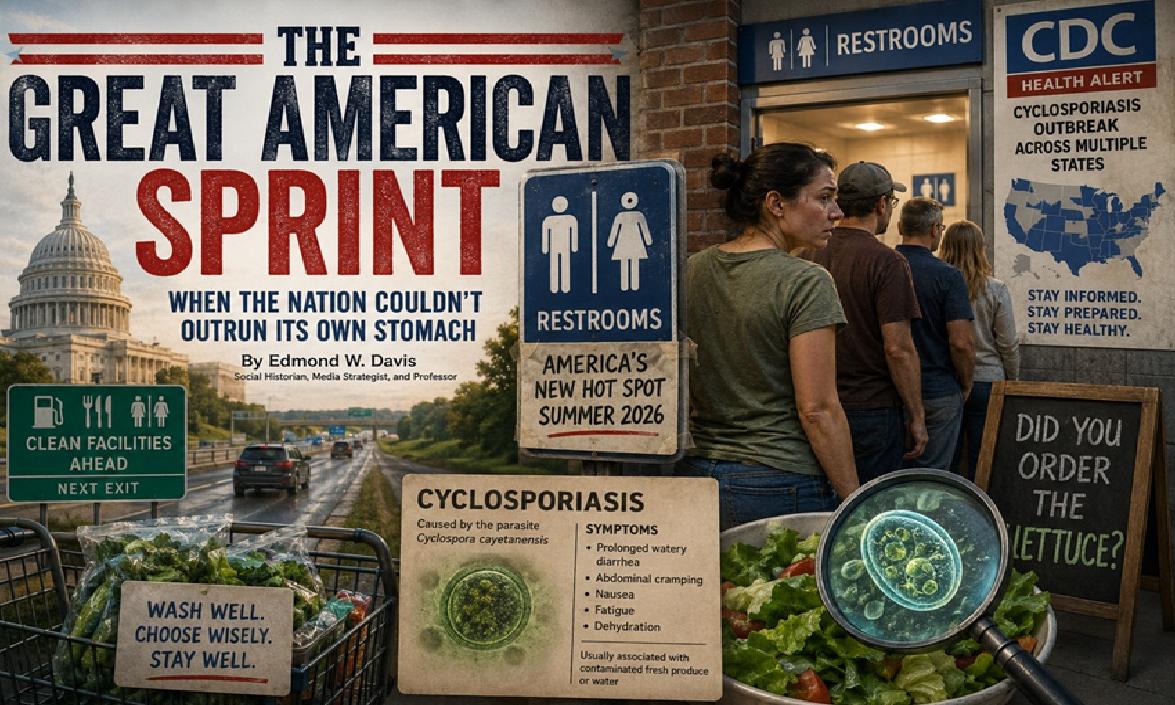
[Disclaimer: Before anyone attempts to politicize this story, let the record show that this is a thoroughly nonpartisan parasite. It has no voter registration card, no campaign donations, and no allegiance to any political party, ideology, or cable news network. It does not care whether you’ve been applauded, criticized, promoted, or cheated. In the spirit of true equality, this microscopic organism appears committed to affecting Americans from every walk of life while scientists follow the data in pursuit of solutions.]
*America has survived wars, recessions, pandemics, political campaigns, and reality television. Yet history has a peculiar sense of humor. In the summer of 2026, one of the nation’s most talked-about public health stories wasn’t found on Wall Street, Capitol Hill, or in the Hood—it was found in the nearest restroom.
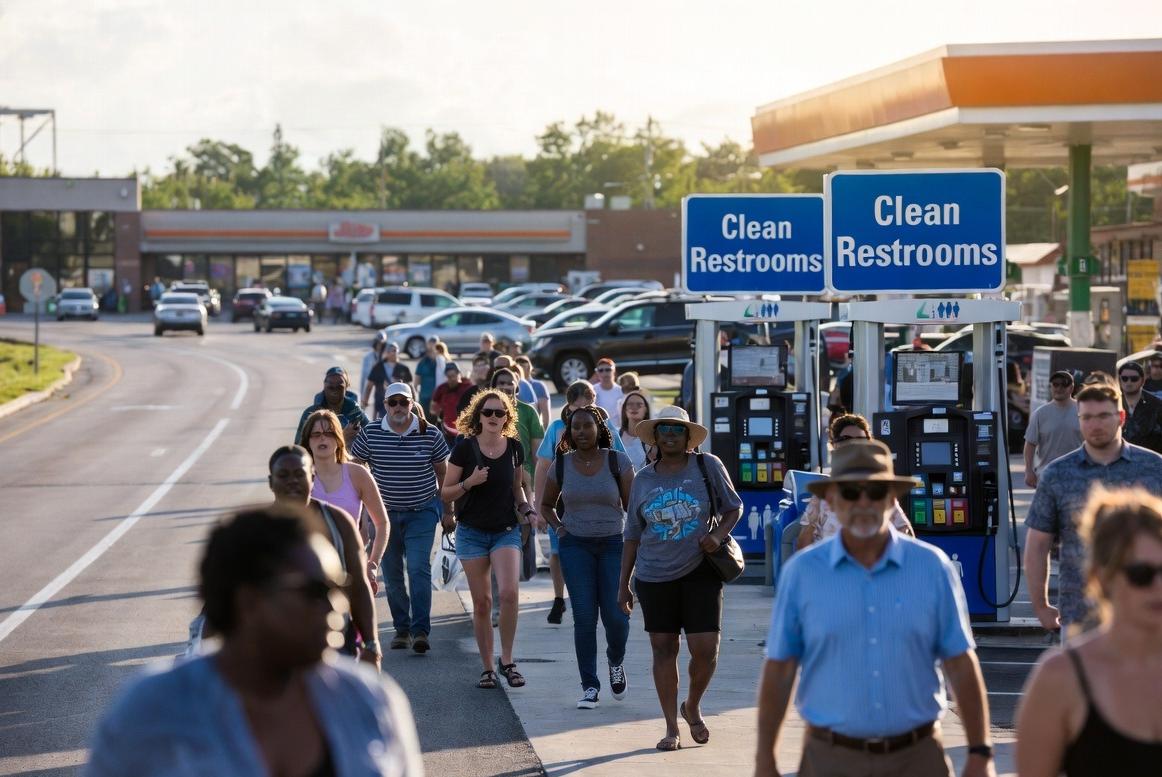
If future historians are honest, they may write that America briefly became the world’s most restroom-conscious nation. Grocery shoppers suddenly looked suspiciously at salad greens. Road trips revolved around locating gas stations with clean facilities. Restaurant patrons quietly leaned across tables and asked one another, “Did you order the lettuce?”
Humor aside, the outbreak deserves serious attention because it demonstrates both the importance of public health surveillance and the value of scientific transparency. Before anyone rushes to social media to announce the arrival of “COVID’s distant cousin,” let’s pause.
Public health officials at the CDC are not suggesting that cyclosporiasis is another COVID-19. The illness is not airborne, it does not spread easily from person to person, and it is generally linked to contaminated food or water rather than casual contact between individuals. Still, health experts are paying close attention because of the unusually large number of reported illnesses across the country. No one wants this to escalate into another national public health disruption. While there is no evidence that it will approach the scale of COVID-19, outbreaks of this size remind us how interconnected America’s food system has become and how quickly contamination can spread across state lines.
Scroll to continue reading








According to the Centers for Disease Control and Prevention, the United States is experiencing a widespread outbreak of cyclosporiasis, an intestinal illness caused by the microscopic parasite Cyclospora cayetanensis. The illness commonly produces prolonged watery diarrhea, abdominal cramping, nausea, fatigue, and dehydration if left untreated. The parasite is generally associated with contaminated fresh produce or water rather than person-to-person transmission.
The facts tell an important story.
As of July 13, 2026, federal health officials reported 1,645 laboratory-confirmed cases across 34 states, 141 hospitalizations, and more than 5,100 additional illnesses under investigation. Fortunately, no deaths have been reported.
The outbreak has now become one of the most significant Cyclospora investigations in recent years.
States Reporting Significant Activity
Health officials have identified notable activity in:
- Michigan
- Ohio
- Kentucky
- West Virginia
- Illinois
- New York
- New Jersey
- North Carolina
- Texas
- Florida
- Connecticut
- Georgia
- Pennsylvania
- Alaska
- Colorado
- Louisiana
- California
- Arizona
Michigan remains the epicenter of the outbreak, reporting case numbers far above its historical annual average. Significant activity has also been documented throughout the Midwest, Northeast, South, and portions of the Western United States.
According to Reuters, medical investigators from the Centers for Disease Control and Prevention, the United States Food and Drug Administration, and state health departments continue tracing possible food sources. Current evidence points toward leafy greens and packaged salad products, although investigators have not yet identified a single farm, grower, distributor, or supplier responsible for the outbreak. I need to use the restroom.
As a social historian, I cannot ignore the irony.
The nation that invented the smartphone, artificial intelligence, same-day delivery, reusable rockets, and self-driving vehicles suddenly found itself humbled by a parasite so small that it requires a microscope to see. Americans became experts in restroom logistics. Navigation apps no longer measured the shortest route. They measured the quickest exit. Travelers became amateur facility inspectors. Family road trips suddenly included discussions that no travel brochure ever anticipated.
One can almost imagine the lettuce issuing a public statement:
“We were intended to improve your diet, not your sprint time.”
Has It Impacted Any Famous People?
At the time of publication, no major celebrity, professional athlete, elected official, or nationally known public figure has publicly reported being infected during the current outbreak. This microscopic parasite appears to be an equal-opportunity offender.
It does not care whether you are a trillionaire, an Uber driver, a college professor, a social media influencer, a homeless person, or a former professional dancer.
In perhaps the most democratic act occurring in America today, the parasite has shown no evidence of discrimination whatsoever. Is this a parasite’s gift to the United States for its 250th birthday?
The All-American “Wipe Out”
Which brings me to a question historians may someday ask:
Who will introduce America to the All-American “Wipe Out”?
I know. I had to go there. But in all seriousness, outbreaks like this remind us that even a technologically advanced society remains vulnerable to some very old-fashioned biological problems.
The United States has artificial intelligence, billion-dollar satellites, quantum computing initiatives, and next-day delivery. Yet in the summer of 2026, thousands of Americans found themselves planning their day around the nearest restroom. That is not a political statement. That is a plumbing statement.
Foods Under Investigation (FDA-approved list)
Federal and state investigators have not identified a single source. However, current investigations and previous Cyclospora outbreaks have repeatedly focused on:
- Lettuce
- Bagged salad mixes
- Leafy greens
- Cilantro
- Basil
- Cucumbers
- Green onions
- Raspberries
- Blackberries
- Fresh-cut vegetables
Investigators currently believe leafy greens and packaged salads are among the most likely sources involved in the present outbreak.
What Health Officials Recommend
The Centers for Disease Control and Prevention, the Food and Drug Administration, and state health departments recommend the following precautions:
Lettuce and Leafy Greens
- Rinse thoroughly under running water.
- Remove damaged outer leaves.
- Refrigerate promptly.
- Consider cooking produce when practical because heat may eliminate contamination risks.
Berries and Fresh Fruit
- Wash thoroughly before consumption.
- Discard bruised or damaged fruit.
- Refrigerate after cleaning.
Fresh Herbs
- Rinse carefully under running water.
- Dry using clean paper towels.
- Store refrigerated until use.
General Produce Safety
- Wash hands before handling food.
- Clean cutting boards and preparation surfaces.
- Separate produce from raw meat products.
- Seek medical attention for prolonged diarrhea, dehydration, or worsening symptoms.
Yet behind the laughter stands an important lesson.
Public health rarely receives applause when everything works as intended. Disease surveillance laboratories, epidemiologists, food inspectors, researchers, and state health departments quietly perform work that most Americans never notice—until an outbreak occurs. Their investigations protect millions of people every year.
The Book of Proverbs reminds us:
“The prudent see danger and take refuge, but the simple keep going and pay the penalty.”
— Proverbs 27:12 (NIV)
That ancient wisdom describes modern public health remarkably well.
Wisdom is not panic. Wisdom is preparation.
Likewise, the Apostle Paul wrote:
“Do you not know that your bodies are temples of the Holy Spirit… Therefore honor God with your bodies.”
— 1 Corinthians 6:19–20 (NIV)
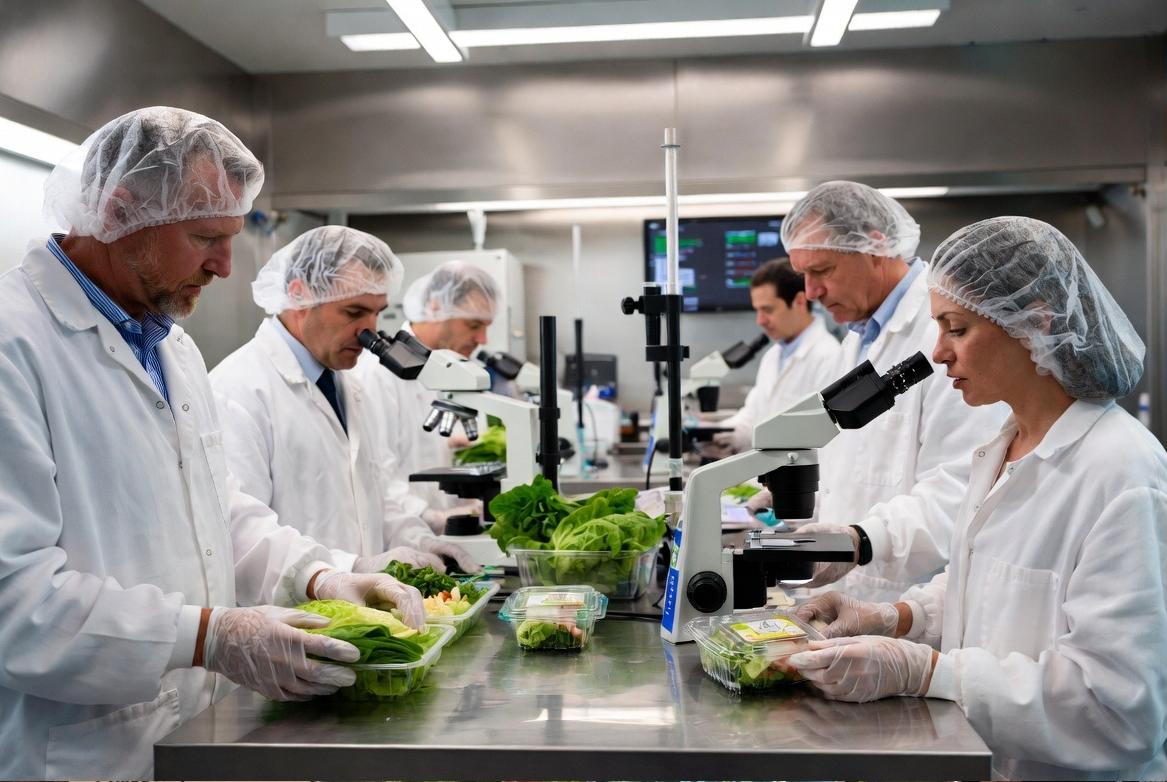
Stewardship includes caring for our health, practicing good hygiene, preparing food safely, and respecting the scientific work that protects our communities.
History repeatedly demonstrates that some of civilization’s greatest achievements are often invisible.
Clean drinking water. Food inspections. Disease surveillance. Laboratory science. These innovations have saved more lives than many of history’s most celebrated inventions. The uncomfortable reality is that nature occasionally reminds humanity who remains in charge. Parasites do not watch cable news. They do not vote. They do not attend political rallies. They do not care about polling numbers. They simply exploit opportunity.
And somewhere, perhaps in a refrigerator across America, a head of lettuce is quietly saying:
“I was trying to help lower your cholesterol. This situation escalated quickly.”
Perhaps future history books will summarize this unusual chapter with one unforgettable sentence:
“In the summer of 2026, America briefly learned that even a superpower can be humbled by a salad.”
As I exit the restroom, history will remember more than the laughter. It will remember whether we valued facts over speculation, cooperation over confusion, and public health over complacency and fake loyalty. Sometimes the smallest lessons leave the biggest impression.’
Reader Resources & Primary Sources
• Centers for Disease Control and Prevention – Cyclosporiasis Surveillance
https://www.cdc.gov/cyclosporiasis/php/surveillance/
• Reuters – FDA Examines Produce Items in U.S. Cyclosporiasis Outbreak
https://www.reuters.com
• CIDRAP – What We Truly Know About the U.S. Cyclospora Outbreak
https://www.cidrap.umn.edu
• Business Insider – Outbreak Map and State Data
https://www.businessinsider.com
• Wall Street Journal – Investigation into Lettuce and Salad Greens
https://www.wsj.com
• Verywell Health – Produce Guidance and Prevention Tips
https://www.verywellhealth.com
The data cited in this article reflects publicly available information from federal and state health agencies as of July 15, 2026.

Edmond W. Davis is a social historian, journalist, professor, and documentary host. Davis is the founder of the National HBCU Black Wall Street Career Fest. This native of Philadelphia, PA, his wife, and his son currently live in the Little Rock, Arkansas, area. Davis is committed to cultural empowerment and educational equity through storytelling and civic engagement. In 2026, Davis was a grand marshal at the 38th Annual African American History Month Celebration Parade, the largest in the U.S. during Black History Month.
(If You Like/Appreciate This EURweb Story, Please SHARE it!)
RELATED NEWS ON EURWEB.COM: Taco Bell Pulls Fresh Ingredients as Human Feces-Linked Cyclospora Outbreak Sickens Thousands
We Publish Breaking News 24/7. Don’t Miss Out! Sign up for our Free daily newsletter HERE.