*In an era where virality can feel manufactured, Ben Reilly’s rise hits different.
Before the buzz, before the streams, before the growing recognition, he was bartending at a burger spot — working, observing, and quietly building something bigger.
What changed everything was a decision to post a track called “Maytag (Tax Free)” online. What followed was a moment that pushed him into a new lane almost overnight.
“Music changed my life drastically,” Reilly said. “I always practiced my craft. But when I posted ‘Maytag,’ it just left Earth. It went crazy.”

At first listen, “Maytag” feels like a clever flex — built on layered laundry metaphors and rapid-fire delivery. But underneath that is a deeper intention rooted in hip-hop tradition.
“As rappers, one thing we do is talk about how good we rap,” he said. “The whole point of ‘Maytag’ is basically saying other rappers are washed.”
What makes the record stick isn’t just the wordplay — it’s the urgency.
“I think it has a real sense of urgency,” he said. “It’s like the song is saying, ‘Listen to me right now.’”
That urgency mirrors his journey. Born in New York and shaped by time spent moving between cities before settling in Atlanta, Reilly carries a dual perspective that shows up in both his sound and his storytelling.
Atlanta gave him space. New York gave him pace.
“It’s Black — super Black,” he said of Atlanta. “I really rock with the South.”
But his foundation was built long before the music started reaching wider audiences. Reilly credits his mother for grounding him in hip-hop’s roots.
“My mom put me on a lot of old-school hip hop,” he said. “She really made sure I understood the history of it.”
That awareness informs how he sees his role as an artist today — not just as an entertainer, but as a voice.
“There’s a lot artists should be talking about,” he said, referencing everything from economic instability to global conflict. “Hip-hop was built on speaking knowledge into music.”
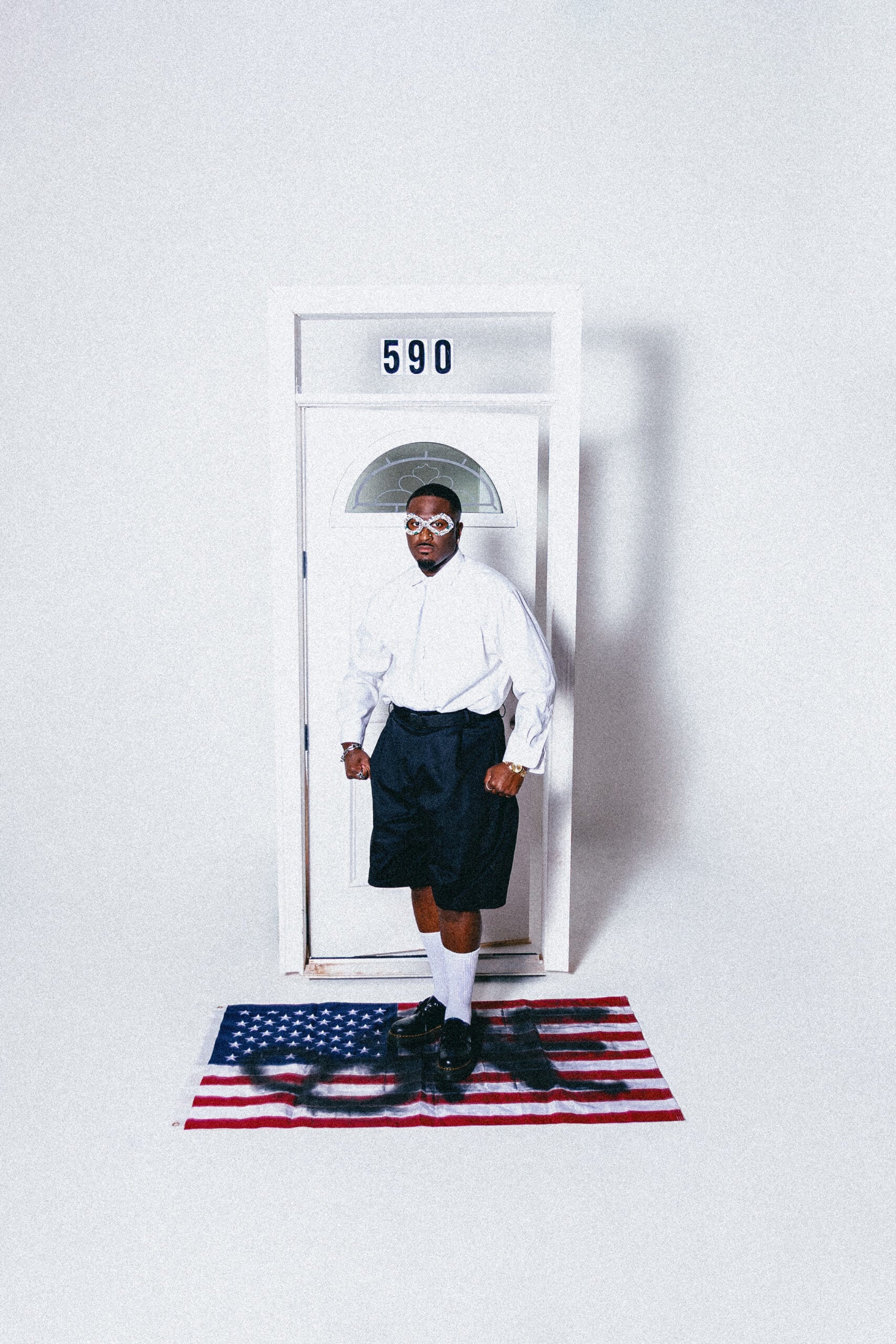
Still, Reilly isn’t interested in being boxed in.
“We’re human,” he said. “Sometimes you want to talk about the world and sometimes you just want to vibe.”
That duality — message and escape — is part of what makes his work resonate. It’s also reflected in his creative influences, which stretch beyond music.
A lifelong comic book fan, Reilly sees parallels between visual storytelling and how he constructs songs.
“When you’re drawing, the details fill out the image,” he said. “With music, it’s the same thing.”
That attention to detail shows up in projects like Freelance and Freelance: Charlie, where themes of freedom, identity, and transformation are woven into both sound and structure. Inspired in part by his observations during the pandemic, he built layered concepts that reward listeners who pay attention.
At its core, his message is simple — and necessary.
“I want people to understand that even when you feel weak, that’s your superpower,” he said.
As the industry continues to chase formulas, Reilly is leaning into individuality.

“Don’t be afraid to be a little weird,” he said. “Don’t be afraid to color outside the lines.”
That mindset may be the real story behind his momentum. Because while the internet may have introduced Ben Reilly to a wider audience, it’s his perspective — grounded, observant, and unfiltered — that’s keeping people locked in.
And in a culture that often rewards sameness, that might be his biggest advantage.
From the column: Black in the Green Room By Keith L. Underwood – Follow: @mrkeithlunderwood (IG), @blackinthegreenroom (IG), YouTube, TikTok, and Facebook

(If You Like/Appreciate This EURweb Story, Please SHARE it!)
MORE NEWS ON EURWEB.COM: Deon Cole on Hosting the NAACP Image Awards: ‘Nobody’s Greater Than Anybody Else’
We Publish Breaking News 24/7. Don’t Miss Out! Sign up for our Free daily newsletter HERE.