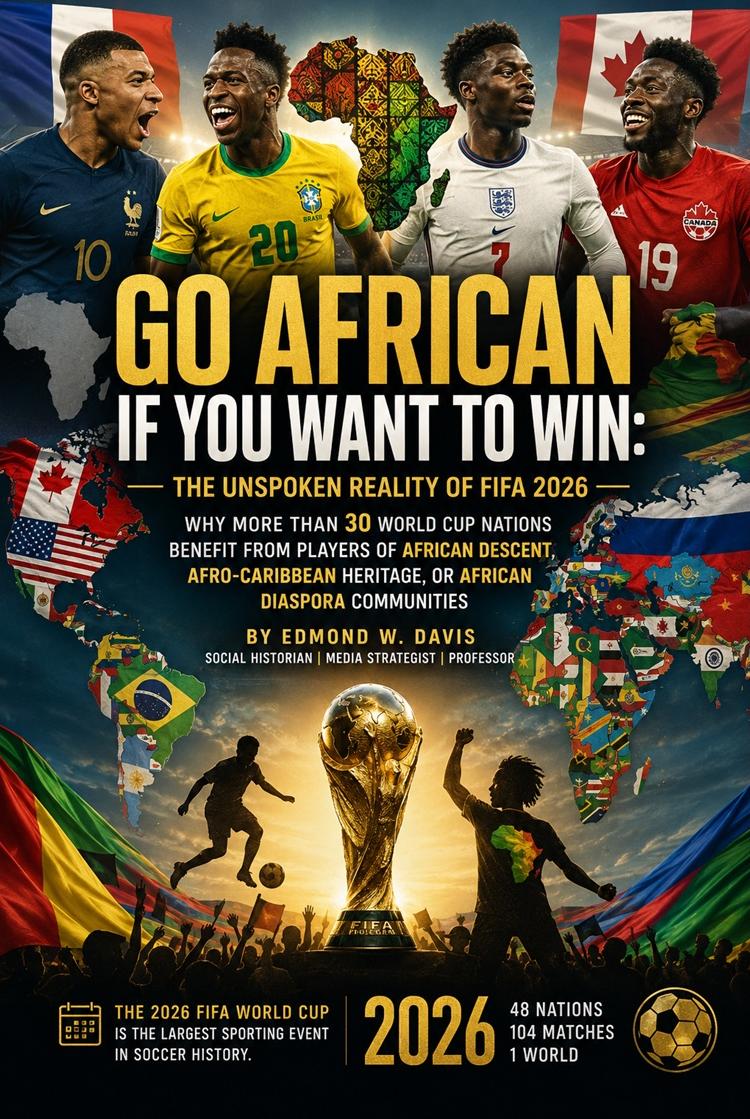
*The 2026 FIFA World Cup is the largest sporting event in soccer history. Having said that, over 62% of all 48 teams have players of African descent. This is nothing new, yet its being observed on a scale unlike ever before. Good job, FIFA organizers, leaders, and teams. After the FIFA World Cup crowns its champion, perhaps we can resume with why Africa is the only continent that has not hosted any Summer Olympic Games ever!
With 48 nations, 104 matches, and 1,248 players representing countries across six continents, the tournament is more than a competition for a trophy. It is a global classroom. It is a lesson in migration, commerce, nationality, economics, culture, and identity. Most importantly, it is a reminder that modern sports often reflect the broader movements of humanity itself.
As I have watched FIFA 2026 unfold, one observation continues to emerge: many of the tournament’s most competitive teams benefit from players of African descent, Afro-Caribbean heritage, or African diaspora backgrounds. Okay Africa provides the world with a look into how Africa has impacted the sport of soccer and beyond. This is not a criticism. It is an observation.
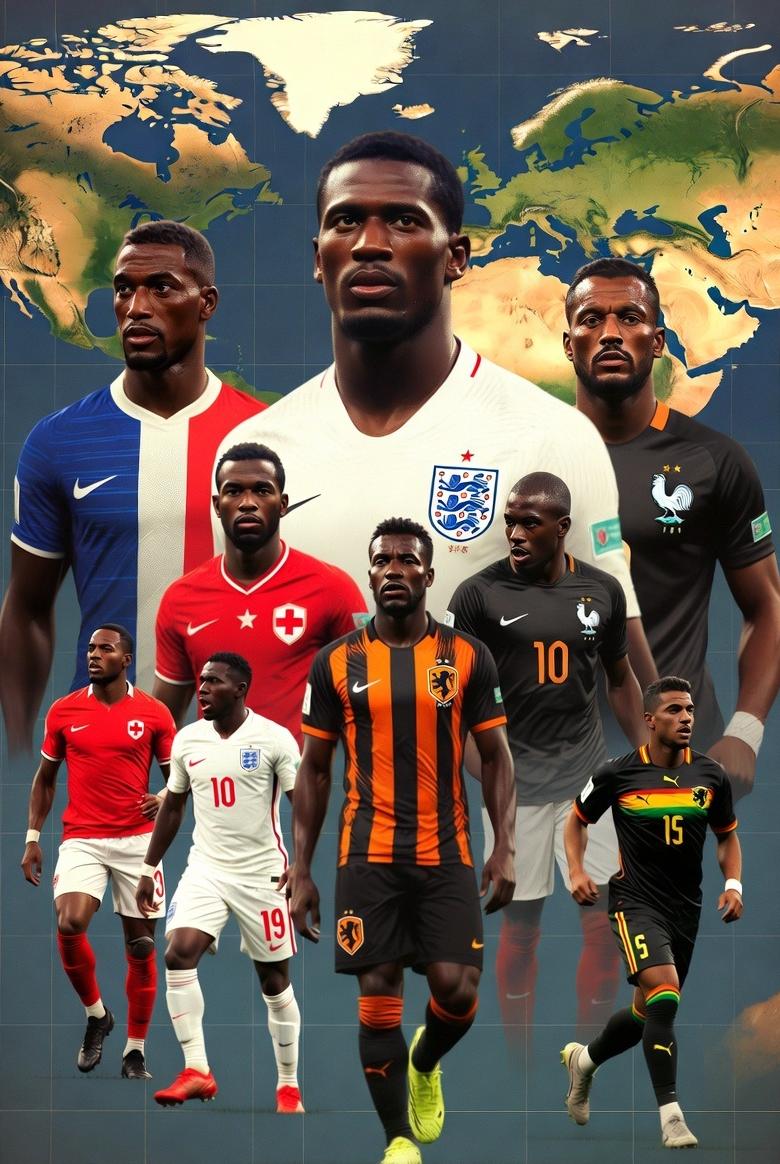
As reported by yahoo sports, from France to England, Belgium to Portugal, Canada to the United States, and from Brazil to the Netherlands, the fingerprints of Africa and its global diaspora are visible throughout modern football.
Scroll to continue reading






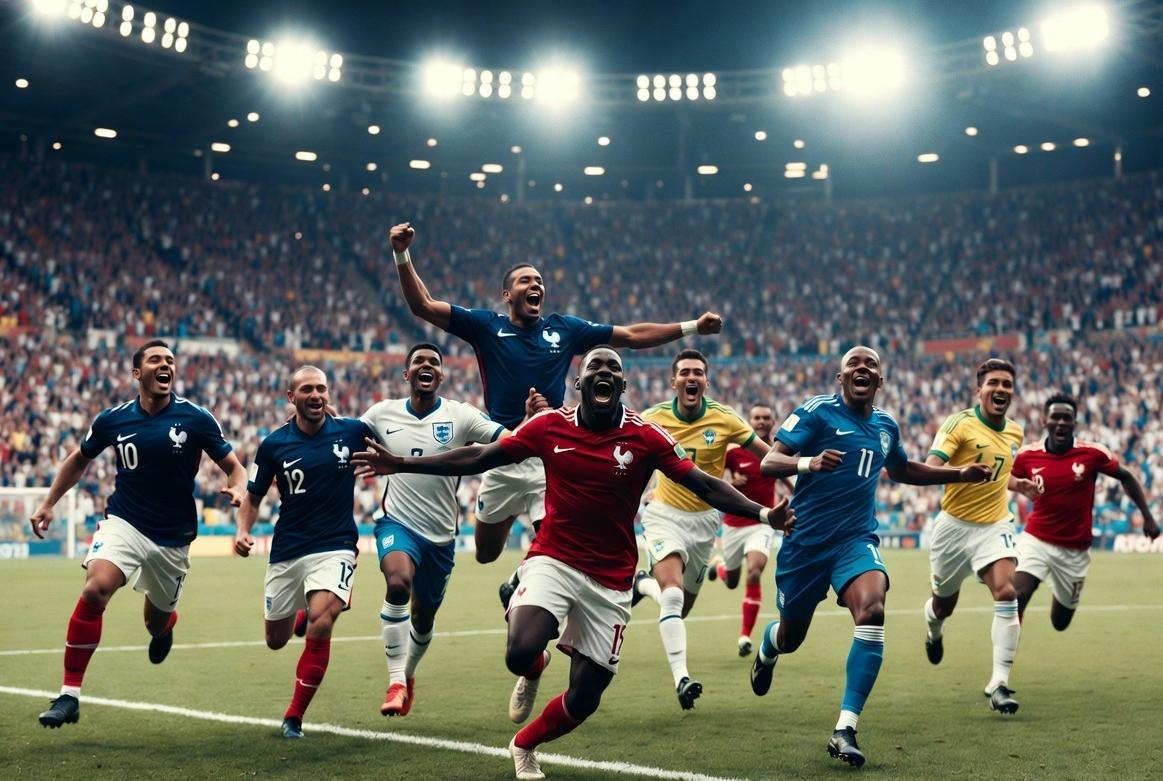
The numbers alone tell part of the story. FIFA’s expanded World Cup includes 48 nations and more than one thousand athletes. While FIFA does not classify players by race or ancestry, a review of publicly available player biographies reveals that a significant number of participating nations include players whose family histories connect to Africa, the Caribbean, or African diaspora communities throughout Europe and the Americas. France: 21 of the 26 squad members have African roots, including key talents like Kylian Mbappé and Ousmane Dembélé.
- England: 15 players of African descent, such as Bukayo Saka and Noni Madueke.
- Netherlands: 14 players of African descent.
- Switzerland: 11 players of African descent.
Simultaneously, the expansion to 48 teams has allowed a record-setting 10 African nations to qualify directly for the tournament. The tournament has already seen these African squads deliver impressive, competitive performances and historic upsets against legacy European powerhouses. The World Cup has become a microcosm of humanity. Nationality and ancestry are no longer the same thing.
A player may represent France while his parents were born in Senegal, Mali, Algeria, or Cameroon. A Canadian player may trace his roots to Jamaica, Haiti, Ghana, or Nigeria. An English player may carry Caribbean ancestry. A Dutch player may have family and economic/business ties to Suriname, Curaçao, or Ghana.
The jersey says one thing. The family story often says another thing. That reality reflects the world we now live in. Better yet, sports have given us a mirror that we’ve not stopped to look into. Are we ready for our close-up, Mr. DeMille? Migration has reshaped nations. Globalization has reshaped identities. Sports have simply made those realities visible.
Consider one of football’s most fascinating stories. Brothers Nico Williams and Iñaki Williams represent different national teams. One plays for Spain. The other plays for Ghana. Same family. Different flags. Their story demonstrates how citizenship, heritage, opportunity, and personal choice intersect in modern sports.
The World Cup teaches us that ethnicity, nationality, geography, and culture are not interchangeable concepts. It also teaches another lesson: talent follows opportunity. Look at what’s going on in the realm of HBCUs and PWIs regarding the NIL tradewars, but I digress.
Historically, African people and their immediate descendants have contributed significantly to global culture, music, art, science, labor, entrepreneurship, and athletics. Yet sports often become the most visible stage because athletic performance is one of the few areas where achievement is measured in real time before a worldwide audience. I say ‘immediate’ in terms of the last two millennia, as all humanity is African.
A goal is a goal. A sprint is a sprint. A victory is a victory. The scoreboard does not care about stereotypes. However, the economics behind sports deserve attention.
The global football industry generates billions of dollars annually. Major clubs recruit talent from every corner of the globe. Television networks, sponsors, advertisers, betting companies, apparel manufacturers, and social media platforms all profit from athletic performance. What we are seeking is Europe’s multicultural mosaics dating back to the slave trade, legal human piracy, and the Berlin Conference.
The question becomes: who owns the systems that profit from the talent?
This is not solely an African question.
It is a human question.
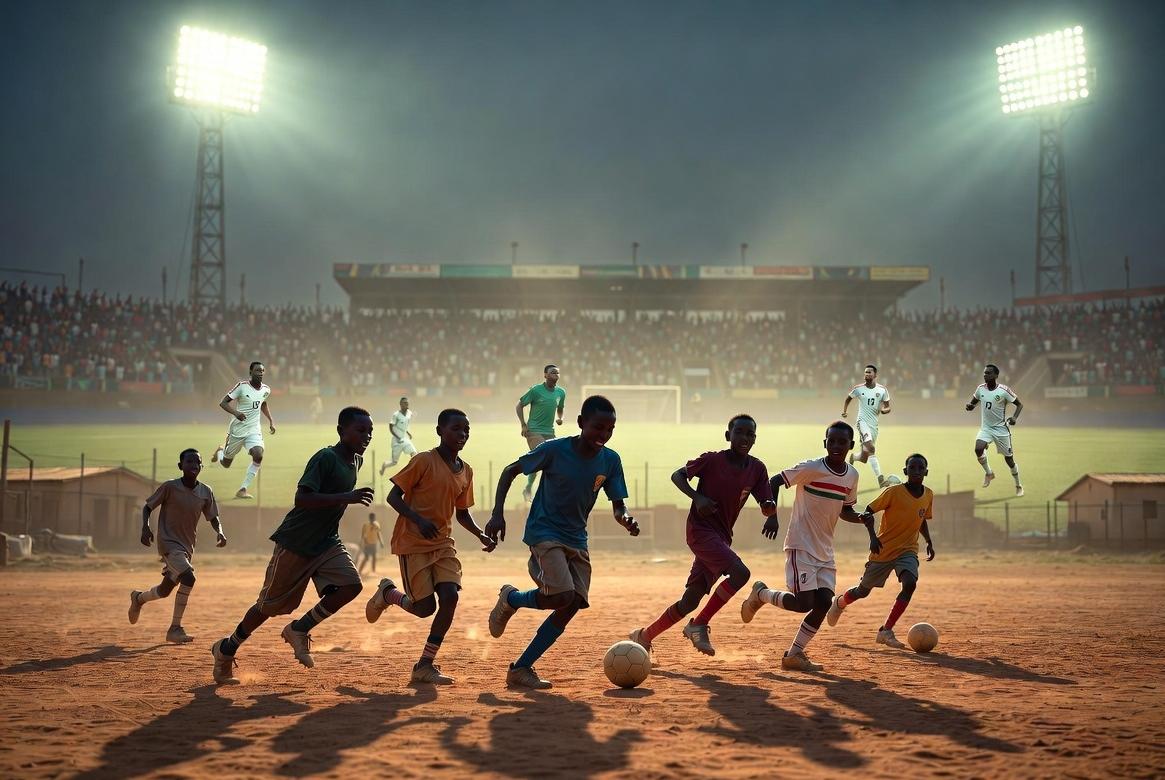
Throughout history, regions rich in natural resources have often found themselves supplying value to wealthier markets elsewhere. Africa has supplied gold, diamonds, oil, cocoa, cobalt, rare earth minerals, and labor to the global economy. Today, it also supplies athletic talent, cultural influence, music, fashion, and entertainment.
The challenge is ensuring that participation leads to ownership.
Celebration should lead to investment.
Visibility should lead to opportunity.
Talent should lead to institution-building.
Otherwise, nations risk becoming exporters of human potential without fully sharing in the wealth that potential creates.
Sports provides a useful mirror for understanding these larger realities.
The same tournament that showcases African-descended players also reveals broader patterns of migration throughout humanity.
Latin America has influenced North America.
Asia has influenced Europe.
Europe has influenced Africa.
Africa has influenced virtually every continent through migration, trade, culture, and history.
The World Cup reminds us that humanity is interconnected.
No nation exists in isolation.
No culture develops alone.
No successful society is built entirely by itself.
Scripture echoes this truth.
Acts 17:26 declares:
“From one man He made all the nations, that they should inhabit the whole earth.”
This verse reminds us that despite our flags, passports, languages, and political boundaries, humanity shares a common origin.
Likewise, Galatians 3:28 teaches:
“There is neither Jew nor Gentile… for you are all one in Christ Jesus.”
While sports celebrates competition, Scripture reminds us of our shared humanity.
The World Cup presents both realities simultaneously.
We cheer for our nations.
Yet we witness our interconnectedness.
That may be FIFA 2026’s greatest lesson.
The tournament demonstrates that diversity is not an exception to modern society. It is increasingly its defining feature.
The old image of national teams as ethnically uniform groups has largely disappeared. Today’s rosters often reflect generations of migration, colonial history, economic opportunity, educational mobility, and family decisions made across multiple continents.
The result is a tournament that looks more like the world itself.
France can reflect Africa and Europe.
Canada can reflect the Caribbean and North America.
Brazil can reflect Indigenous, African, and European heritage.
The United States can reflect nearly every corner of the globe.
In many ways, FIFA 2026 is not merely a soccer tournament.
It is a living map of humanity.
The competition reminds us that people move.
Families adapt.
Cultures merge.
Nations evolve.
And talent knows no borders.
Whether one views the World Cup through the lens of sports, economics, history, migration, or faith, one reality remains undeniable:
The modern game has become profoundly shaped by Africa, its descendants, and its diaspora.
And as nations continue competing for championships, influence, and global prestige, one lesson becomes increasingly clear:
If you want to understand where football is going, you must understand the people helping drive it there.
That story begins not with a flag.
It begins with humanity.
Credible Sources
- FIFA World Cup 2026 Official Tournament Information
- UNESCO – General History of Africa Project
- Brookings Institution – Africa’s Growing Global Economic Importance
- United Nations – International Migration Data Portal
- World Bank – Africa Development Overview

Edmond W. Davis is a social historian, journalist, professor, and documentary host. Davis is the founder of the National HBCU Black Wall Street Career Fest. This native of Philadelphia, PA, his wife, and his son currently live in the Little Rock, Arkansas, area. Davis is committed to cultural empowerment and educational equity through storytelling and civic engagement. In 2026, Davis was a grand marshal at the 38th Annual African American History Month Celebration Parade, the largest in the U.S. during Black History Month.
(If You Like/Appreciate This EURweb Story, Please SHARE it!)
MORE NEWS ON EURWEB.COM: Inglewood’s Wood Cup Brings World Cup Fever to Local Fans
We Publish Breaking News 24/7. Don’t Miss Out! Sign up for our Free daily newsletter HERE.