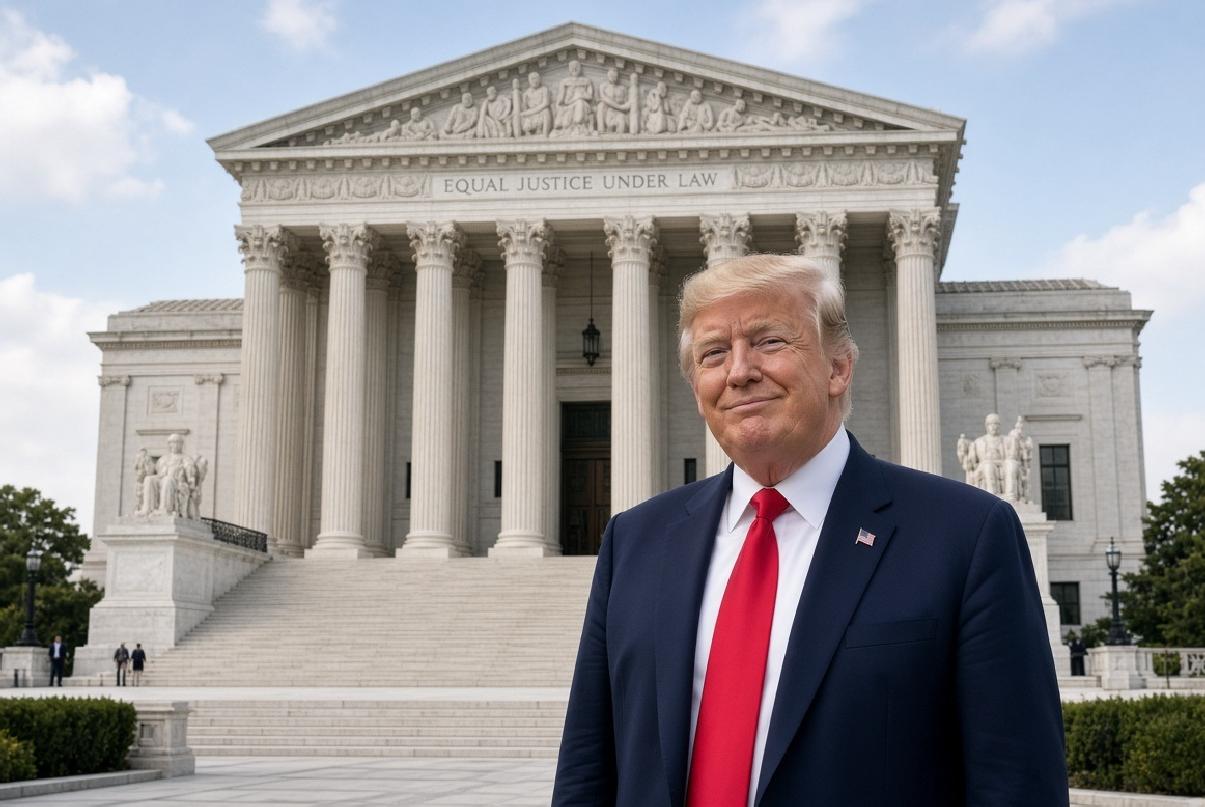
*The U.S. Supreme Court handed President Donald Trump a major election-law victory Monday, clearing a legal obstacle to his administration’s attempted overhaul of mail-in voting just months before the November midterms — even as Black voting-rights organizations continue fighting the president’s order in court.
The justices granted the administration’s emergency request to stay a lower-court ruling that had blocked key portions of Trump’s March executive order. But the distinction is important: the Supreme Court did not decide that Trump’s mail-voting restrictions are constitutional or that every step taken to implement them will be lawful.
In its unsigned decision in Trump v. California, the Supreme Court concluded that the states challenging the order were unlikely to establish standing because the provisions at issue primarily direct federal officials rather than regulate states themselves. That procedural victory could nevertheless have real consequences as election officials prepare for November.
What Trump’s Mail-Voting Order Would Change
Trump’s executive order directs the Department of Homeland Security to compile lists of U.S. citizens residing in each state and make those lists available before federal elections. It also calls for federal investigation and prosecution of state and local officials who issue federal ballots to people who are not eligible to vote.
Scroll to continue reading







Another provision directs the U.S. Postal Service to establish new requirements for mailed ballots, including federal markings and barcodes on ballot envelopes and restrictions on transmitting ballots unless voters are enrolled in a system contemplated by the order.
The administration says the changes are intended to strengthen election integrity.
Opponents argue that Trump is attempting to exercise authority over elections that the Constitution gives principally to states, subject to congressional power over federal election rules. Twenty-three Democratic-led states and the District of Columbia challenged the order.
The Court’s majority did not settle that constitutional dispute. Instead, it found that the federal government was likely to suffer irreparable harm if the injunction remained in place while the litigation continued.
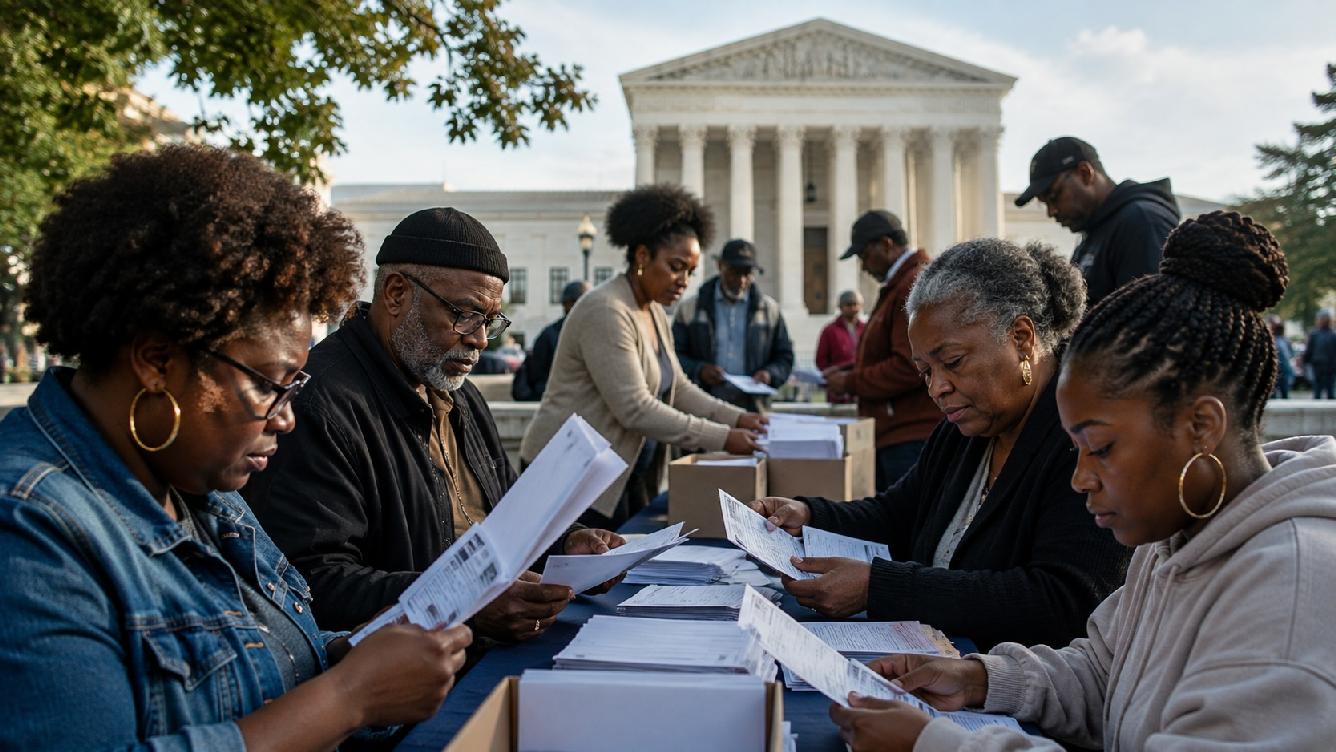
Black Voting Groups Are Already in the Fight
For Black voters, the story has another important dimension: major Black civil-rights organizations were fighting Trump’s order well before Monday’s Supreme Court ruling.
The NAACP, Black Voters Matter, Common Cause and the Lawyers’ Committee for Civil Rights Under Law filed a separate federal lawsuit in April seeking to stop the executive order.
NAACP President and CEO Derrick Johnson argued at the time that mail voting has long served Americans across racial, geographic and economic lines.
“Americans in every corner of our country, rural and urban, Black and white, rich and poor, healthy and infirm, civilian and servicemember, have participated in mail-in voting for decades without issue,” Johnson said.
The groups contend Trump’s order exceeds presidential authority and threatens access to mail voting. Their involvement gives the dispute a direct Black voting-rights dimension without establishing that the new requirements will disproportionately disenfranchise Black voters — an outcome that has not yet been demonstrated.
Three Justices Warn About State Election Power
Justices Sonia Sotomayor, Elena Kagan and Ketanji Brown Jackson dissented.
Jackson focused sharply on the constitutional division of election authority, arguing that state-run elections are a foundational component of the nation’s system of self-government.
The majority, however, stressed the limited nature of Monday’s decision. The Court said allowing the administration to proceed at this stage does not mean every future action implementing Trump’s order will be legal.
That leaves opponents with avenues to keep fighting.
There is also a separate injunction complicating the administration’s plans. Reuters reports that a different order issued by U.S. District Judge Indira Talwani on Aug. 11 blocks nationwide implementation of the Postal Service changes for the November elections. Monday’s Supreme Court ruling did not remove that separate barrier.
November Is Getting Closer
The timing raises the stakes.
The Associated Press reports that some states are less than two weeks from beginning to send mail ballots, while the Postal Service has already developed rules to carry out Trump’s directive if the remaining legal barriers are removed.
That creates an unusual election-year reality: the administration has won an important Supreme Court round, but the rules voters and election officials will ultimately face remain unsettled.
For the NAACP, Black Voters Matter and other organizations challenging Trump’s order, Monday’s decision therefore isn’t the end of the fight.
And for voters preparing to cast ballots by mail, the most consequential question remains unanswered: which of Trump’s proposed restrictions, if any, will actually be operating when voting begins?
(If You Like/Appreciate This EURweb Story, Please SHARE it!)
MORE NEWS ON EURWEB.COM: Trump Walks Out of Kristen Welker/’Meet the Press’ Interview After Heated Election Clash | WATCH
We Publish Breaking News 24/7. Don’t Miss Out! Sign up for our Free daily newsletter HERE.