*We take things for granted until they’re gone. For example, the moment a well-known restaurant announces its planned closure, it instantly becomes more popular than ever, filled with people eager to feed their nostalgia.
When a famous retail chain falls upon hard times and declares it’s soon going out of business, crowds flock to the store.
I remember 2012, when Twinkies disappeared from shelves after Hostess filed for bankruptcy. Suddenly, a nation’s sentimental yearning for a snack long criticized as overly processed surfaced. I was never a Twinkie fan, but after Hostess went out of business, I wanted one. The iconic sponge cake returned a year later, when a new company acquired its manufacturer. People like me, who lamented the Twinkie’s demise, promptly continued not to eat them.
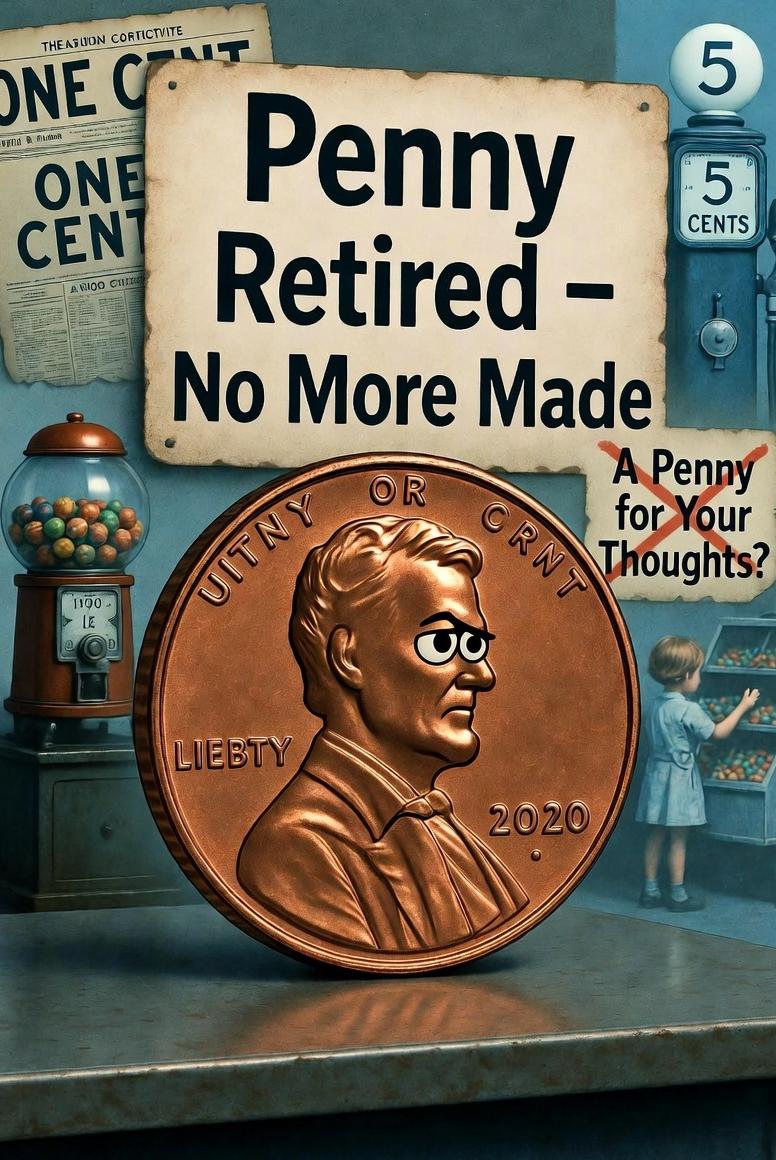
There isn’t the same wave of nostalgia for the penny. After all, for years, there has been lobbying to get rid of it. In 2025, the U.S. Mint announced it would stop producing and circulating the coin, first produced in 1787 and officially circulated in 1793, citing the cost as exceeding its value. The penny is still out there. Those still in circulation are legal tender and can be spent. But the government won’t be releasing any more to the public.
Scroll to continue reading









While the announcement was made last year, the reality is hitting home now: at cash registers across the country, you’ll find posted notices that the penny has been retired, even though merchants still accept it as payment. Imagine how the penny feels about all this: I’m already the smallest denomination in America’s currency system—I mean, I’m a PENNY, damn it—and now I cost too much for y’all to bother making? Gee, thanks, America.
You know it’s over when they start hawking “commemorative” pennies on TV.
It’s quite a chilly out-to-pasture for currency that once meant more. In 1900, at the beginning of the 20thcentury, a single penny equaled 40 cents today. Back then, a newspaper cost a penny. One cent could buy you a farm egg or a postage stamp. A penny could get you a bus ride.
In the mid-sixties of my childhood, I’d strut into the Eighth Street T.G.& Y. around the corner from our home on Oklahoma City’s East Side, armed with a dime, and emerge with a small brown paper bootie of prized penny candy—green Jolly Ranchers, miniature Tootie Rolls, a couple of strands of red licorice, banana candy squares, Dubble Bubble or Bazooka bubble gum (with the tiny comic strip inside the wrapper), and little chewable wax bottles filled with colored sugar liquid.
Or I could put a penny in one of those gumball machines found at gas stations and supermarkets, twist the knob, and out would come candy, gum, or peanuts. Never mind that before you, a million other hands had scooped out the treats, just as you did.
Those were the glory days of the penny. Today, the penny is treated as the party pooper of spare change, regarded more as a nuisance than anything else. You see a penny on the ground, and few will even bother to pick it up.
Society will pay for this heartlessness. For one thing, the price of cerebral contemplation just went up: No more of this “A penny for your thoughts” stuff. That tariff has gone the way of the public phone booth.
Likewise, say adios to “Just my two cents.” You’ll have to fork over more than two beleaguered pennies next time you offer an opinion no one asked for. And consider that future generations will have no idea what a penny is.
If I’m honest, like much of the nation, I’ve long outgrown my need for the penny. It’s just that, for mawkish reasons, I regret seeing it go. I’ve never been on the planet without the penny (or, for that matter, the Twinkie).
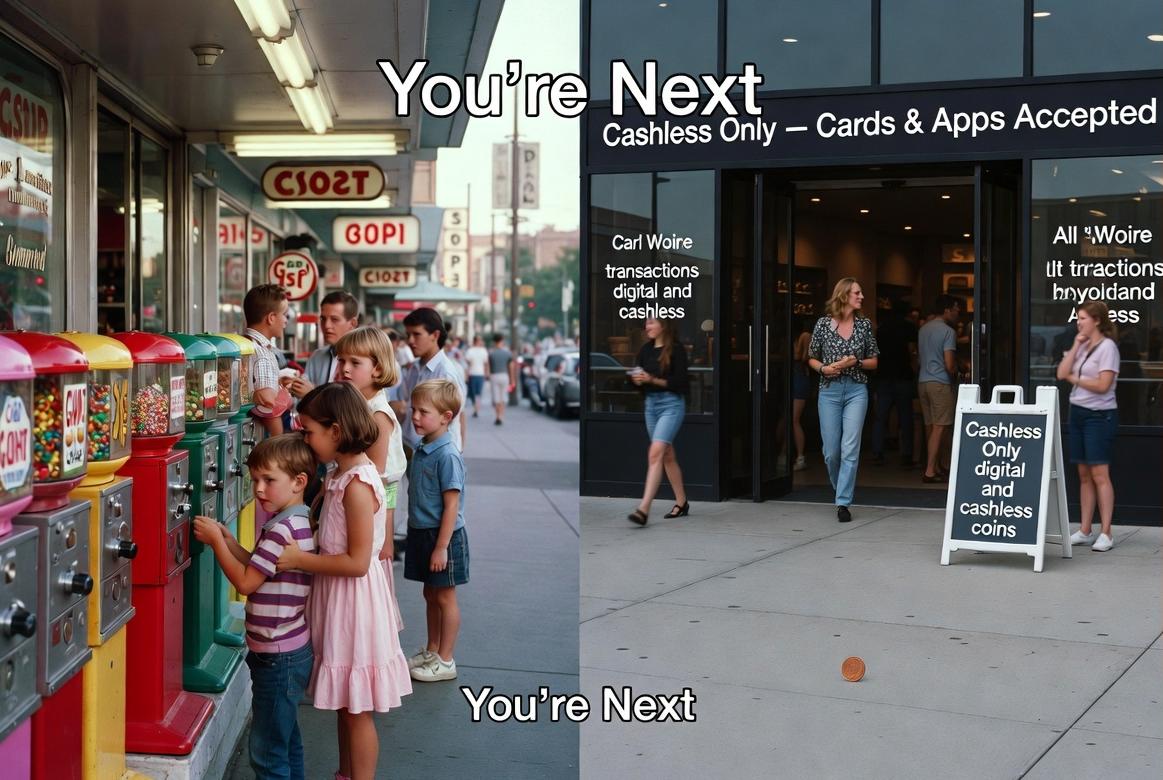
However, the penny could ultimately have the last laugh. In the O’Jays’ classic “For the Love of Money,” that ominous lyric about the dollar bill, sung by Eddie Levert— “For a small piece of paper, it carries a lot of weight”—may be gospel, but not at the L.A. restaurant I visited for lunch one recent weekend. Upon entering, I was greeted by a sign that sent chills down the spine of a cash-is-king guy like me: “We’re cashless.” You can almost hear the penny say to the nickel, “You’re next.”

Steven Ivory, veteran journalist, essayist, and author, writes and discusses popular culture across various platforms, including the Internet, TV, radio, documentaries, magazines, and newspapers. The Last Man on AOL is at [email protected]
(If You Like/Appreciate This EURweb Story, Please SHARE it!)
MORE NEWS ON EURWEB.COM: Florida Lawsuit Against OpenAI Could Test AI Product Liability
We Publish Breaking News 24/7. Don’t Miss Out! Sign up for our Free daily newsletter HERE.