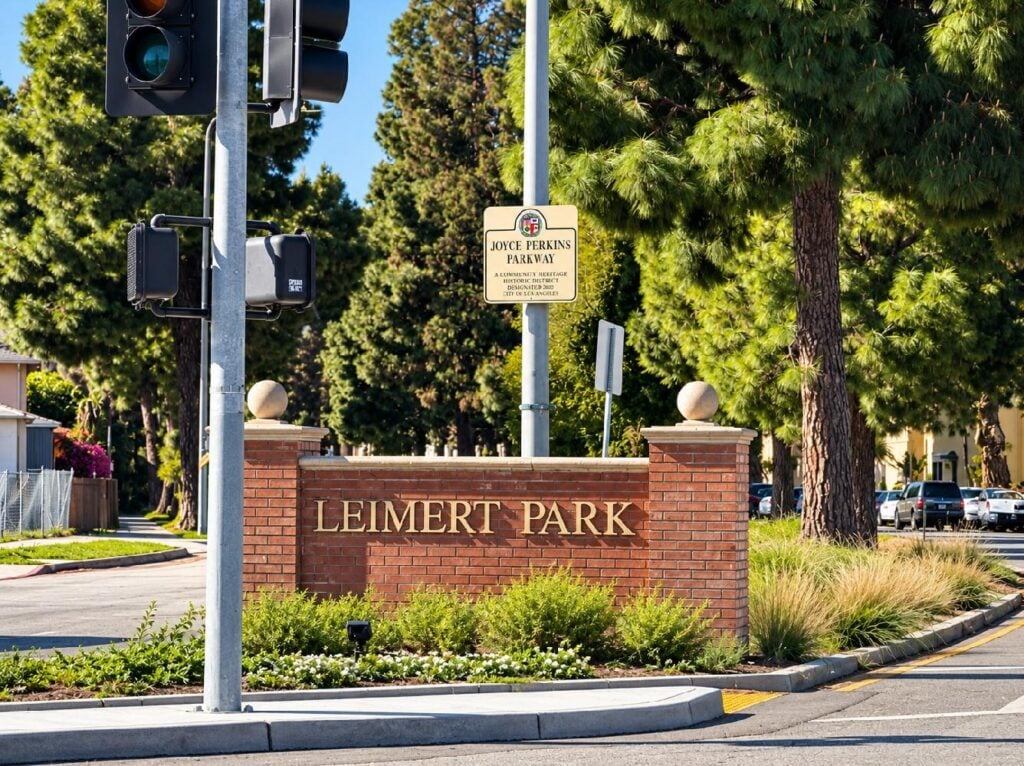
*Leimert Park has long stood as one of Los Angeles’ most important centers of Black culture, business, homeownership and community life. Black-owned businesses, artists, entrepreneurs, homeowners and independent vendors have helped give the neighborhood an identity unlike virtually anywhere else in the city.
That model of African American social and economic success is treasured. It is also increasingly worried over.
That mix of anxiety and racial well-being came to a crashing head when Barrio Athletics, a little-known Latino running and fitness group, announced plans to hold a Sunday 5K run and fitness event in Leimert Park.
Many scratched their heads in puzzlement at the swift and ferocious reaction the group’s announcement ignited. Most Black opponents strongly assured that their objections had nothing to do with the organizers being Latino and everything to do with protocol. Opponents raised questions about permits, community outreach and the potential impact on Black vendors.
But some made no apology for viewing the planned event as another sign that Latinos were pushing Blacks aside in one of Los Angeles’ most historically significant Black enclaves.
Scroll to continue reading









Whatever the motive of the opponents, the flap reopened a much deeper fear among many Black residents: the continuing racial and economic transformation of Leimert Park.
That is the real takeover threat.
The history of that transformation began decades before Barrio Athletics was ever thought of. As development patterns changed across Los Angeles, centrally located neighborhoods that had once been overlooked increasingly attracted investors, developers and higher-income homebuyers.
Leimert Park is a prime example.
Its location, cultural significance and proximity to major employment centers have made it increasingly attractive. New transportation infrastructure and development have added to that appeal.
The result has been a dramatic increase in the value of Leimert Park real estate. Homes that Black families purchased decades ago for comparatively modest prices are now worth hundreds of thousands of dollars more, with many approaching or exceeding $1 million.
For longtime Black homeowners, that appreciation can create substantial generational wealth. But it can also bring pressure.
As property values rise, so can the costs associated with remaining in the neighborhood. Homeowners face increasingly attractive offers to sell valuable property that may have been in their families for generations.
Black business owners face their own pressures.
Leimert Park’s Black entrepreneurs do more than provide goods and services. They create jobs, generate income, support other businesses and preserve the neighborhood’s cultural identity. Losing them would mean losing far more than storefronts.
That is why Black entrepreneurs and community leaders have increasingly emphasized ownership—not simply patronage—as a way to preserve Leimert Park.
The concern is not imaginary.
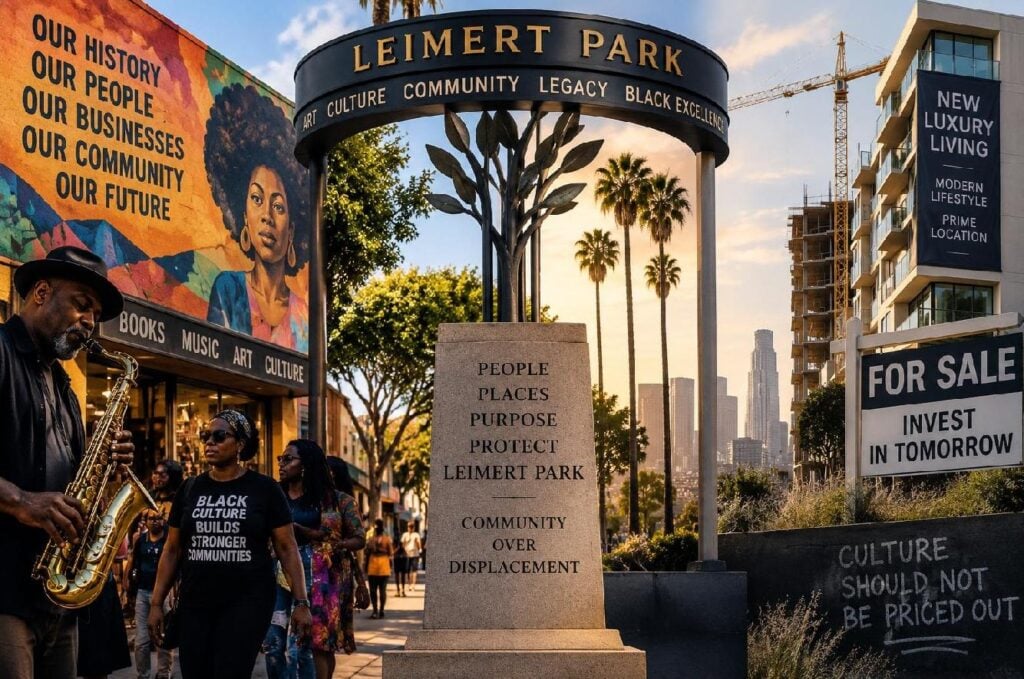
Longtime residents have repeatedly expressed anxiety about investors seeking to purchase homes in the neighborhood and about the possibility that escalating real estate prices will eventually alter Leimert Park’s racial, economic and cultural character.
There is also the critical issue of generational wealth.
Homeownership has historically been one of the principal ways American families build and transfer wealth. For Black families, who for generations faced discriminatory housing policies and barriers to property ownership, preserving that ownership carries particular significance.
A house in Leimert Park isn’t simply a house.
For some families, it represents decades of sacrifice, stability and the possibility of transferring wealth to children and grandchildren.
The same is true of Black commercial ownership. When the buildings themselves remain in community hands, Black businesses have a far better chance of surviving changes in rents, development and neighborhood demographics.
That is where the real battle over Leimert Park lies.
The social and cultural bonds that unite generations of Black residents can be shattered when longtime residents and businesses can no longer afford to remain.
Barrio Athletics did not create that threat.
A running group holding a 5K in Leimert Park was never going to determine who ultimately owns the homes, businesses and commercial property in this historic Black community.
But the controversy touched something very real.
It stirred the fear that a community built and sustained by generations of Black Angelenos could someday retain the name Leimert Park while losing much of what made Leimert Park culturally significant in the first place.
That is why the 5K became the flashpoint it did.
The argument over one event should not distract from the much larger question facing Black Leimert Park:
Who will own it tomorrow?
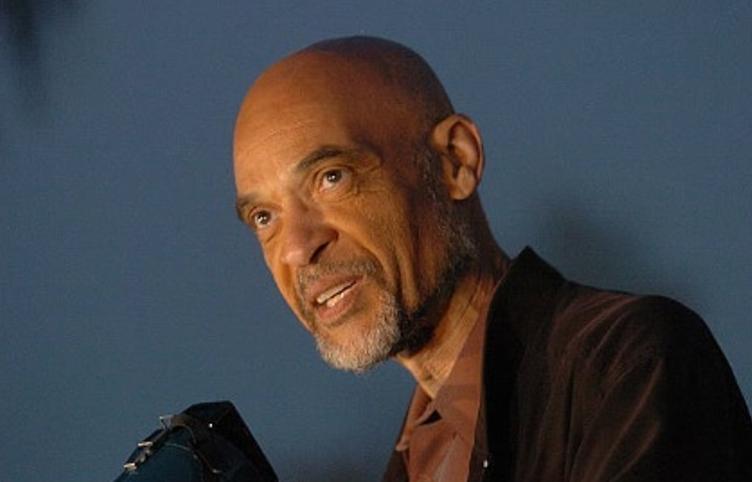
Earl Ofari Hutchinson is an author and political analyst. His forthcoming book is The Garbaging of America (Amazon ebook and Middle Passage Press)
(If You Like/Appreciate This EURweb Story, Please SHARE it!)
MORE NEWS ON EURWEB.COM: Earl Ofari Hutchinson: Take Over the Street Takeovers and End Them Once and For All | VIDEO
We Publish Breaking News 24/7. Don’t Miss Out! Sign up for our Free daily newsletter HERE.