From Wildfire Criticism to Political Opportunity
*Los Angeles Mayor Karen Bass came under fire for what critics called a slow and disorganized recovery effort. Residents complained about delayed aid and poor communication, creating political vulnerability for the city’s first female Black mayor.
The criticism stemmed from her handling of the Palisades Fire in early 2025, which killed 12 people, destroyed 6,837 structures, and damaged 1,017 within LA city limits.
At the same time, the nearby Eaton Fire in Altadena—outside Bass’s jurisdiction—claimed 19 lives, destroyed 9,418 structures, and damaged 1,073. Together, the two wildfires left Southern California reeling and Bass struggling to maintain public confidence in her leadership.
By spring, political analysts warned she would need a decisive win to recover her standing. That moment arrived in June, when Los Angeles became a flashpoint in President Donald Trump’s aggressive immigration enforcement campaign.
Scroll to continue reading








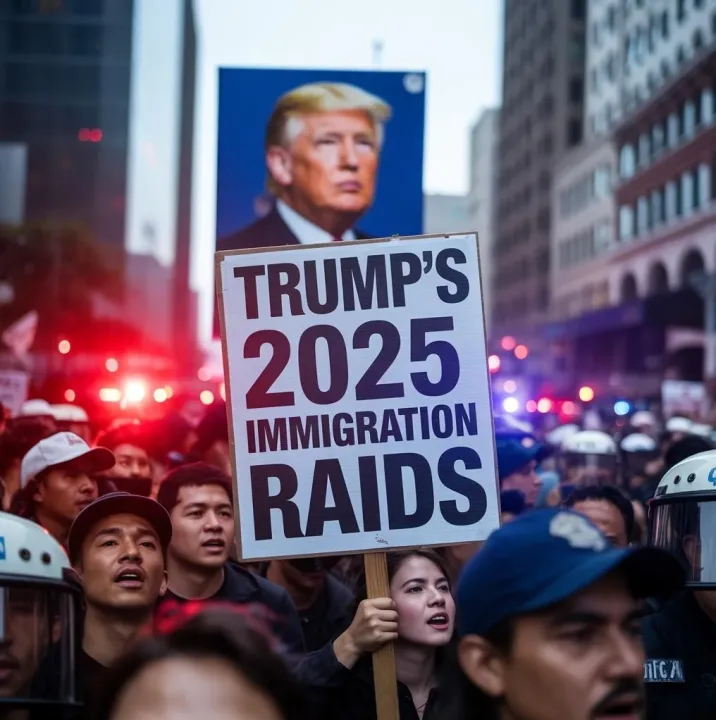
Trump’s 2025 Immigration Raids Ignite Citywide Protests
In June 2025, the Trump administration launched a sweeping immigration crackdown in Southern California, with Los Angeles as a primary target. Immigration and Customs Enforcement (ICE) agents raided Home Depot parking lots, day labor centers, and garment industry factories. Dozens of long-time residents—many with decades in the U.S.—were detained.
The raids sparked immediate protests across the city. Initially peaceful, the demonstrations escalated into clashes that continued for several days. Fear spread through immigrant neighborhoods, and many businesses reported steep drops in customers as residents avoided public spaces.
In a move that intensified tensions, the administration deployed 2,000 California National Guard troops and 700 U.S. Marines to Los Angeles. Critics accused President Trump of militarizing the city instead of addressing community concerns.
Bass Positions Herself as a Defender of Immigrants
Mayor Bass condemned the raids as an “attack on hardworking people” and said the administration was targeting everyday laborers rather than dangerous criminals. She warned that the actions created an “atmosphere of fear” that hurt the economy and destabilized neighborhoods.
Her message resonated in Los Angeles, where immigrants make up nearly 40% of the population. Bass joined forces with more than 20 Southern California mayors and nearly 30 state and federal legislators in demanding an immediate end to the raids. The coalition warned that removing breadwinners from households would cause severe long-term harm to families and local businesses.

Direct Confrontation with Trump
This pivot from wildfire criticism to immigration rights leadership helped Bass rebuild political momentum and strengthen her standing with progressive allies.
President Trump claimed his military deployment prevented Los Angeles from “burning.” Bass quickly dismissed the statement as political theater. California Governor Gavin Newsom backed her, denying Trump’s claim of a phone conversation about the raids.
The clash played out across national media, giving Bass a larger platform and casting her as a prominent figure in the resistance to Trump’s immigration policies. While supporters applauded her willingness to stand up to the president, opponents accused her of using the controversy to divert attention from the Palisades Fire backlash.
Scrutiny, Controversy, and Continued Clashes
Even as her approval ratings rebounded, Bass faced renewed scrutiny over her decades-old ties to a pro-Cuban Communist group. Around the same time, Trump froze federal funding for UCLA, prompting Bass to accuse the administration of targeting California institutions for political gain.
Public reaction was sharply divided. Some praised her for “defending Los Angeles,” while others argued her actions were calculated political maneuvers. Social media platforms reflected this split, with competing hashtags supporting and criticizing her decisions trending for days.
Bass’s ability to keep the immigration issue front and center helped shift attention from earlier controversies. Still, the dual pressures of wildfire recovery and federal confrontation left her leadership under ongoing scrutiny.
Economic Fallout from the Immigration Raids
Local business groups reported sales declines of up to 30% in immigrant-heavy neighborhoods after the raids began. Restaurants, grocery stores, and construction companies saw a drop in both customers and employees. Advocacy groups estimated that hundreds of families lost their main source of income when primary earners were detained.
Bass used these statistics to strengthen her argument that the raids were both morally wrong and economically harmful. By framing the issue around community stability and economic impact, she expanded her appeal beyond traditional immigrant rights supporters.
The strategy kept the debate in headlines and forced federal officials to repeatedly defend their actions in public forums.
Why This Political Reversal Matters
Karen Bass’s shift from being criticized over the Palisades Fire to leading a high-profile fight against Trump’s immigration raids demonstrates how political fortunes can turn quickly in a crisis. Her coalition-building and command of the narrative have positioned her as a central figure in California’s response to federal immigration crackdowns.

However, the controversies that surrounded her before the raids remain unresolved. As Los Angeles works to recover from both devastating wildfires and political unrest, Bass’s leadership will continue to be a focal point in state politics.
Whether her resurgence will result in long-term political strength—or prove to be a temporary recovery—will depend on how she navigates the challenges ahead.
MORE NEWS ON EURWEB.COM: ‘No More Mr. Nice Guy’ – Trump Declares WAR on the Homeless in D.C. – ‘They Have to Move Out, IMMEDIATELY!’ | VIDEO
We Publish Breaking News 24/7. Don’t Miss Out! Sign up for our Free daily newsletter HERE.