*Right about now, I’d be shaking in my boots. That’s an ancient figure of speech, and I didn’t wear boots back then anyway. But if I did, my skinny little ankles would have chafed from all the vibrating.
This month, decades ago, I would not have been able to enjoy everything I held dear—like morning swims under the last gasps of a sweltering Oklahoma summer sun with Donnie Minnis, my best friend, in the Olympic-sized swimming pool at Washington Park. Or leisurely riding our Stingray bikes aimlessly along the edges of Oklahoma City’s Black East Side community, where we lived.
Even as early as August, the stalwarts of Saturday morning—“Johnny Quest,” “Secret Squirrel,” “Space Ghost,” or anyone or thing with “Super” in its moniker—couldn’t console me in light of the beast to come. Because right behind August is September, and when I was a child and into my teens, September only meant one downcast event: Back to school.
Hate is a strong word, so I’ll say I didn’t like school. Some kids love the institution; I’ve heard of these people. But for me, the years of my life dedicated to formal education amounted to various strains of emotional trauma.

Scroll to continue reading









*Vivid in my mind is that first day of kindergarten at Carter G. Woodson Elementary. A lifetime later, I’m still haunted by the pong of fresh gray and muted light green paint on Woodson’s walls.
Inside the doorway of Miss Garner’s classroom, I wailed as if being kidnapped, pleading with Mama not to abandon me in this strange place with all these children I did not know. Compounding my dread was our living on the corner of Sixth and High–directly across the street from Woodson (all of the schools I attended in the ’60s and early ’70s—Woodson, F.D. Moon Jr. High, and Frederick Douglass High, were christened in honor of great Black educators).
We know that specific childhood experiences, functional and dysfunctional, can cement behavior for one’s life. Likewise, that first day in Kindergarten supplied the template for an insecure kid’s schooling years: The anxiety of the unknown, the customary first-week jitters, and the fear of teachers and students I didn’t know.
School wasn’t a total nightmare for me. Though my dearest friends were pop songs, at every grade level I did manage to find camaraderie among the meek Brand X crowd. Reading, writing, cool. Anything involving numbers, no.
Despite my debilitating shyness, I participated in school assemblies onstage in Woodson’s auditorium. At the end of the programs, when they requested parents to stand, Mama was always there, smiling proudly. Sometimes, the pictures I drew in class made it to the coveted hallway display boards. Mama would come to see them and respond as if she were gazing upon the works of Rembrandt.

Yet, by sixth grade, I was a prolific class-cutter. A loner, I didn’t ditch school with other incorrigibles. Instead, I took refuge in the “Batcave”–the attic of the neglected, stand-alone garage in the back of Donnie’s house, next door to where my family lived, which Donnie and I used as our clubhouse.
Imagine sitting silently for eight school hours in an empty attic—no transistor radio, no comic books to read, nothing, accompanied only by my thoughts. During my junior high and high school years, I’d often leave home with the rest of the family and then sneak back home. I intercepted any attempts by schools to contact my parents by mail.
When I did attend school, I mastered being there without being there. In one junior high class, I put my desk in a far corner of the room and would not answer anyone when spoken to, including the teacher. I’d pretend to be insane. Just for that class.
In one math class, I was called to the blackboard. When I got there, to the audible horror of students, I suddenly “fainted.” At the direction of a panicked Mrs. Cooper, Nathaniel Crownover, the biggest and strongest kid in the class and possibly the whole school, valiantly carried his “unconscious” classmate to the nurse’s office. I was diagnosed as anemic—or constipated—and placed in one of two private bedrooms. On white, crisp sheets, I passed the time watching the industrial-size clock’s big hand twitch backward before moving forward. Miraculously. I recovered by lunchtime.
At the end of my senior year at Douglass, Mr. Harris, the school’s crusty, no-nonsense counselor, from behind his cluttered desk informed me that I’d graduate by the skin of my teeth. “Ivory, I’ve never seen a student with more days absent than present,” he said in exaggerated disgust. “You’ll march in the graduation ceremony, but I don’t know what the hell you’ll do out in the world with a D average.”
Feigning disappointment, in my head I gleefully answered the counselor’s question: What am I gon’ do with a D average? I’m gon’ GRADUATE, is what I’m gon’ do, Jack.
These days, at the start of every school year, I reflect on who I was during grade school. I imagine the grown-up me going back in time and talking to little Stevie. Hindsight is 20/20, obviously, but I’d work to persuade him to believe he had nothing to worry about. I would make the younger me understand that the spooky creature whispering words of doubt in his ear is his shadow. I’d encourage him to try all those things he daydreamed of but was afraid: Stop being a spectator in Physical Ed class; you know damn well you’re faster than that Anderson Kid. Why did you slow down during the relay and let him finish first?
You aren’t the gangly ugly duckling you see in the mirror. Girls will like you for you. In class, raise your hand! You won’t offend anyone by having the correct answer. I’d teach him the definition of personal regret and assure him it’s not a place he wants to dwell.
And once I had truly convinced my young self of his worth, I would ask him to do the same for the adult me.
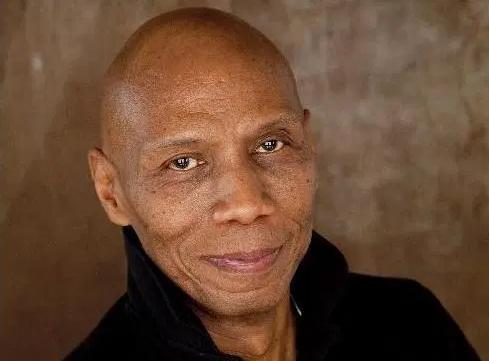
Steven Ivory, veteran journalist, essayist, and author, writes about popular culture for magazines, newspapers, radio, TV, and the Internet. Respond to him via [email protected]
MORE NEWS ON EURWEB.COM: Daniella Perkins Going Back to School This September to Mogul Academy