*In the high-stakes, multibillion-dollar race to dominate artificial intelligence, Nvidia’s CEO Jensen Huang unveiled a world-changing piece of hardware in 2024. He called it “Blackwell,” naming the most advanced AI chip ever built not after a valley or a trendy concept, but after a man: David Blackwell.
Few outside of academic mathematics recognized the name. Yet, this quiet, groundbreaking Black scholar, who faced profound racism on his path to a PhD, laid the very mathematical bedrock upon which modern AI—from ChatGPT to autonomous vehicles—now operates.
This is the forgotten prehistory of artificial intelligence. It’s a story that challenges the popular Silicon Valley origin myth and asks a crucial question: if the tools powering our technological revolution were forged by a man history overlooked, what other geniuses have we failed to recognize?
The Man Behind the Theorem: David Blackwell’s Quiet Revolution
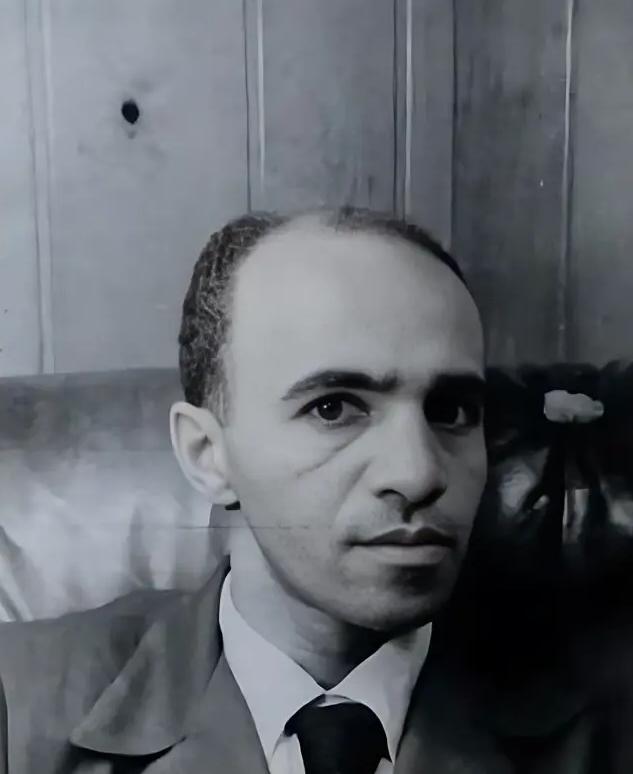
David Harold Blackwell (1919-2010) was a titan of 20th-century mathematics. A prodigy, he earned his PhD from the University of Illinois at Urbana-Champaign at 22. His work spanned game theory, probability, and statistical inference—fields that are not just adjacent to AI but are its essential language.
His most famous contribution, the Blackwell-Rao theorem, provides a statistical method for estimating what should happen in a given situation while minimizing bias in the data. In an era increasingly worried about algorithmic prejudice, this 20th-century theorem is a North Star for creating fairer machine learning models. “If David Blackwell were alive today,” his grandson, filmmaker David B. Blackwell, notes in a recent documentary concept reel, “he would likely be concerned about the bias in AI… and would advocate for minimizing these biases.”
Scroll to continue reading









A Career Forged Against the Odds
Blackwell’s path was obstructed by the racism of his time. In the 1950s, despite his stellar credentials, he was denied positions at top universities. He was famously hired by UC Berkeley’s mathematics department in 1954, becoming its first Black tenured professor, but only after internal opposition was overruled. Traveling for conferences with his family, he relied on the Green Book to find safe lodging.
Yet, by all accounts, he met these injustices with a profound grace and forward-looking intellect. He focused not on bitterness, but on building a better world through reason. “He was a positive and considerate person who did not dwell on negative experiences,” his grandson recalls, describing a man who could captivate a room with complex ideas, making everyone—from seasoned academics to young children—feel equally engaged and capable.
From Theory to Silicon: The “Blackwell” GPU Architecture
The ultimate testament to his relevance arrived decades after his death. In 2024, Nvidia’s Blackwell GPU architecture became the engine of the global AI boom. It’s the hardware that trains massive, large language models and drives cutting-edge research. The company’s co-founders, Jensen Huang and Chris Malachowsky, consciously chose his name to honor a foundational contributor.
This act of naming is part of Nvidia’s tradition of honoring scientific pioneers (like the astronomer Vera Rubin). But Blackwell’s case is unique. As highlighted in the documentary, he is one of the few whose work is directly in the lineage of artificial intelligence itself. His theories on decision-making under uncertainty are the blueprints for reinforcement learning—how AI agents learn to play games, trade stocks, or navigate robots.

The High Cost of Hidden Figures
The obscurity of David Blackwell’s story underscores a persistent issue in STEM: the visibility gap. For generations of aspiring Black scientists and mathematicians, the narrative of who builds the future was presented without figures who looked like them. “The lack of visibility of black achievers in STEM fields can impact the aspirations of young people,” the documentary argues, suggesting that knowing about Blackwell’s contributions “could potentially change the trajectory of their interests and career goals.”
Blackwell himself offered simple, powerful advice: “Do not consider your race as a handicap.” He lived this philosophy, focusing on the work, not the barriers. Yet his legacy poses a societal challenge. It is not enough for individuals to overcome; systems must also remember and celebrate.
A Legacy of Logic and Inspiration
Today, David Blackwell’s legacy operates on two planes. First, in the silent, humming data centers of the world, his mathematics optimizes trillions of calculations per second. Second, in the powerful symbolism of his name on the industry’s most prized technology, a beacon for a new generation.
The story of AI is often told as an explosion of code and capital. But it is, more accurately, a century-long construction project. David Blackwell was one of its master architects, drafting the plans in the face of exclusion. Recognizing him does more than correct the historical record; it reminds us that genius is universal, that innovation has deep and diverse roots, and that the future is built by remembering all who helped lay its foundation.
(If You Like/Appreciate This EURweb Story, Please SHARE it!)
MORE NEWS ON EURWEB.COM: Bill Gates Predicts AI Will Surpass Human Intelligence in Most Jobs Within 10 Years
We Publish Breaking News 24/7. Don’t Miss Out! Sign up for our Free daily newsletter HERE.