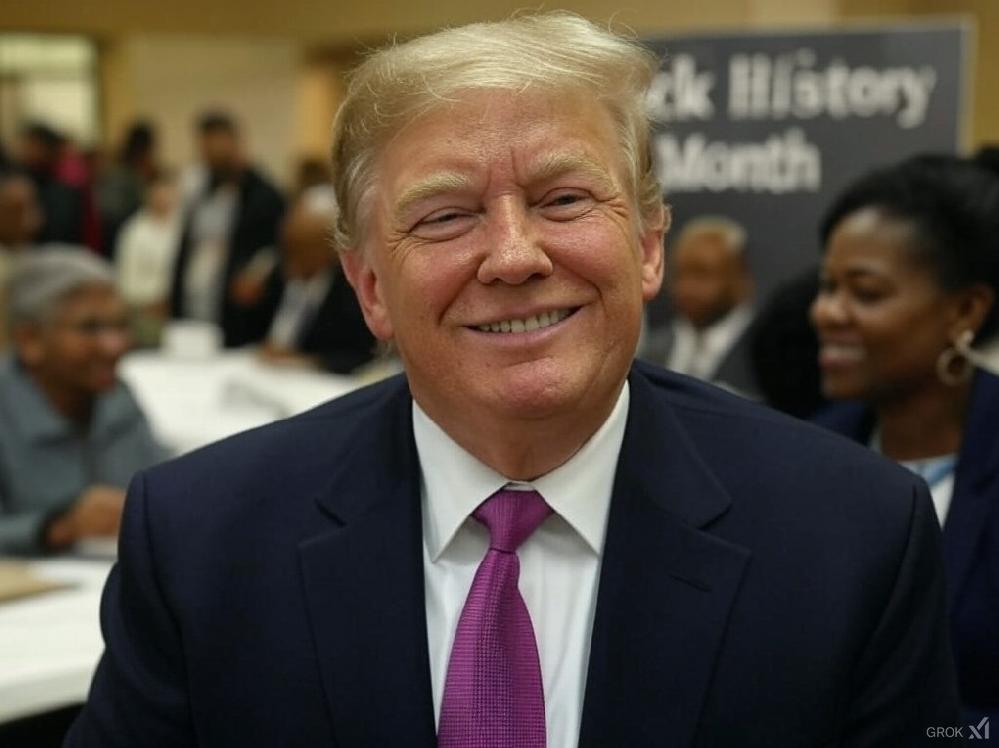
*In a strikingly muted acknowledgment that contrasts sharply with his previous proclamations, President Donald Trump marked Black History Month by expressing his “honor” in celebrating the contributions of Black Americans.
In a statement released Friday night, Trump noted that these individuals are “among our country’s most consequential leaders,” specifically calling out historical figures such as Frederick Douglass, Harriet Tubman, economist Thomas Sowell, Justice Clarence Thomas, and athlete Tiger Woods. This recognition, however, comes in the wake of recent and aggressive actions against diversity, equity, and inclusion (DEI) initiatives within his administration and across corporate America.
Black History Month, originally conceived by historian Carter G. Woodson during the early 20th century, has evolved into an annual celebration that honors the achievements and history of Black Americans. This year’s theme is “African Americans and Labor,” highlighting the essential contributions that Black workers have made to the country’s economy and infrastructure. Yet, in a proclamation lacking the depth of previous years, Trump refrained from addressing significant historical events such as slavery and the Civil Rights Movement—topics that were central to his proclamations during his first term in office.
While Trump expressed his “tremendous gratitude” to Black Americans for their role in the nation’s progress, he also shifted the focus toward the ongoing debate surrounding DEI policies, which he has branded as divisive and detrimental. In a series of executive orders signed within hours of his second inauguration, Trump directed federal agencies to dismantle DEI programs, denouncing them as “illegal and immoral discrimination programs.”
This approach signals a stark departure from the inclusive message traditionally associated with Black History Month, as Trump aligns himself with a wave of companies like Target, Meta, and Amazon, which are scaling back their DEI commitments following political pressure.
Scroll to continue reading








In his proclamation, Trump cited the accomplishments of notable figures in African American history but notably failed to mention the ongoing challenges that Black Americans still face. His singular focus on promoting individual achievements reflects a broader trend toward individualism in discussions around race in America, often overshadowing systemic issues that persist across socio-economic spectrums.
Critics argue that this approach diminishes the collective struggles faced by Black Americans, essentially glossing over the foundational issues that still need to be addressed. Furthermore, Trump’s recent comments about the tragic mid-air collision between an American Airlines jet and a Black Hawk helicopter also sparked controversy. In press interviews and statements on his social media platform, Truth Social, he suggested that diversity hiring practices may have contributed to the factors leading up to the fatal incident.
These claims were met with skepticism and criticism from various sectors, including aviation experts and civil rights advocates, who emphasize that such unfounded allegations only serve to perpetuate harmful stereotypes and distract from critical conversations regarding safety and responsibility.
Historically, Trump has used Black History Month as an opportunity to highlight significant legislative achievements, such as the Voting Rights Act and desegregation efforts. In contrast, the proclamation issued this year lacks substantive acknowledgment of these milestones and fails to address the foundational civil rights issues that continue to impact Black Americans.
Previously, Trump’s proclamations recognized the perseverance of individuals against discrimination, stating: “We must never forget the toil and struggle that so many have faced.” However, this year’s message appeared disjointed, inflected with an air of discord as policies undermining DEI delicately interweave with his Black History Month rhetoric.
Donald Trump’s Empty Black History Month Proclamation: A Hypocritical Farce
Donald Trump had the audacity to proclaim February as National Black History Month, paying empty lip service to the contributions of Black Americans—while actively working to erase our history and… pic.twitter.com/bQMUxFqgEF
— Bishop Talbert Swan (@TalbertSwan) February 1, 2025
As the landscape surrounding racial equity and inclusion in both the public and private sectors evolves, the role of leadership in addressing these issues becomes increasingly crucial. Trump’s mixed messages could alienate the very demographic that may have been hopeful for legitimate discourse about racial equality and the efforts required to move toward it.
By ignoring the weighty issues during Black History Month while simultaneously attacking DEI initiatives, Trump risks disenfranchising the supporters who want tangible change.
In summary, President Trump’s acknowledgment of Black History Month comes at a time of heightened tension regarding diversity and inclusion in America. While he recognized the contributions of Black Americans, the context of his proclamation reveals a disturbing contradiction in policy and rhetoric.
As businesses re-evaluate their commitments to DEI in response to political pressures, the legacy of Black History Month serves as a reminder that the fight for recognition and equality is ongoing. Only through genuine acknowledgment of historical injustices and a commitment to advancing systemic change can society move closer to fulfilling the promise of equality under the law for all.
MORE NEWS ON EURWEB.COM: Dave Chappelle Issues Plea to Donald Trump Before Inauguration on ‘SNL’: ‘Please, Do Better Next Time’ | WATCH