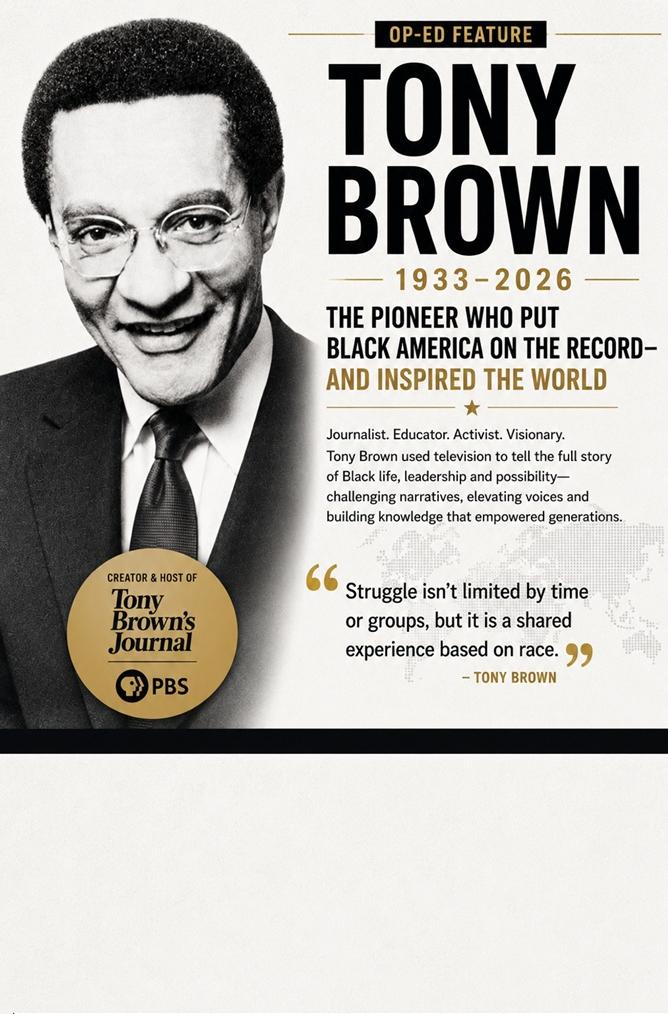
*When I learned of the passing of Tony Brown at age 93, I immediately found myself traveling back in memory.
I could see my father sitting in front of the television. I could see my grandparents nearby. I could see the familiar face of a debonair African American man wearing glasses, dressed in a sharp suit, speaking with confidence, dignity, and authority.
That man was Tony Brown.
For many Black families during the 1970s, 1980s, and 1990s, Tony Brown’s Journal was more than a television program. It was a classroom. It was a boardroom. It was a cultural briefing. It was a place where Black America could see itself analyzed, challenged, and respected.
Growing up, there were certain staples in many African-American households. In ours, there was Black Enterprise magazine founded by Earl G. Graves Sr. There was the influence of Ebony and Jet magazines. There were conversations about business, education, and advancement.
Scroll to continue reading









And there was Tony Brown.
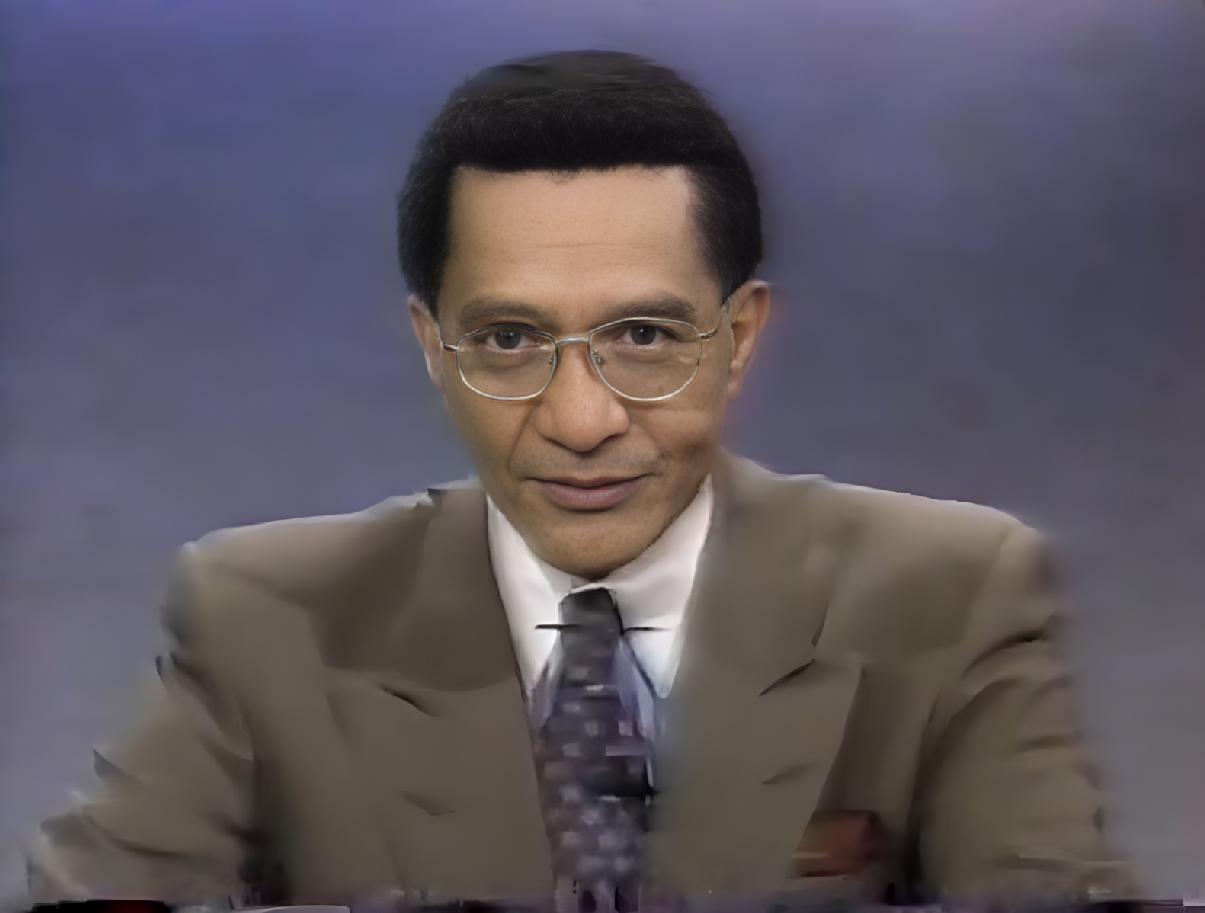
As a young person, I may not have fully understood everything he was discussing, but I understood that what he was saying mattered.
Brown possessed a unique presence.
He was not loud.
He was not theatrical.
He was not interested in creating controversy for ratings.
Instead, he projected intelligence, preparation, and purpose.
Looking back, he was a fascinating blend of several figures. He carried the business-minded practicality of Earl Graves Sr., the analytical style that later became associated with commentators such as Dr. Boyce Watkins, and the commanding confidence of a minister addressing a congregation.
Yet Tony Brown was uniquely Tony Brown.
Long before political analysts became celebrities and before social media rewarded hot takes, Brown was carefully dissecting economics, race, education, technology, public policy, and culture for Black audiences.
He had a gift for taking complicated subjects and making them understandable.
Whether discussing computers, economic empowerment, media ownership, or the future of race relations, he had an ability to break issues down into digestible pieces without insulting the intelligence of his audience.
He made people think.
That may be his greatest legacy.
Brown understood something that many media executives never did: Black Americans wanted substance.
They wanted information.
They wanted context.
They wanted solutions.
They wanted to understand how systems worked and how communities could improve their condition.
As creator and host of Tony Brown’s Journal, Brown built the longest-running Black public affairs television program in American history. Through more than four decades of broadcasting, he interviewed political leaders, scholars, entrepreneurs, entertainers, activists, and everyday citizens.
He created a permanent archive of Black thought.
When mainstream television often reduced African Americans to stereotypes, statistics, or moments of crisis, Tony Brown presented Black people as thinkers, builders, innovators, educators, and leaders.
That was revolutionary.
His influence extended beyond television.
Brown founded the School of Communications at Howard University and later served in leadership roles at Hampton University, helping prepare future generations of journalists and media professionals.
He believed media was not simply about entertainment.
It was about empowerment.
It was about ownership.
It was about shaping how a people see themselves.
One quote often associated with Brown’s worldview is the understanding that struggle is not limited by time or by any one group. Human struggle is universal, yet race shapes how many people experience opportunity, justice, and advancement.
Brown never ignored that reality.
Neither did he allow Black Americans to become trapped by it.
He consistently challenged viewers to pursue education, entrepreneurship, discipline, and self-reliance.
That message remains relevant today.
In an era dominated by algorithms, social media influencers, and twenty-second video clips, Tony Brown represented something increasingly rare: depth.
He demanded that audiences think beyond headlines.
He encouraged viewers to study history.
He challenged people to understand economics.
He insisted that knowledge was power.

As a journalist, I now appreciate even more what Tony Brown accomplished.
The preparation.
The discipline.
The research.
The consistency.
The courage.
Producing one thoughtful program is difficult.
Producing thousands across four decades is extraordinary.
His passing leaves a significant void in journalism and Black media.
Yet his work remains.
His interviews remain.
His lessons remain.
His example remains.
For those of us who grew up watching him, Tony Brown was not simply a television personality.
He was a trusted voice.
He was a teacher.
He was a builder.
He was a pioneer.
And for countless viewers who tuned in every week, he was proof that Black journalism could be intelligent, dignified, solution-oriented, and unapologetically committed to telling the truth.
Tony Brown may be gone, but the record he built remains one of the greatest contributions ever made to American journalism.
May future generations discover his work and learn what so many of us learned years ago:
Knowledge matters.
Ownership matters.
History matters.
And informed people remain a powerful people.
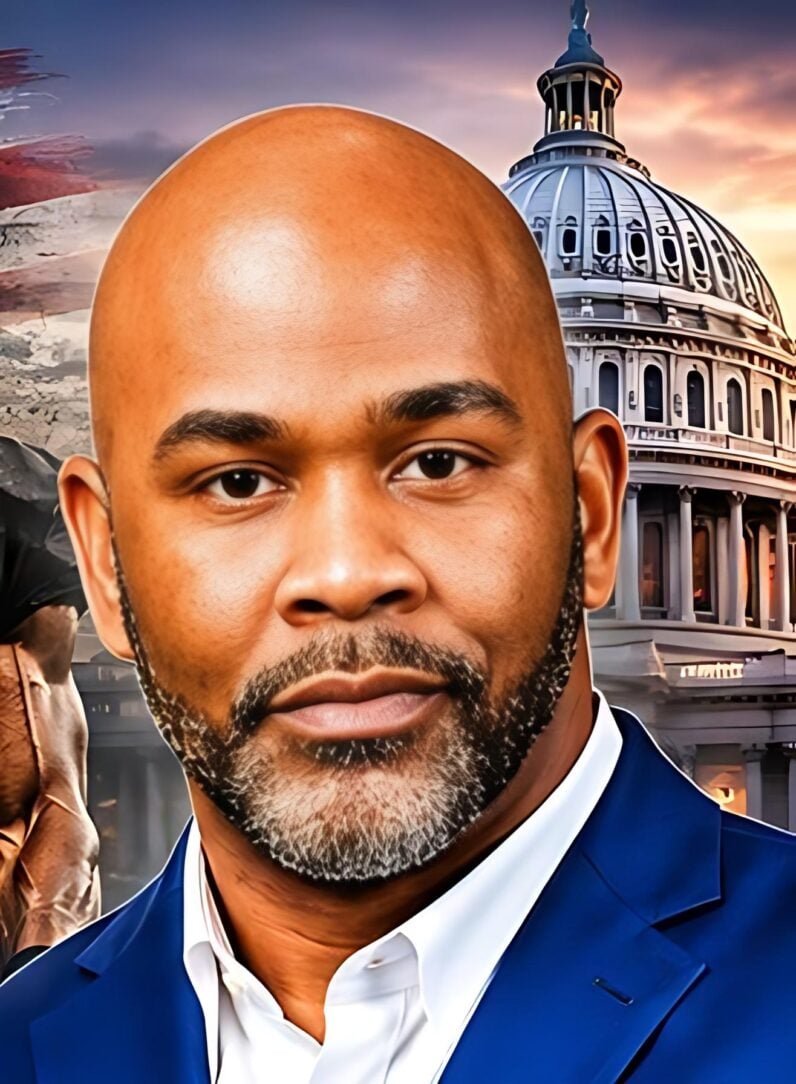
Edmond W. Davis is a social historian, journalist, retired history professor, socioemotional intelligence expert, author of multiple historical texts, Arkansas’s first and only Tuskegee Airmen history textbook, and an international speaker. Davis had a role as a Shelby County Courtroom Jail Deputy on the NBC TV series Bluff City Law. He is a former director of the Derek Olivier Research Institute for the Prevention of Gun Violence. Davis is also the founder of the National HBCU Black Wall Street Career Fest and an Amazon #1 author. Contact him via www.edmondwdavis.com.
(If You Like/Appreciate This EURweb Story, Please SHARE it!)
MORE NEWS ON EURWEB.COM: Jasmyne Cannick Commentary: An Ode to the Other Black Journalists
We Publish Breaking News 24/7. Don’t Miss Out! Sign up for our Free daily newsletter HERE.