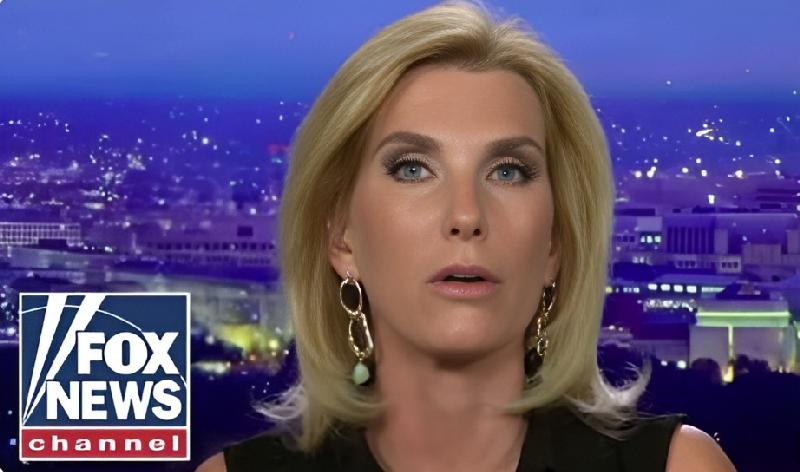
*In the world of television and politics, comments can stir up a lot of attention, and Fox News host Laura Ingraham recently found herself in hot water. During a segment on her show “The Ingraham Angle,” Ingraham referred to Representative Jasmine Crockett (D-Texas) as “street” while criticizing her remarks about Attorney General Pam Bondi. This comment quickly led to discussions about racial stereotypes and how they are used in public discourse.
Setting the Scene
Ingraham’s remarks came following Crockett’s comments at a House Judiciary Committee hearing. The congresswoman accused Bondi of attacking her right to free speech. Bondi had warned Crockett to “tread very carefully” when criticizing Elon Musk. Well, apparently, Crockett wasn’t having any of it.
During this back-and-forth, Ingraham and Fox News contributor Raymond Arroyo took jabs at Crockett. Arroyo labeled her the “Madea of Capitol Hill,” referencing the well-known character created by filmmaker Tyler Perry. This comment, rooted in racial and cultural stereotypes, raised eyebrows and made people think twice about the implications of their words, HuffPost is reporting.
The ‘Street’ Comment
Ingraham then went on to say that Crockett was now “going very … street” during their discussion. This statement drew immediate attention. Many felt that using the term “street” carried negative connotations aimed at Black individuals. Ingraham swayed her head side-to-side as she spoke, trying to demonstrate a point, but all it did was add to the discomfort surrounding her comments.
Understanding the weight of words is crucial, especially on a platform like Fox News. The remark suggested a level of contempt for Crockett’s style of communication, further spotlighting the racial undertones that often creep into such discussions.
Scroll to continue reading









Arroyo: She has become the Madea of Capitol Hill without the charm.. Stop threatening people pic.twitter.com/nbFdxSopeG
— Acyn (@Acyn) April 2, 2025
Reaction From Media and Experts
The backlash against Ingraham’s comments was swift. Online reactions were filled with criticism. Jared Blake, a senior producer at MSNBC, has pointed out that terms like “ghetto” or “street” are often used to describe those from low-income backgrounds, particularly targeting Black individuals. Conversations began to swirl around how these coded terms perpetuate harmful stereotypes.
Mario Luis Small, a professor at Columbia University, emphasized the issue further. He noted that derogatory terms can easily be perceived as racial insults. “When ‘ghetto’ is used as an insult, it often sounds like a racial insult,” he stated. These sentiments reflect the problematic nature of labels that insist on placing people into boxes based on race or class.
The Broader Impact
On social media, users did not hold back their opinions. One user remarked, “The moment they can’t find a good excuse, they start being racist.” Others echoed similar thoughts, pointing out the racial undertones in Ingraham’s comments. It appeared clear to many that when faced with someone who challenges the status quo, the knee-jerk reaction is too often to revert to old stereotypes.
Tabitha Bonilla, an associate professor of political science at Northwestern University, expressed disappointment in the public dialogue today. She pointed out that much discussion has shifted towards using “discriminatory and demeaning language” instead of addressing the real issues at hand. “Dog whistles tend to be subtle—you only understand them if you know what to listen for,” she said.

Crockett’s Response
Jasmine Crockett has faced her share of criticism, especially regarding her communication style. Her critics often target her for the way she speaks. Some have gone as far as calling her names based on her cadence or use of African American Vernacular English (AAVE).
In response to these attacks, Crockett asserted, “I don’t have an ‘accent’… if anything it’s Texan, maybe mixed with a little bit of St. Louis.” She pushed back against the ridiculous notion that her background somehow makes her voice less valid. “By focusing on her expressions they are exemplifying just how deeply entrenched their historically dominant language game is,” noted Deepak Sarma, a professor at Case Western Reserve University.
Conclusion
In conclusion, the comments made by Laura Ingraham about Jasmine Crockett have ignited a flame of discussion about race, language, and representation. While Ingraham might have intended to make a point about the political discourse, her words brought forth a wave of criticism that can’t be ignored.
Crockett’s ability to navigate this scrutiny while remaining true to herself speaks volumes about resilience in the face of adversity. In a society that still grapples with racial stereotypes, it’s crucial that we put our words under the microscope.
As the conversation continues, we must remember that the way we talk about each other matters. Every statement shapes perceptions and can create ripples of change—whether for good or ill.

MORE NEWS ON EURWEB.COM: Republican Double Standard and Hypocrisy: Keith Self Calls Out Jasmine Crockett But Not Donald Trump for Doing Same Thing | WATCH
We Publish Breaking News 24/7. Don’t Miss Out! Sign up for our Free daily newsletter HERE.