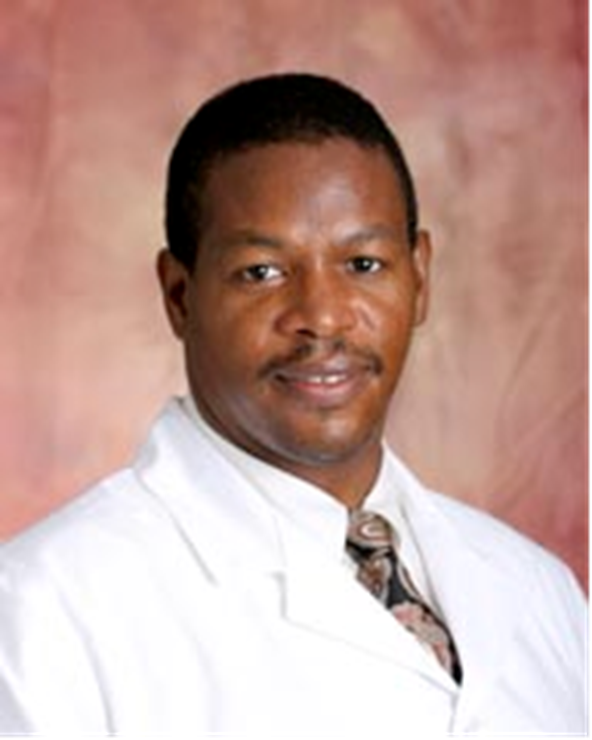
*Donald Alcendor, Ph.D., an associate professor of microbiology and immunology at Meharry Medical College in Nashville, Tennessee, is said to be only a few weeks away from developing an antiviral drug to combat COVID-19.
As noted by RollingOut, “once submitted, the drug will undergo clinical trials and must be approved by the Food and Drug Administration, which could take a few months,” the outlet writes.
“The process is understanding how the virus gets into your system, where it goes and how it infects,” Alcendor said about developing an antiviral drug. “The struggle is that it is a single-strand that produces tremendous inflammation. The patient will feel like he’s drowning.”
Alcendor’s antiviral drug would “intervene at the critical point in the virus’ (attack), eliminating its ability to reproduce viral proteins. The cycle would be terminated,” he said, NBC News reports.
OTHER NEWS YOU MIGHT HAVE MISSED: Taraji P. Henson Provides Mental Health Support for Underserved Communities | ‘Today’
Scroll to continue reading








LATEST: As of 10:30 a.m. ET, April 20, there are 756,374 confirmed coronavirus cases in the US, and 40,698 deaths. https://t.co/qv6iQrU6Rb pic.twitter.com/p2xZJDawEE
— NBC News (@NBCNews) April 20, 2020
Alcendor was also on the front lines in the fight against the Zika virus several years ago.
“It’s similar to what we did with Zika,” he added. “But in comparison to Zika, this is through the roof. We didn’t have the deaths or the spread. This is a much bigger scale. All the marbles are on the table.”
COVID-19 has reportedly hit the Black community especially hard in states including Michigan, Illinois and Wisconsin.
“I have been pushing for pre-emptive screening with health officials going into the underserved communities to start testing because that would be a way to get in front of it with the most vulnerable public,” said Meharry President James E.K. Hildreth. “If you have pre-existing auto-immune disease and the other stated health issues, the outcomes are much more severe. Those are exactly what we have in our communities. The burden of the disease is so much higher.”