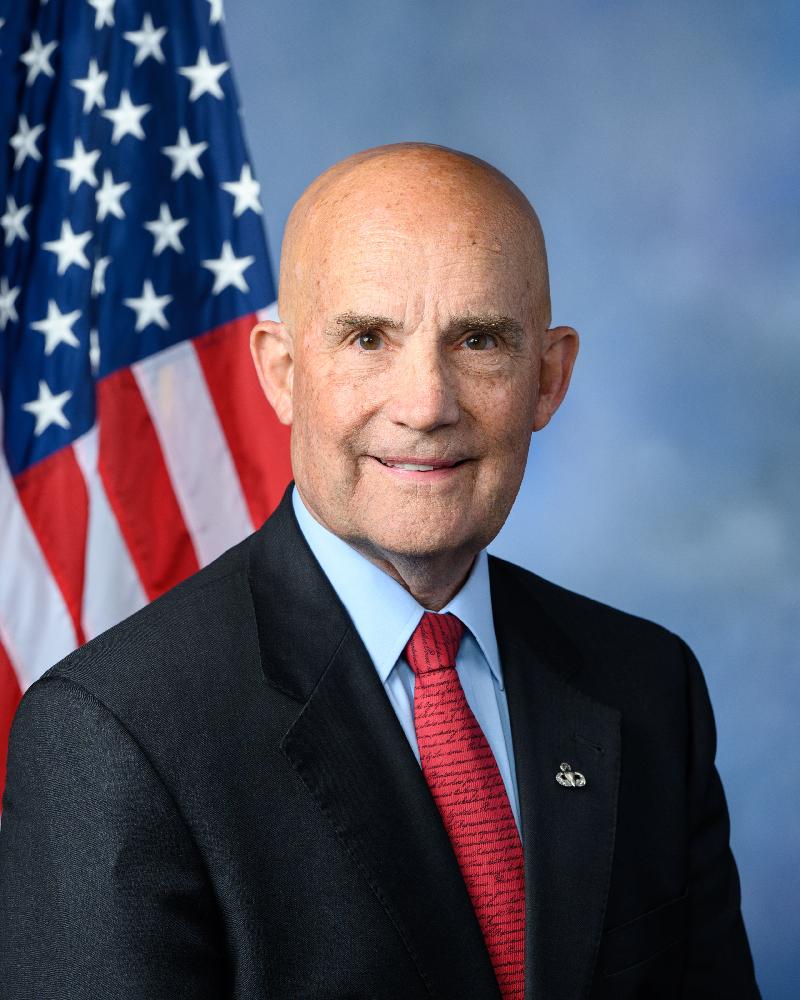
*The line between accountability and hypocrisy often gets blurred in the increasingly polarized landscape of American politics. A recent incident involving Republican Congressman Keith Self (Texas) highlights this double standard, especially regarding the acceptable parameters of humor and public discourse.
Self’s criticism of Congresswoman Jasmine Crockett’s comments about Texas Governor Greg Abbott exposes the inconsistency in how political figures address similar actions depending on their party affiliation.
Crockett recently garnered attention for calling Abbott “Governor Hot Wheels,” a quip that Self quickly condemned as bullying. His remarks come amid a larger discourse about respecting those with disabilities, especially when such vulnerabilities are put on public display. However, while he was swift to chastise Crockett, Self’s unwillingness to address a comparable moment from former President Donald Trump raises significant questions about his commitment to fairness and consistency.
In 2015, Trump famously mocked New York Times reporter Serge Kovaleski, who has a congenital joint condition. During a campaign rally, Trump imitated Kovaleski’s physical mannerisms, drawing laughter from the crowd at the expense of someone with a disability.
This incident was reprehensible, demonstrating a harsh and insensitive use of humor surrounding a person’s condition. Yet, when confronted with this past indiscretion, Self opted to deflect, refusing to discuss Trump’s comments, insisting instead that he wanted to focus solely on Crockett’s remarks, TMZ notes in its report. This suggests a glaring hypocrisy: one politician can be excused for inappropriate jokes while another faces condemnation for a similar offense, simply because of party lines.
Scroll to continue reading








Congressman Keith Self is blasting Congresswoman #JasmineCrockett for cracking a joke about #Texas Governor #GregAbbott‘s disability … though he wouldn’t condemn President #DonaldTrump for doing something similar.
Full story HERE: https://t.co/ptSYnf54i8 pic.twitter.com/GN1cnC2V8u
— TMZ (@TMZ) March 26, 2025
Crockett responded to the backlash by clarifying her intentions behind the “Hot Wheels” comment.
“I wasn’t thinking about the governor’s condition—I was thinking about the planes, trains, and automobiles he used to transfer migrants into communities led by Black mayors,” She asserted.
This nuanced perspective indicates her critique was not a personal attack on Abbott as an individual with a disability but rather a sharp rebuke of his policy decisions. While her choice of words may have been in poor taste, her explanation underscores the danger of reductive interpretations when humor and politics clash.
At the heart of Self’s outrage seems to be a desire to portray Crockett as a bully—a strategy that serves two purposes. Firstly, it allows him to galvanize support among his Republican base who prioritize the defense of the governor. Secondly, it sidelines the legitimate policy critiques that Crockett aims to articulate. Yet, his selective outrage—targeting Crockett while ignoring Trump’s similarly charged behavior—illustrates a fundamental failure to uphold the very standards he seeks to impose on his political opponents.

Self’s comments about nearly wanting Congress to avoid censure for Crockett, describing her as detrimental to the Democratic Party, further suggest a strategic motive beneath his outrage. By denouncing her humor, he aims to bolster the Republican narrative of Democratic missteps while simultaneously disregarding the similar faults within his ranks. This selective moral high ground perpetuates the divisiveness characteristic of modern politics, highlighting a glaring inconsistency.
Moreover, this situation also reflects broader societal issues surrounding the discourse on disability and public figure accountability. Humorous jabs about physical limitations have historically been treated differently depending on the speaker’s political allegiance. Society grapples with an evolving understanding of inclusivity and respect; thus, holding one representative accountable while letting another slip by creates a disjointed narrative that undermines the conversation about disability rights and affective language in politics.
In a political climate where soundbites often overshadow substantive policy discussions, Self’s remarks about Crockett serve as a reminder of how easily the narrative can pivot from important issues to sensationalized personal attacks. This relentless cycle of offense and counter-offense hinders productive dialogues around governance and the responsibility that elected officials hold.
Both Self and Crockett represent communities in Texas shaped by their distinct political identities. While their districts are geographically adjacent, the political climate brings forth ideological schisms that exacerbate their rivalry. In challenging times, voters should seek representatives who prioritize principled honesty over partisan hypocrisy.
As the political discourse matures, it is crucial for elected officials to recognize the responsibility they bear in leading by example—an endeavor that begins with fair and consistent critique.
MORE NEWS ON EURWEB.COM: Wait. What?! DoorDash Has A Layaway Plan for Fast Food – The Journal of Steffanie Rivers | WATCH
We Publish News 24/7 – Don’t Miss Out! Sign up for our Free daily newsletter HERE.