*In a decision that has ignited significant controversy, the Virginia Military Institute (V.M.I.) board of visitors voted to not extend the contract of Major General Cedric T. Wins, the school’s first Black superintendent.
The final vote was narrow, concluding at 10-6 after a closed meeting that lasted over two hours. The board did not provide an official rationale for its decision, leaving many to speculate about the underlying motivations.
The decision comes in the wake of years-long pushback from conservative alumni who criticized General Wins’ efforts to promote diversity on campus, deeming these initiatives as part of a “woke” agenda. This resistance highlights a broader cultural conflict within the institution, which has been characterized by traditionalism and resistance to change.
The controversy surrounding Wins’ leadership has intensified, particularly after Virginia State Senator Jennifer Carroll Foy, a Black V.M.I. alumna, alleged that the effort to remove him was racially motivated.
General Wins took the helm at V.M.I. during a critical moment for the college, which is the oldest state-supported military college in the U.S. He was appointed as interim superintendent in November 2020 as the institution underwent a state-ordered investigation into systemic racism following disturbing reports about the treatment of Black cadets. His subsequent appointment as the 15th superintendent on April 15, 2021, marked a historic moment for V.M.I., as he became the first African American to lead the institution in its 181-year history.
Scroll to continue reading









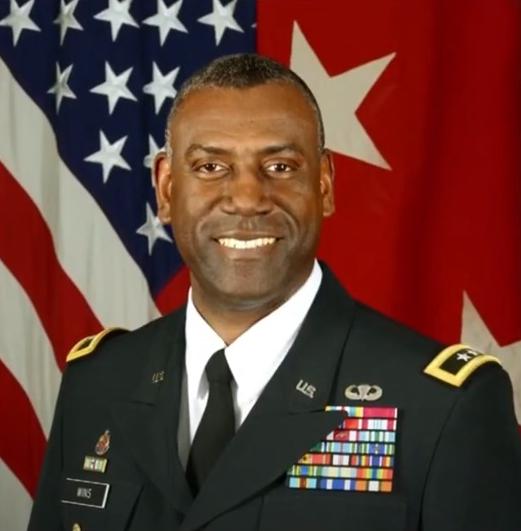
During his tenure, General Wins focused on addressing the allegations of a racist and sexist culture at V.M.I., implementing measures to increase diversity and inclusion within an environment that many have characterized as resistant to change. His actions included the removal of a statue of Confederate General Thomas “Stonewall” Jackson, a figure whose legacy is deeply entwined with the school’s history.
Wins acknowledged the strong feelings surrounding this decision, asserting that “though change can sometimes be difficult, it is time for our beloved Institution to move forward.”
Despite his efforts, General Wins faced substantial opposition from alumni, particularly from a group called Spirit of V.M.I., which launched campaigns against what they described as a “woke assault” on the college. This movement underscores the cultural clash within V.M.I. as it grapples with its legacy and modern expectations, reflecting a larger national conversation concerning race and identity.
The allegations surrounding Wins’ removal have raised eyebrows, particularly in light of recent political dynamics. Senator Carroll Foy contended that the board chair, John D. Adams, conveyed a preference against having a Black superintendent leading the institution.
Although Adams denied making such claims, the assertion has highlighted potential racial tensions within the leadership. The board, heavily influenced by appointments from Governor Glenn Youngkin, has also seen pushback from Democratic state senators regarding the composition of its members.

As General Wins’ contract nears its expiration date of June 30, his departure has sparked fears regarding the future trajectory of diversity initiatives at V.M.I. The recent ousting of General Charles Q. Brown Jr. as chairman of the Joint Chiefs of Staff during the Trump administration, also a Black leader, has added another layer of concern about institutional biases against leaders of color in military structures.
Major General Cedric T. Wins, a distinguished military officer with a 34-year career, emerged as a prominent figure during these turbulent times. Born in Hyattsville, Maryland, Wins graduated from V.M.I. in 1985, where he distinguished himself not only academically but as an athlete, ranking among the top five scorers in the school’s basketball history.
Throughout his military journey, he earned two master’s degrees and held significant command roles, culminating in recognition through numerous awards for his service, including the Distinguished Service Medal and the Bronze Star.
General Wins’ contributions to the institution are profound, as he sought to reform V.M.I. while preserving its core mission of developing honorable leaders. His historical appointment represented hope for many advocates for diversity within the military community.
However, as the college faces internal and external pressures, the future remains uncertain. The board’s recent vote not only impacts General Wins but may also signify a broader rejection of progressive reform efforts at V.M.I., leaving many to wonder what this means for the institution’s legacy and its commitment to inclusivity.
MORE NEWS ON EURWEB.COM: Black Gen. CQ Brown Dismissed as Joint Chiefs Chairman in Surprise Leadership Shift by Trump | WATCH
Sign up for our FREE newsletter HERE.