‘Poverty in China vs US’ Is More Than Just Economics
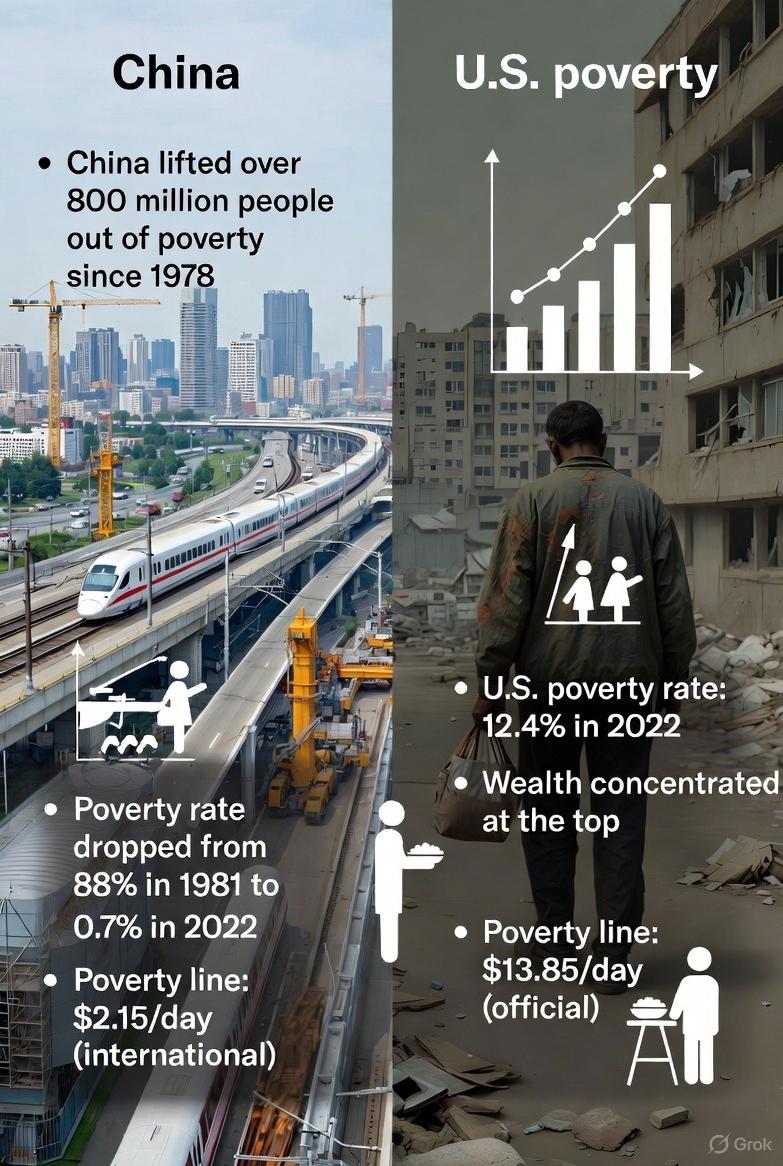
*This is the kind of news that makes you wonder just what the hell is really going on in these United States of America. That’s because since 1978, China has lifted over 800 million people out of extreme poverty. According to the World Bank, nearly 88% of China’s population lived on less than $2.15 a day in 1981. By the late 2010s, that number dropped to below 1%.
This dramatic transformation was driven by major policy shifts. Reforms by Deng Xiaoping, massive industrialization, rural-to-urban migration, and foreign investment all played key roles. In contrast, the United States never had poverty on this scale but has also never reduced it as aggressively.
U.S. Poverty Reduction Is Real but Temporary
America has shown it can reduce poverty, but only when it decides to spend heavily. In 2021, poverty hit a historic low of 7.8% due to stimulus checks and child tax credits. But these were short-lived policies, and poverty spiked again to 12.4% in 2022 after benefits expired.
This rise and fall shows that poverty in the U.S. is more about political will than capability. Programs work, but they’re not made permanent. Instead, U.S. policy tends to favor low taxes and smaller safety nets over bold redistribution.
Scroll to continue reading









‘Poverty in China vs US’ Shows Different National Priorities
Both nations made conscious choices. China embraced state-led development and redistribution to tackle poverty fast. The U.S. has favored market-led growth and individual responsibility, even if that means more inequality.
China’s success came with political trade-offs, including limited freedoms and tight government control. Meanwhile, the U.S. maintained higher living standards overall, but with greater inequality and fewer social protections.
China’s Success in Ending Poverty Is Unmatched
In 1990, over 943 million Chinese people lived on less than $3 a day. By 2019, that number was zero. This marks one of the fastest poverty reductions in modern history.
Meanwhile, over 4 million Americans still live on less than $3 a day today. That’s three times more than in the late 1980s, even though U.S. economic output per person is six times higher than China’s.
Income Inequality in the U.S. Keeps Getting Worse
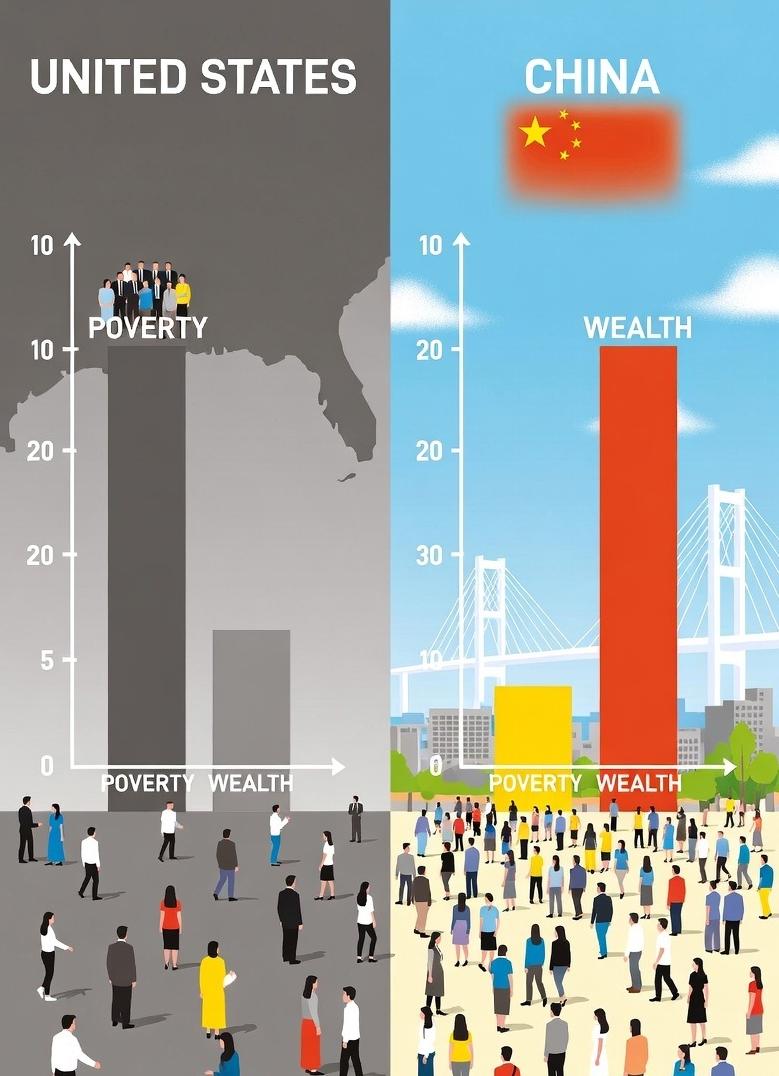
Back in 1980, middle-income Americans earned over half the amount of those in the 90th percentile. By 2023, that share had dropped to just 42.5%. The top has raced ahead while the middle and bottom struggle.
Americans in the bottom 10% of income earn about 1.8% of the nation’s total income. That’s less than in many developing countries. Poor people in China, Nigeria, and Bangladesh receive a bigger share of national income than those in the U.S.
Globalization and Tech Widen the Gap in America
Technology and global trade reshaped the U.S. economy. High-skilled workers benefited, while low-skilled workers were replaced or left behind. This pushed the working class further apart and deepened income gaps.
At the same time, the share of income going to workers fell. Corporate profits and capital returns surged, making the rich richer. Still, the U.S. government chose not to redistribute much of this wealth.
Why This Comparison Matters for the Future
The debate isn’t just about numbers. It’s about what kind of society people want to build. Should a country let millions struggle when solutions exist?
“Poverty in China vs US” highlights two paths. One focused on collective uplift, the other on personal freedom and limited government. Each has costs—but only one made mass poverty elimination a national goal.

(If You Like/Appreciate This EURweb Story, Please SHARE it!)
MORE NEWS ON EURWEB.COM: Lil Jon Faces Backlash After Leaving Black Wife for Non-Black Partner | PicsVideo
Sign up for our Free daily newsletter HERE.