*The saying that returning to something you haven’t done in a long time is “like riding a bike” has been around forever. The idea is that once you learn to ride, you never forget how. But no one talks about what it takes to learn to ride that bike in the first place.
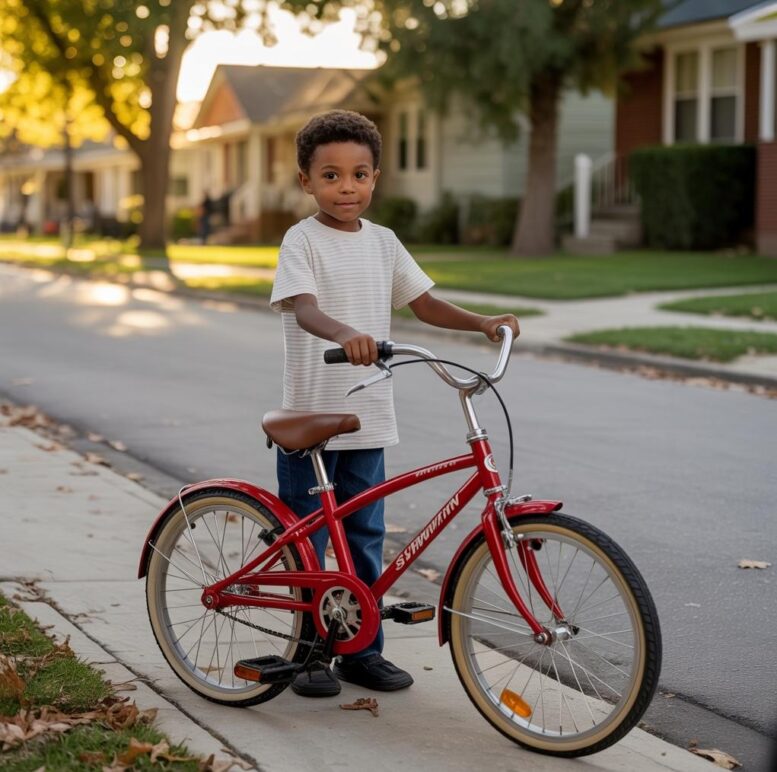
When I was 11, everyone in my neighborhood either had a bicycle or knew how to ride one, except me. A few kids were willing to teach me by letting me ride their bikes. I’d climb on, and they would hold the bike while running beside me. But when they’d let go, I’d lose my balance and fall, taking their bike down with me.
Nobody was interested in me wrecking their bike, so the generosity ended with me on the pavement, leaving me embarrassed and even more nervous about trying again.
Even though I couldn’t ride one, when November arrived, I began lobbying Mama for a bicycle. In November 1966, the Supremes had the number one record in the country with “You Keep Me Hangin’ On.” Somewhere out in California, where my maternal grandmother, aunts, and cousins lived, I’d heard about the founding of something called the Black Panther Party. The Beatles, having taken the U.S. by storm two years earlier, were a household name by ‘66. As far as I was concerned, everyone in the world seemed to be doing their thing, and I didn’t have a bike. I needed to change that.
Scroll to continue reading




In persuading Mama, I faced a tough headwind, as November was when Daddy would launch his annual “It’s gonna be a bleak Christmas” campaign. This was when he said what he said every holiday season–that he didn’t know where the money for gifts this year was going to come from. “I’m just sayin,’” went his grim declaration, “it’s gonna be a bleak Christmas.”
However, when Daddy wasn’t around, as quietly as a determined child could be, I’d be in Mama’s ear. In the catalog from local Oklahoma City retail chain OTASCO (Oklahoma Tire and Supply Co.), I showed her the latest trend in kids’ bicycles, the Sting-Ray.
The Schwinn company designed and marketed the original Sting-Ray in 1963 after discovering that kids in California had been customizing their bikes to look like motorcycles. The bikes, with their high handlebars and “banana” seats, were all the rage. I dreamed of owning one.
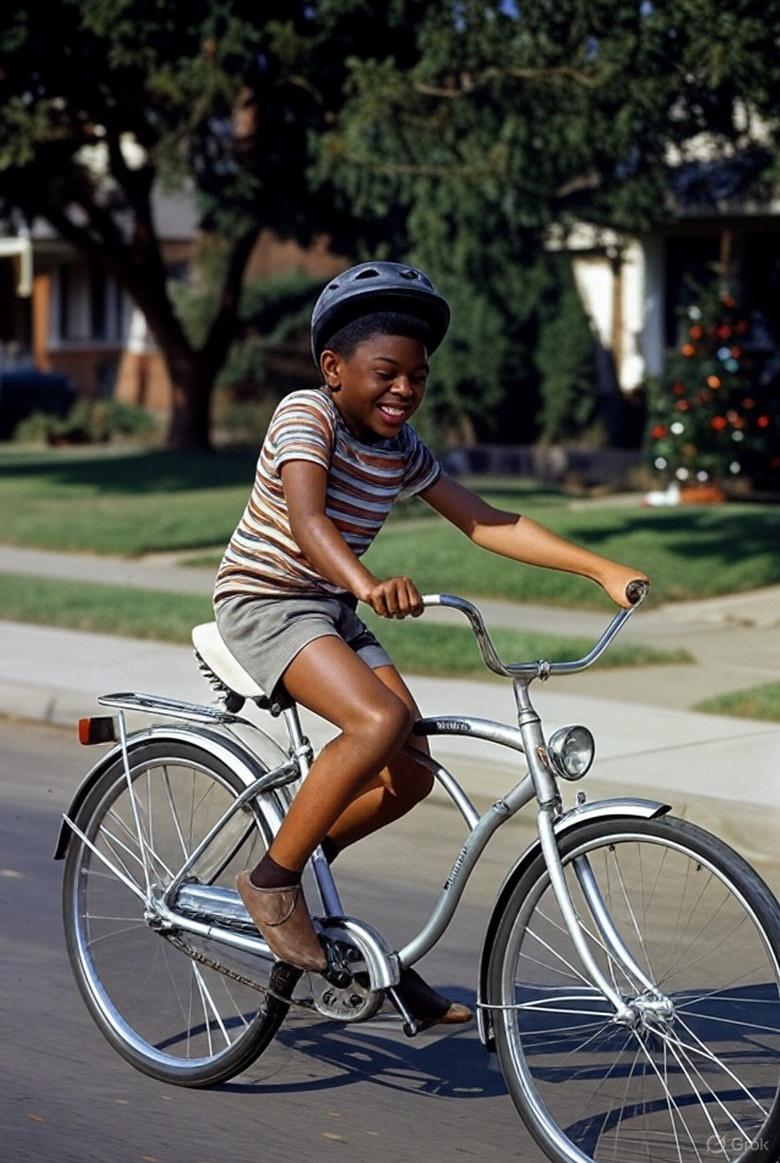
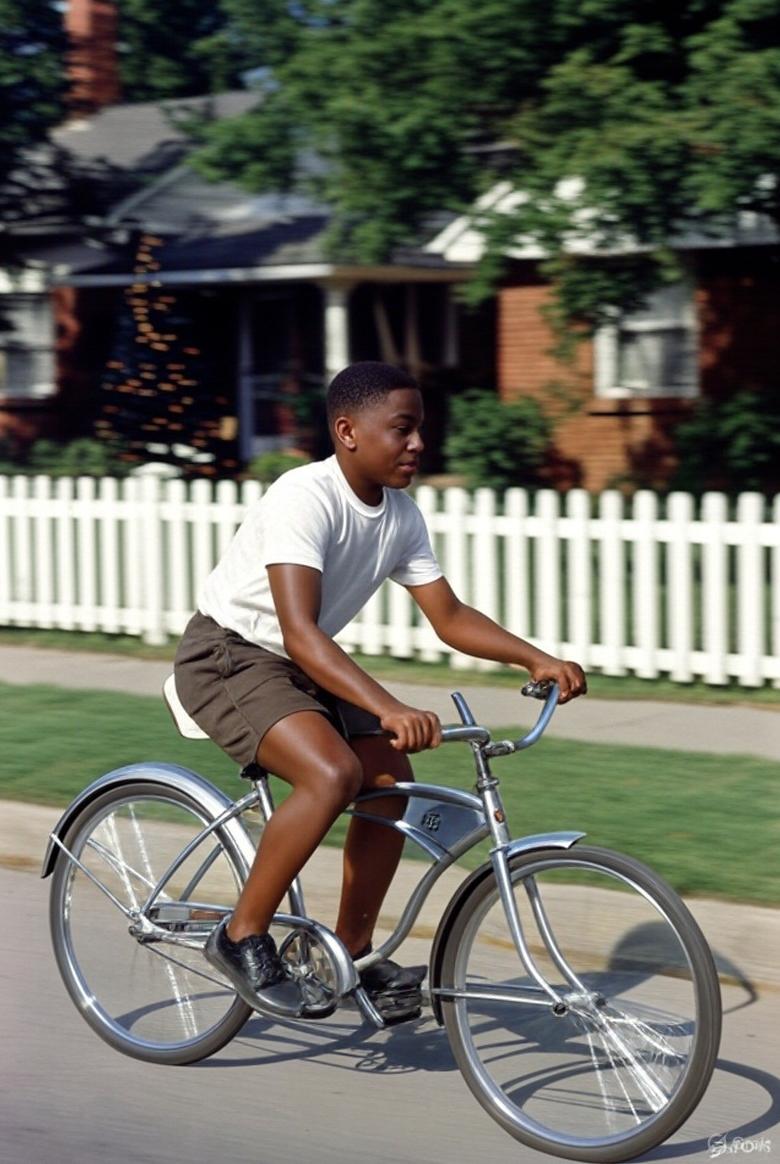
Despite Daddy’s bleak bluster, he always managed to find a way. And come Christmas morning, standing next to our Christmas tree, among other gifts, was a gleaming silver Sting-Ray bicycle, with a white banana seat. Mama smiled at my excitement—Daddy was still asleep—and, as my sister and brothers opened their gifts, I got dressed, put on my coat and mittens, and headed out.
What was left of a snowfall a week earlier didn’t stop me; the sidewalks were clear. I fell three times trying to maintain enough momentum to keep the bike upright. Then I thought of something.
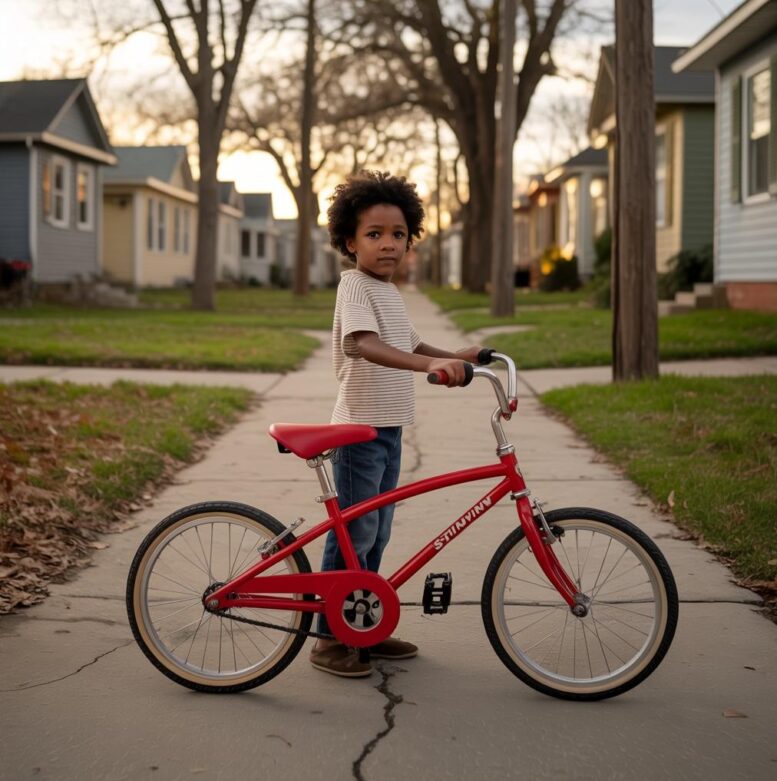
The edge of our backyard—at the fence that separated our yard from the neighbor’s—had a very slight slope. Standing at the fence, you wouldn’t notice it. But on wheels, that slope gave me just enough momentum to pedal and pick up speed. I pedaled out of the backyard, out front, and onto the sidewalk. I was riding!
I’d start my rides at the backyard slope a few times, but then I learned how to get on the bike, push off, and start pedaling.
I became an agile rider. I wasn’t as dexterous as Donnie, my best friend and next-door neighbor, who could do a wheelie—lifting his bike’s front wheel while riding on the back wheel—for nearly a neighborhood block’s length. Mostly, I was a smart rider. Like a person’s first car, my bike was a source of pride—it was mine!—and a symbol of freedom. I never rode far from home, but that I could if I wanted to meant everything.
My ability to ride a bike was motivating. I was athletic but avoided team sports because competition felt like confrontation. Mama got me a violin, but I didn’t commit and quit the school’s music class soon after starting. I went to one Cub Scouts meeting before quitting because I was too shy to connect with the other boys.
To teach me how to skate, Gerald, my big brother, attached skates to my shoes, locked them tightly with a skate key that he pocketed, walked me three blocks from the house, and, mischievously, left me there to figure out how to get home on my own. I clung to streetlight poles, fences, and trees, crawling—everything but skating—to get home. Never looked at skates again.
Learning to ride a bike on my own gave the childhood me the courage to try other things. In my memory, it was the first thing I taught myself to do, not because it was required, but because I wanted to. I was so nervous about trying it; peer pressure was intense. But I did it.
I’ve long since learned that past accomplishments—no matter how long ago—can be a great well of inspiration for achieving new goals today. I’ve since done many things from which I draw inspiration, but learning to ride my bike all those years ago remains as mighty a source of spirit as any.
I haven’t ridden a bike in years, but I know I can. Still, I wouldn’t want anyone to watch me trying to get it together.
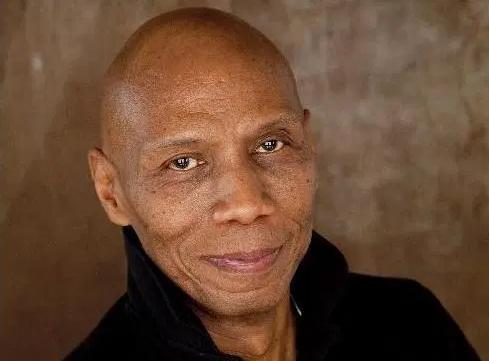
Steven Ivory, a veteran journalist, essayist, and author, writes about and discusses popular culture across various platforms, including the Internet, TV, radio, documentaries, magazines, and newspapers. The Last Man on AOL is at [email protected].
(If You Like/Appreciate This EURweb Story, Please SHARE it!)
MORE NEWS ON EURWEB.COM: Cory Booker Marries Alexis Lewis in Private Ceremonies
We Publish Breaking News 24/7. Don’t Miss Out! Sign up for our Free daily newsletter HERE