*I grew up in New York in the late fifties and sixties, a time and place that left indelible marks on anyone attentive to the currents shaping our city’s soul. It was an unsettling era; every block and borough seemed caught up in the storm of social change, unrest, and the quest for dignity.
Concerns about the well-being of society were not just abstractions but daily, urgent matters foregrounded in homes, schools, and on street corners.
While the agony of racial strife and injustice in the South dominated national headlines, the North, and New York City especially, was hardly free from its own torments. Many African Americans migrated from the South to New York during those years, driven by hope for greater freedom and justice. Yet the city’s promises were often incomplete and uneven: New York bore its own burdens of segregation, exclusion, and racialized inequality, even as its neighborhoods grew more vibrantly diverse with each passing year.
I learned early on, long before adulthood, what the words “police brutality” meant and how deeply they resonated for African Americans across our five-borough city. There was a constant, sobering awareness of the challenges of high unemployment within their communities, along with disparities in housing and the ever-present struggle for opportunity. These truths were made real to us not only on the streets, but in our social studies lessons and public conversations.
Scroll to continue reading
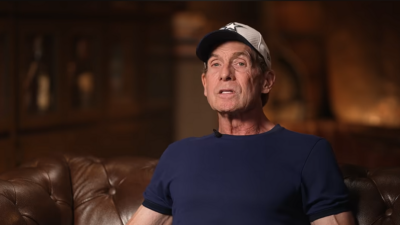

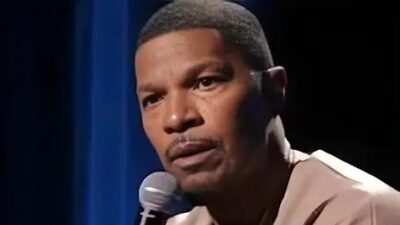






Living in the presence of one another in New York could offer the illusion that all things were equal; we played together, went to school together, shared subway rides. But as I matured, first in grammar school, then middle school, it became painfully clear that our experiences were sometimes worlds apart. Raised in a cross-cultural neighborhood, I assumed difference was diluted in togetherness, only to discover over time how layered and persistent inequity truly was. Even in my younger years, I remember watching Dick Cavett and other talk show hosts on television, seeing the likes of James Baldwin, Adam Clayton Powell Jr., and others confront the urgent issues on everyone’s minds.
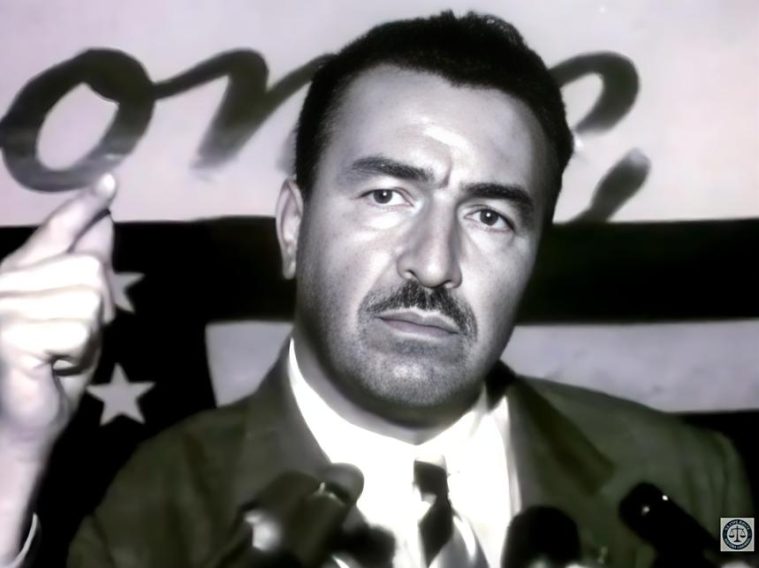
“Keep the faith, baby.” If I heard that phrase once, I heard it again and again as it rolled off the tongue with the effortless charisma of Adam Clayton Powell Jr., the late Harlem congressman and Baptist pastor, whose turbulent journey through American public life still lights the way for those navigating today’s storms of division and despair.¹ In the era when Powell first uttered those words (mid-century America), with its sharp racial divides, Cold War anxieties, and barely bridged chasms between hope and disappointment, the country seemed perpetually poised on the edge of promise or peril. Powell was both a witness and a change agent, wielding spiritual rhetoric and hard political strategy to urge a fractured society toward progress.² Yet his most enduring gift may not be his legislative victories or pulpit oratory, but his stubborn insistence on faith: a faith not of blind optimism but of gritty, collective resilience shaped by trial and tempered by engagement.¹
James Baldwin, who shared New York’s restless pulse with Powell, understood both the promise and peril of America’s conscience. His essays became moral mirrors for a society desperate to see itself truthfully. In The Fire Next Time, Baldwin warned, “If we, and I mean the relatively conscious whites and the relatively conscious blacks, who must, like lovers, insist on, or create, the consciousness of the others, do not falter in our duty now, we may be able, handful that we are, to end the racial nightmare.”⁶
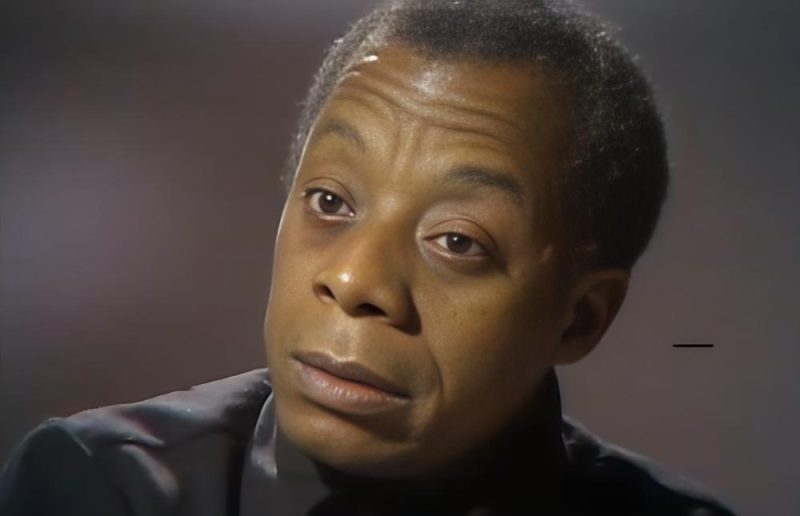
Baldwin’s appeal was to what he believed was a conscious minority of both African American and Caucasian communities, at least that was his hope. He dared to believe that this conscious minority was not willfully blind, and neither did they lack comprehension of the ravages of the sickness of racism. When he then speaks of relationality at an intimate level, he contends that those who are truly and deeply in love cultivate awareness, as it is essential and non-negotiable if empathy is to be present. In other words, those who are the conscious minority are to be “like lovers” and exercise ethical persuasion to enable others to see what and as they see.
Baldwin considered the path to ending racism a shared burden, and that the conscious minority of African Americans and Caucasians had the capacity to actually create a new consciousness. If that was relevant, then how much more is it relevant now? If the telos, the goal, the zenith is indeed a more just society, which Baldwin said was the very intent of what “our country” was formed for, it had the potential of transforming world history itself. This is no small dream. It is strikingly similar to Dr. King’s impassioned plea that we must “accept finite disappointment but never lose infinite hope.”⁹
Baldwin’s sentence carries Powell’s cadence of courage. Both men believed that consciousness, both moral and civic, was a duty, not a luxury. Powell embodied it in policy and public service; Baldwin articulated it in language that seared the soul. He also saw how fear corrodes both oppressor and oppressed: “Whatever white people do not know about Negroes reveals, precisely and inexorably, what they do not know about themselves.”⁷ It was not an accusation for its own sake but an appeal to self-knowledge as the foundation of national renewal.
Where Powell stood in the glare of cameras and congressional debate, Baldwin stood in cafés, lecture halls, and living rooms, calling Americans back to the difficult work of truth. “Not everything that is faced can be changed,” he wrote, “but nothing can be changed until it is faced.”⁸ That single line names the precondition of resilience: truth before reconciliation, honesty before healing.
Their approaches differed. Powell’s humor and public pragmatism met Baldwin’s relentless introspection. But their hope converged. Each insisted that faith without honesty is hollow, and honesty without hope becomes despair. In that balance lies the moral architecture of endurance that can still serve our divided age.
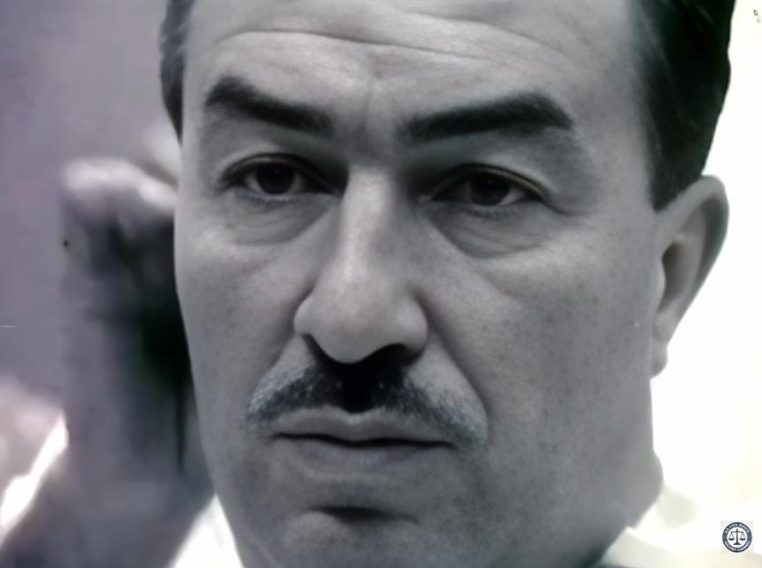
We need Powell’s challenge now. We live in a moment marked by cultural malaise and civic unease. The air is thick with vitriol, and the “us vs. them” mentality, which is ever so partisan, racial, and ideological, has seeped into everyday conversation and digital spectacle. The bonds of trust that hold communities together appear frayed, as nearly every news cycle brings fresh evidence of rancor, division, and the erosion of shared purpose. From school board meetings to social media feeds, the landscape is studded with eruptions of anger and endless commentary on the symptoms of decline.
But beneath all the strife, something vital stirs: the possibility that, as in Powell’s day, renewed civic resilience could be the remedy to our social malaise. Such resilience is not a vague abstraction, but a deliberate practice—a capacity, fostered collectively, to absorb setbacks, confront threats, and remain open to social transformation.³ It is the difference between communities that fracture under stress and those that persist, adapt, and restore.³
Powell understood this need intuitively. When he pressed his famous exhortation, “keep the faith, baby!” he was addressing not just his congregation or constituents, but the entire American experiment.¹ Living at the intersection of pulpit and Congress, he saw firsthand how adversity and disappointment could sap a people’s will; he also saw how endurance, hope, and shared struggle were indispensable tools for both survival and progress.¹ That his life was marked by controversy, censure, political battles, and public rebuke only deepened his appreciation for the difficult work of keeping faith in the repurposing of civic pain toward purpose.²
What does this look like today? Civic resilience begins at the granular level: in relationships, neighborhoods, and local institutions that withstand the corrosion of cynicism and polarization.³ It is evident where people still seek understanding across divides, where dialogue, however tense, persists in town halls and community centers; where young activists, elders, and unexpected coalitions refuse to surrender the common good to despair. Even when the pressure of events threatens to overwhelm, history teaches that such resilience is possible, and, crucially, that it can be cultivated.³⁴
Consider recent local responses to the crisis. In the wake of pandemic disruptions, economic setbacks, and social injustice, countless communities have shown how resilience works in practice. Mutual aid networks sprang up to provide food and support; faith leaders and secular organizers collaborated to address grief and anxiety; teachers and parents adapted together to ensure education would continue. Such moments do not negate the reality of malaise; they acknowledge it, face it, and respond with the thick-skinned determination Powell advocated.
This is not easy work. The current climate is fraught, and efforts to come together can feel Sisyphean against waves of digital outrage or real-world hostility. But to “keep the faith” is to refuse resignation; it is to insist, again and again, that the future is not yet written, and that ordinary intentional acts of listening, creating, joining, voting, speaking, and caring are the building blocks of resilience and possibility.
Powell’s example offers several lessons for today’s public conversation. Primarily, he modeled a confidence in ordinary people’s capacity to change their circumstances, a confidence rooted not in elite privilege but in the lived experience of the marginalized and the overlooked.¹² In addition, he understood that faith and resilience must be embodied institutionally: churches, schools, civic organizations, and governments all have crucial roles to play in restoring civic trust and fostering renewal.⁵
And ultimately, and perhaps most powerfully, he showed that encouragement is not sentimental; it is strategic. By asserting faith in the face of adversity, he galvanized others, tapping resources of hope and humor that move people beyond grievance to action.¹-²-⁵
To reflect on Powell is to recognize that resilience does not mean ignoring faults, injustices, or pain; it means confronting them, naming them, and then stubbornly refusing to let them define or exhaust the civic imagination. His exhortation, decades later, is a call to both truth-telling and persistent hope. In times of cultural malaise, when the temptation to retreat into partisan camps or personal despair is strong, “keep the faith, baby” becomes less a historical phrase than an urgent public ethic, one that invites us to reimagine the hard work of belonging and rebuilding.
Our age demands civic resilience no less than Powell’s did.⁵ To answer that demand, as neighbors, advocates, leaders, or simply citizens, requires rediscovering the power of faith, not simply as private consolation, but as the wellspring of public transformation. Powell taught that hope is a discipline, encouragement a responsibility, and civic resilience the lifeblood of democracy’s renewal. The question that remains is whether, in these turbulent days, we are ready to answer, as he did, with words and deeds that build, connect, and restore. The times are chaotic. But the call is clear: keep the faith, baby, and help weave the future from the fabric of resilience that grounds our hope.

Endnotes
1. Adam Clayton Powell Jr., Keep the Faith, Baby! (New York: Trident Press, 1967).
2. “Adam Clayton Powell Jr.,” U.S. House of Representatives: History, Art & Archives, overview of his legislative service and activism.
3. Ann S. Masten, Ordinary Magic: Resilience in Development (New York: Guilford Press, 2014).
4. Andrew Zolli and Ann Marie Healy, Resilience: Why Things Bounce Back (New York: Simon & Schuster, 2012).
5. John W. Kinney, “Faith as a Public Virtue: Adam Clayton Powell and the Theological Foundations of Social Engagement,” Journal of the Interdenominational Theological Center 44 (2018): 55–70.
6. James Baldwin, The Fire Next Time (New York: Vintage, 1963), 105.
7. James Baldwin, “The Discovery of What It Means to Be an American,” in Nobody Knows My Name (New York: Dial Press, 1961), 137.
8. James Baldwin, “As Much Truth as One Can Bear,” The New York Times Book Review, January 14, 1962.
9. Martin Luther King Jr., Strength to Love (New York: Harper & Row, 1963), 158.
View this post on Instagram
Certified life coach, author, and spiritual director Dr. Mark Chironna is a man uniquely gifted to bridge the realms of the intellectual and spiritual in dismantling emotional barriers and empowering lives. He is a prolific author whose frequent media appearances are well-received in faith-based and secular markets. Contact him via: www.markchironna.com
(If You Like/Appreciate This EURweb Story, Please SHARE it!)
MORE NEWS ON EURWEB.COM: ‘I Am Not Done!’ Kamala Harris Teases 2028 Run in Candid BBC Interview | VIDEO
We Publish Breaking News 24/7. Don’t Miss Out! Sign up for our Free daily newsletter HERE.