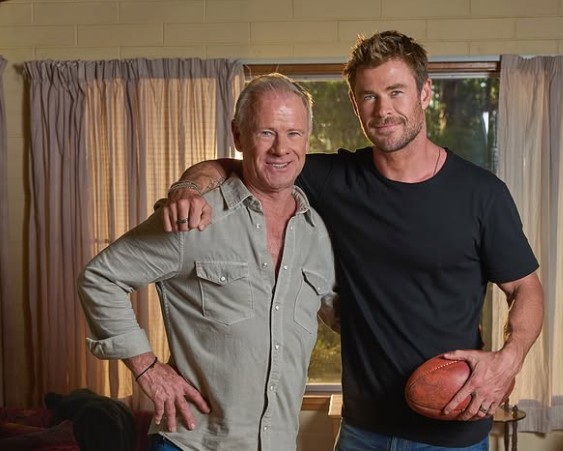
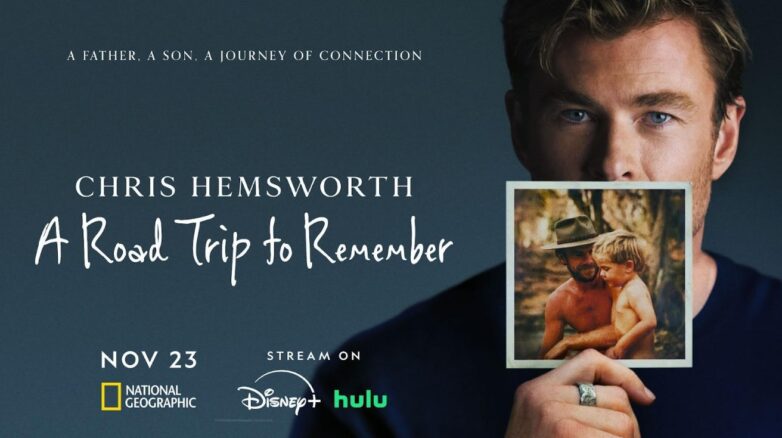
*The impact of dementia is felt by millions worldwide, and that reality forms the emotional foundation of “Chris Hemsworth: A Road Trip to Remember.”
More than 57 million people are currently living with dementia, with Alzheimer’s as the leading cause, and an estimated 10 million additional cases emerging each year. Those statistics helped shape Hemsworth’s decision to return to National Geographic for a deeply personal one-hour special that premiered Nov. 23 and streams Nov. 24 on Disney+ and Hulu.
The documentary follows Chris and his father, Craig, as they ride across Australia to revisit meaningful locations from their past. Their time on the road is guided by research from dementia specialist Dr. Suraj Samtani, whose work links social connection, reminiscence, and community engagement to stronger cognitive health. For producer Arif Nurmohamed, the authenticity of the Hemsworths’ relationship created a rare opportunity for storytelling grounded in openness and trust.
Nurmohamed has worked with Chris Hemsworth on multiple projects, including the series “Limitless,” and says Hemsworth’s transparency made this film possible. After spending time with Craig and earning the family’s confidence, the team felt the father and son would naturally bring depth and sincerity to the journey.
Scroll to continue reading
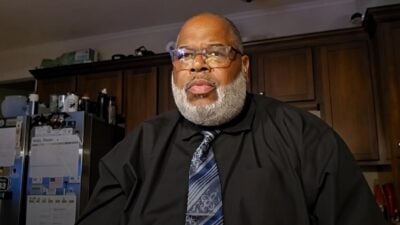






Even with that rapport, the production carried uncertainty, as much of it unfolded in a purely observational style. Nurmohamed recalls unexpected moments when Craig’s early-onset Alzheimer’s surfaced. “We didn’t know, and we didn’t need to see those moments,” he explains, noting that Craig and his wife, Leonie, encouraged the filmmakers to continue documenting, recognizing the value of showing their experience authentically.
A central hope for the Hemsworth family was to help others feel less alone. They wanted to highlight everyday tools that support loved ones living with dementia—simple behaviors rooted in presence, routine, and connection. “Connection, as we say, in the film is the most powerful drug that you can give,” Nurmohamed emphasizes, underscoring the family’s desire to share accessible strategies with viewers.
Throughout the ride, Hemsworth and his father participated in experiences backed by scientific evidence, including reminiscence therapy and regular social interaction. Research from Dr. Samtani and a global study of more than 40,000 people shows that maintaining consistent social engagement can cut dementia risk in half, while community-oriented activities may help slow cognitive decline. For Craig and Chris, those interventions felt meaningful in the moment. As Nurmohamed explains, “As Chris says, he doesn’t know what the future holds, but he knows that that experience in that moment was something that really did make a difference for his dad.”
The route also carried personal significance for the Hemsworth family, who revisited areas tied to their early years, including Bulman in the Northern Territory. Nurmohamed describes the return as an unexpected layer to the film, providing another dimension to their shared story. “It was a real gift to us as storytellers and filmmakers that Chris and his family were prepared to let us film that journey,” he says.
Some of the most intimate scenes came from Hemsworth’s own camera, an approach initially conceived as an extension of the film’s themes. According to Nurmohamed, “the idea was that Chris was capturing that as part of their reminiscence therapy.” Though visually distinct from the main footage, the self-shot moments were set up early in the documentary so audiences would understand their purpose.
Other emotional highlights happened in front of the main cameras, unplanned and unscripted. Nurmohamed points to one instance when Craig forgets who is with him, and another where father and son share a quiet campfire exchange. Both scenes, he says, unfolded naturally once the presence of the crew faded into the background. “They were really in the moment. It was very real.”
Reflecting on the broader goals of the project, Nurmohamed connects the film’s approach to the philosophy behind the “Limitless” series—focusing on affordable, accessible ways to enhance well-being. Reminiscence therapy, social interaction, and consistent engagement require no costly treatments, he notes, yet offer meaningful benefits. He hopes audiences walk away motivated to reach out to the people who matter most.
For those navigating dementia within their own families, Nurmohamed believes seeing someone as public as Chris Hemsworth face similar challenges may carry comfort. He adds, “Ultimately, we want people to come away feeling that connecting with their loved ones and after the film finishes, reaching for that phone… reaching out to loved ones is something that’s very easy to do and exponentially beneficial to everyone.”
Watch our full conversation with Arif Nurmohamed via the clip below.
*This interview has been edited for length and clarity.
MORE NEWS ON EURWEB.COM: Chris Hemsworth’s New Documentary Turns a Family Road Trip into a Powerful Exploration of Dementia, Memory, and Connection | EUR Exclusive
Sign up for our Free daily newsletter HERE.