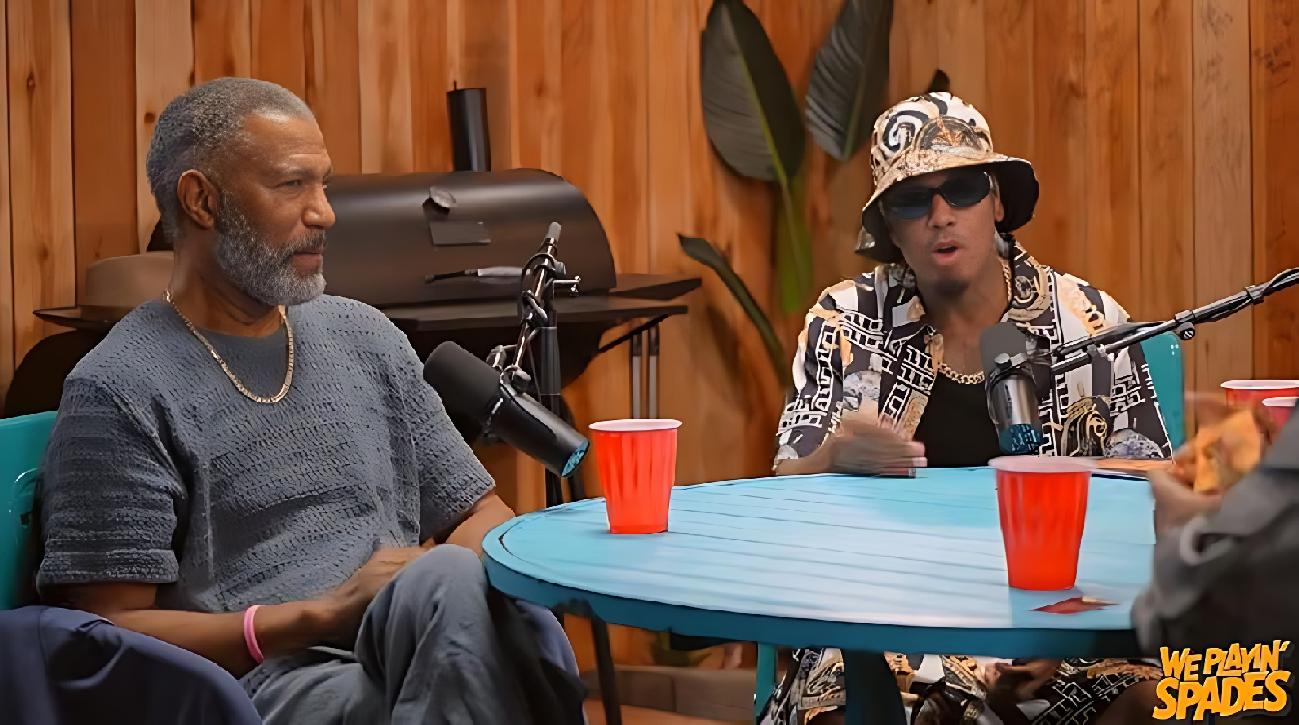
*Nick Cannon posted one question on social media, and within hours, Black Twitter had chosen war. The March 17 (2026) post was deceptively simple: “Black US actors vs Black UK actors… Y’all think it’s competition or just different journeys?”
Accompanied by a clip from his show “We Playin’ Spades,” the question landed like a lit match on dry grass—igniting hundreds of likes, reposts, and a comment section that has since become ground zero for one of the most heated debates in Black entertainment.
The Heart of the Debate
At its core, Cannon’s question taps into a simmering tension that has been building for over a decade. As Black British actors like Idris Elba, Daniel Kaluuya, John Boyega, and Letitia Wright increasingly land marquee Hollywood roles—often in projects centered on the African American experience—some in the industry have wondered aloud whether Black American actors feel threatened. The rise of stars like Damson Idris (“Snowfall”) and Kingsley Ben-Adir (“Bob Marley: One Love”) has only intensified the conversation, as more UK-trained actors are tapped to portray iconic Black American figures and stories.
One viral reply put it bluntly: “A lot of black actors in America got a little chip on their shoulder towards the UK black actors especially in the last 10 years…”
The accusations go beyond simple rivalry. Some argue that British actors are perceived as “cheaper” to hire due to different union structures or that their formal drama school training gives them a perceived legitimacy that casting directors favor. Others suggest the resentment stems from UK actors being cast in quintessentially American stories—Kaluuya’s Oscar-winning turn in “Get Out” or Boyega’s role in “Detroit” being prime examples of British actors portraying deeply American experiences.
Scroll to continue reading







The Pushback: “What Is There to Be Jealous Of?”
But if Cannon expected universal agreement, the replies made clear that the other side has plenty to say.
One popular counterargument dismantles the jealousy narrative entirely: “What is there to be jealous of? They come here because they can’t and will not pressure the English to do right by them. They play Black American heroes and never put their own culture on the map for the world to see. They don’t even have a Denzel, so this topic is mute.”
Others pointed to the infrastructure Black American actors have built—Hollywood, Tyler Perry Studios, BET, and a legacy of awards recognition—as proof that there’s no reason for resentment. Meanwhile, UK Black talent often migrates to the U.S. because opportunities in Britain remain limited, with fewer major productions and no Black-led award shows comparable to the NAACP Image Awards or BET Awards.
As one commenter noted: “It’s not a stereotype, it’s just facts. In order to get valuable representation, they have to be formally trained as actors. America used to care about that before Tyler Perry.”
Diaspora Tension or Industry Reality?
The debate echoes previous moments, including comedian London Hughes calling out the BBC and BAFTA for mistreatment of Black British talent, and the recurring discourse around colorism and accent bias in both countries’ entertainment industries. Some see this less as pure jealousy and more as intra-diaspora tension—competition for a limited pool of “Black” roles in an industry still dominated by white decision-makers who may default to familiar archetypes.
Whether it’s jealousy, healthy competition, or simply the globalization of Hollywood, one thing is clear: Nick Cannon knows how to start a conversation.
The comments are still on fire. Pick a side. Scroll down and let us know where you stand on this issue.
(If You Like/Appreciate This EURweb Story, Please SHARE it!)
RELATED NEWS ON EURWEB.COM: Larenz Tate Says Hollywood Values Black British Actors Over Black American Actors (Watch)
Sign Up for Our Free daily newsletter HERE