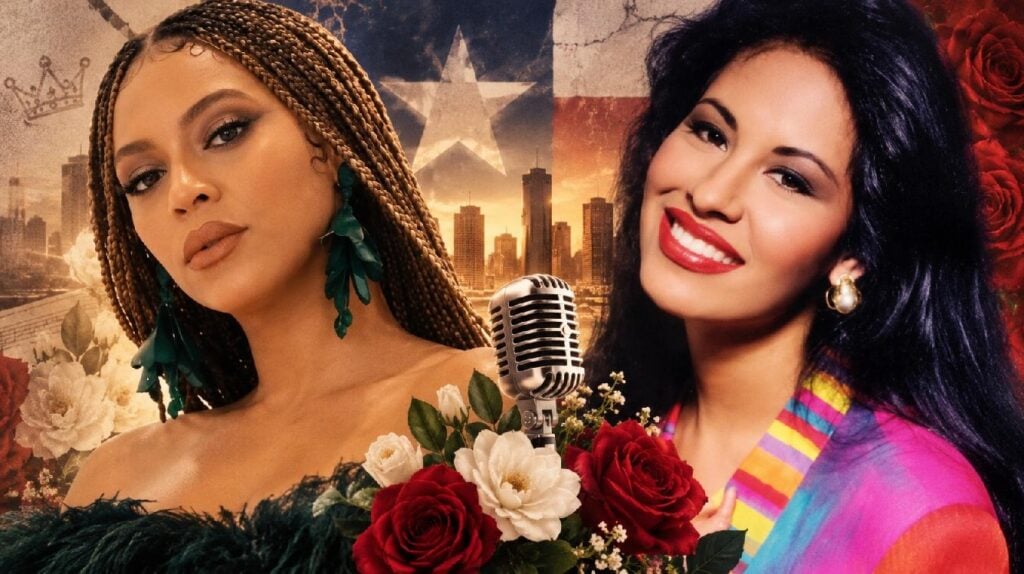
*Beyoncé‘s new collaboration with late Tejano icon Selena Quintanilla has triggered criticism over cultural appropriation and political solidarity, turning an estate-approved musical tribute into a larger argument about race, Latino identity and what artists owe communities whose culture they embrace.
The controversy surrounds “Irreemplazable (Como La Flor),” released on the 20th-anniversary edition of Beyoncé’s “B’Day.” The recording combines her Spanish-language version of “Irreplaceable” with Selena’s vocals from “Como La Flor.”
But one fact makes a simple appropriation narrative considerably more complicated: Selena’s estate approved the collaboration.
Selena’s Estate Approved Beyoncé’s Tribute
The Los Angeles Times reported that Selena’s estate, which rarely grants permission to use her music, gave Beyoncé its blessing. A statement announcing the project described the pairing as bringing together two Texas women whose voices have broken barriers.
Scroll to continue reading






Selena’s widower, Chris Pérez, also defended Beyoncé after critics questioned the collaboration, urging fans to appreciate that another major artist was highlighting Selena.
Beyoncé’s connection to Selena isn’t newly manufactured. The Houston Chronicle noted that the Houston native has long cited Selena as an influence, remembers listening to her on local radio and once briefly encountered her at a Houston mall.
None of that requires listeners to like the remix. Estate approval doesn’t automatically settle every debate about culture, either.
It does make appropriation harder to treat as self-evident when Selena is explicitly credited, her voice remains part of the recording and her estate authorized the project.
Then the Argument Became Political
The debate didn’t remain about music.
Emerald Book documented criticism arguing that Beyoncé shouldn’t embrace Latino culture while remaining insufficiently vocal about ICE and immigration enforcement under President Donald Trump.
One claim in that analysis, however, doesn’t withstand verification: that Beyoncé legally forced ICE to stop using her music. The documented cease-and-desist involved the Trump campaign, not ICE.
Beyoncé does have a clear public record in the 2024 presidential campaign. The Associated Press reported that she endorsed Kamala Harris at an October 2024 rally in Houston, encouraged Americans to vote and authorized Harris’ campaign to use “Freedom.”
That doesn’t answer whether Beyoncé should specifically address the Trump administration’s current immigration policies. Critics can make that demand.
But it complicates any suggestion that she has remained politically neutral about Trump.
Latino Politics Aren’t One Thing
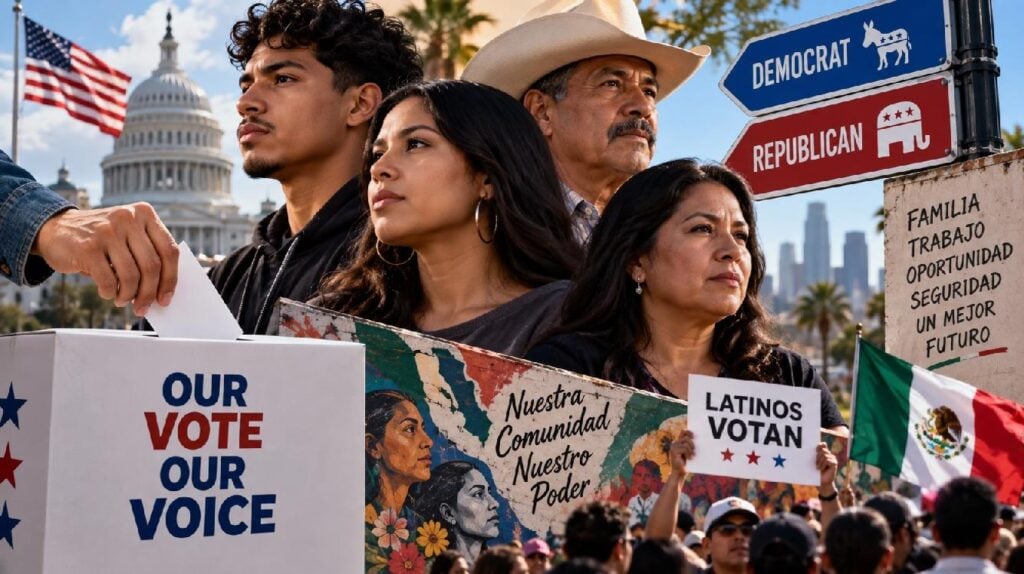
The political-solidarity argument gets shakier when “the Latino community” is treated as a single political constituency.
Pew Research Center found that 48% of Hispanic voters backed Trump in 2024, while 51% supported Harris. Trump’s share was up substantially from 36% in 2020.
That doesn’t mean Beyoncé’s Latino critics voted for Trump. There is no evidence establishing that connection.
What the numbers actually demonstrate is more useful: Latino political opinion is itself deeply divided. Any debate about what Beyoncé supposedly owes “the Latino community” can’t presume that millions of people share one political position on Trump, immigration or anything else.

Beyoncé Has Been Here Before
Questions about who gets to claim a culture aren’t new territory for Beyoncé.
When “Cowboy Carter” arrived, EURweb previously covered the debate surrounding Beyoncé’s use of American, Western and country imagery. Some critics challenged those choices, while others interpreted them as a Black Texas artist reclaiming cultural spaces from which Black contributions have often been obscured.
The Selena debate reverses the direction of that conversation.
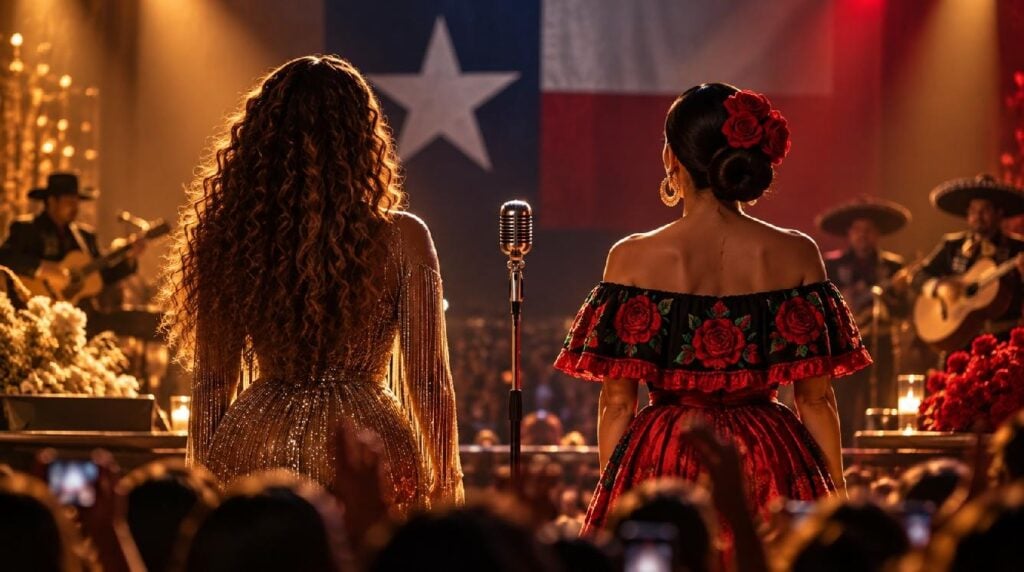
Here, a Black artist is entering a Mexican American musical space. Yet she’s doing so through an explicitly credited recording, with Selena’s vocals, estate authorization, shared Texas roots and a documented admiration for Selena stretching back years.
That’s more complicated than simply declaring the collaboration either appropriation or appreciation.
The Bigger Question Is Who Sets the Cultural Test
The most interesting question isn’t whether Beyoncé is powerful enough to survive another online controversy. She clearly is.
It’s what one community should require from another before cultural exchange is considered legitimate.
Does credit matter? Does permission matter? Does a shared regional history matter? Does political solidarity become part of the price of participating in another community’s musical tradition? And if it does, who decides when an artist has done enough?
Those questions don’t disappear because Beyoncé supported Harris, and the voting behavior of millions of Latino Americans doesn’t invalidate criticism from individual Latino listeners.
But those realities do expose why this controversy resists an easy verdict.
Beyoncé’s Selena tribute doesn’t settle the cultural appropriation debate.
It demonstrates why the debate is considerably more complicated than the accusation.
(If You Like/Appreciate This EURweb Story, Please SHARE it!)
RELATED NEWS ON EURWEB.COM: Beyoncé’s ‘B’Day’ Turns 20 With Celia Cruz Tribute, Selena and Maluma
We Publish Breaking News 24/7. Don’t Miss Out! Sign up for our Free daily newsletter HERE.