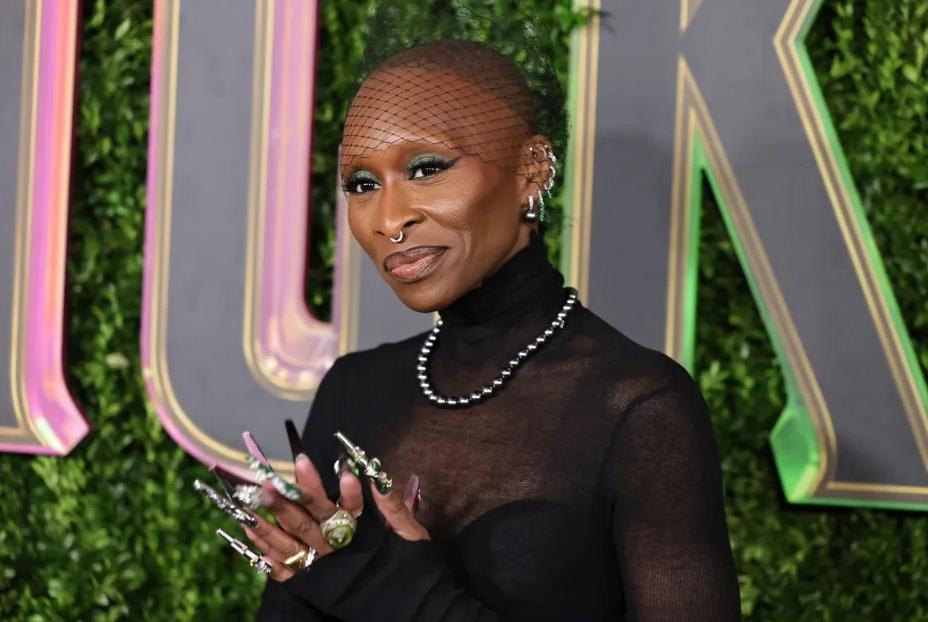
*Angelina Jolie and Cynthia Erivo recently connected over their shared passion for music and the power of art during a candid discussion about singing live on set.
Jolie opened up about her daughter’s emotional connection to “Wicked’s” iconic anthem “Defying Gravity,” highlighting the profound impact art can have on shaping young minds. Erivo stars as Elphaba in Universal’s “Wicked,” the untold story of the witches of Oz, co-starring Ariana Grande as Glinda. Elphaba is a young woman, misunderstood because of her unusual green skin, who has yet to discover her true power, while Glinda is gilded by privilege and ambition, and has yet to discover her true heart. The two meet as students at Shiz University in the fantastical Land of Oz and forge an unlikely but profound friendship.
Directed by acclaimed filmmaker Jon M. Chu and based on Gregory Maguire’s bestselling novel, “Wicked” is the first chapter of a two-part immersive experience, with “Wicked: Part Two” slated for a release theatrically on November 26, 2025.
Meanwhile, Jolie committed to seven months of vocal training before stepping into the role of Greek opera icon Maria Callas for the upcoming Netflix biopic “Maria.” Directed by Pablo Larraín, the film “reimagines the legendary soprano in her final days as the diva reckons with her identity and life” and “follows the American-Greek soprano as she retreats to Paris after a glamorous and tumultuous life in the public eye,” the official synopsis states, PEOPLE reports.
Callas, renowned for her remarkable three-octave vocal range, became a global sensation in the mid-20th century. She passed away in Paris in 1977 at the age of 53 due to a heart attack. “Maria” debuts in select theaters on Nov. 27, then on Netflix Dec. 11.
Scroll to continue reading
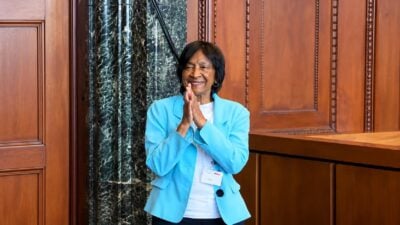
Jolie and Erivo discussed their latest projects during Variety’s Actors on Actors conversation and emphasized the transformative role of creativity. Below are excerpts from the discussion.
CYNTHIA ERIVO: When I watched “Maria,” I wanted to find out what brought you to the project.
ANGELINA JOLIE: Well, I had wanted to work with Pablo Larraín for a long time. I think he’s a wonderful director that is very thoughtful about his subject and his work. And he’s very sensitive to behavior in actors, but also able to shoot a film — and you sometimes sacrifice one for the other. He called me about “Maria,” and I said, “You have to give me a few days.” I knew of her a little bit, but I watched a lot of her work. Then I also watched a lot of her interviews.
What got me the most was, towards the end of her life, there was a lot of cruelty, and she was very unsupported. I knew that the whole team wanted to approach it with love and respect for her, so I thought we’d try.
ERIVO: I didn’t realize that there was that much cruelty. There’s a particular scene where she comes out of the opera house after singing, and [an aggressive] photographer’s there. I felt so heartbroken for her, as someone who’s just trying to find her feet again.
JOLIE: I’m sure you understand her even in ways I don’t, as singing has been a part of your life since you were little. And you’re so unbelievably talented. It’s a lifetime commitment; it’s all the work that’s not seen and not understood. And in many ways you were born very talented. But really for me to now understand what it takes … I have so, so much respect for you and your work.
ERIVO: Thank you.

JOLIE: I feel so many emotions when it comes to this piece, because I had someone in my life say that I couldn’t sing. They didn’t even say, “You couldn’t sing.” I was singing something little, and they laughed a little bit at me. And it really locked me. I don’t think I would’ve ever tried had this not come; I would’ve just lived my whole life never finding my voice. So, yes, I went from being very terrified to being very grateful.
I can’t not talk about some of the joy of this film that you’ve made. I remember taking my daughter — a few of my children, but my one daughter — who, when she watched “Defying Gravity,” I remember that moment. Because as a mom, we want art to have an influence. I felt that feeling of “Oh, she needs this — she’s feeling this desire to know that there’s endless possibility and something within her she hasn’t discovered yet.” This was how I was feeling about it in that moment. I loved seeing it live. I loved, loved when it came at the end of this film. That particular song or what it means to you — singing it — anything that you can share?
ERIVO: There was this huge responsibility, because it’s such a well-known song. And people know it; people love it. I really wanted to mean it. The physical work of it was hard, because I’m in a harness: I’m flying and I’m singing at the same time — so many things are happening. That was new for me, to figure out how my body, my brain, my voice, would all come together to work as one. I felt really proud of being able to figure that physical, practical side of it.
But I think in order to get to a point where I could rule the words, I really thought of all of the journey of getting to that moment. Not just in the making of this particular project, but the journey I’ve taken to get to here: being at drama school at 20, putting myself through, finishing at 23, not getting jobs and not really being seen and not really feeling accepted — feeling very odd, very different. And having to figure out how to make my own way through this, because this business is hard, and this business is very hard when you’re a Black girl who’s singing.
I also knew that there are so many people who want to feel seen, who want to know that it’s possible to exceed people’s expectations of them and exceed your own expectations. Even in that moment, I wanted to exceed my own expectations of what I could do. There’s this other thing that’s playing in my head, like, “There are so many people on this set right now, also, who have been waiting for this moment in this film and this project, and we’ve all worked towards this one part.” It’s how we finished shooting; it was the last thing we shot.
JOLIE: Oh, was it?
ERIVO: I just had to channel several different things: Little Cynthia, who didn’t know she could do this. Big Cynthia, who wanted to make everyone proud and herself proud. I wanted it to feel like the complete package that it was servicing — not just my desires, but the desires of everyone who’d actually come together to make this thing happen. And I love singing. So to be able to take on that and honor the women who’ve had to sing at eight shows a week and to understand what it feels like to have to do that too, I was so ready to do it. I was so ready to “OK, let’s do this.”
JOLIE: Oh, that must’ve been an extraordinary day on set.
Read the full conversation here.
READ MORE FROM EURWEB.COM: Studio Denies Pay Gap Between Ariana Grande and Cynthia Erivo in ‘Wicked’