*In American history, moments of generosity aimed at Black and Brown communities have often been followed—not by gratitude—but by suspicion. From Reconstruction-era Freedmen’s banks to 20th-century Black mutual-aid societies, institutions built to stabilize marginalized communities have repeatedly found themselves under government surveillance, financial restriction, or public smear. What we are witnessing today is not unprecedented. It is patterned.
Before engaging that pattern, it must be said clearly and without hesitation: thank you, MacKenzie Scott.
In an era many now call “Mackenzigiving,” Scott’s model of unrestricted, trust-based philanthropy has not only rewritten the rules of charitable giving—it has restored dignity to organizations long treated as suspect by default. Her generosity has inspired others to give boldly, quickly, and without paternalism. Nowhere has that impact been more consequential than at Historically Black Colleges and Universities (HBCUs)—America’s most underfunded, most overlooked, and too often MIA: Marginalized, Ignored, and Avoided institutions of higher learning.
This op-ed is written on behalf of all HBCUs in the United States. Without question, America’s 3%—the institutions educating a disproportionate share of Black professionals, educators, engineers, judges, and civic leaders—are stronger today than they were before Scott’s intervention. She has helped lift the American Dream back into reach for communities that have consistently done the most with the least.
Scripture reminds us, “To whom much is given, much will be required” (Luke 12:48). Scott has answered that calling—not with spectacle, but with substance.
Scroll to continue reading








A Pattern Older Than the Republic
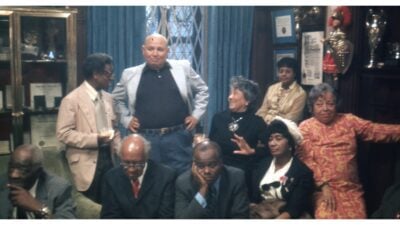
When Black-controlled or Black-serving financial institutions grow in influence, they often attract scrutiny disproportionate to their actual conduct. The original Freedman’s Savings Bank—created to help formerly enslaved people safeguard their wages—collapsed under mismanagement by white trustees, yet the blame and the distrust were placed on Black economic self-determination itself. In the 20th century, Black banks, credit unions, and civil-rights organizations were monitored under COINTELPRO, not because of proven crimes, but because empowerment was perceived as a threat.
Today’s landscape looks different in form, but not in function.
Philanthropy Under a Microscope
Since 2020, Scott has donated more than $26 billion, with an unprecedented concentration of giving to HBCUs, community-based nonprofits, and organizations serving people long excluded from America’s economic mainstream. By any historical metric, she is the single largest individual donor to Black-serving institutions in U.S. history.
And yet—suddenly—her name is being circulated in media narratives that imply, rather than prove, wrongdoing by associating her giving with organizations now facing federal or congressional scrutiny.
Let us be clear: Scott’s gifts were unrestricted, pooled, and not earmarked for any specific subgroup. There is no evidence that she knowingly funded illegal activity. Historically, donor collaboratives exist precisely to decentralize power and protect generosity from political retaliation.
Scripture cautions against this very impulse: “Do not call conspiracy all that this people calls conspiracy; do not fear what they fear” (Isaiah 8:12). Yet implication has become the weapon of choice.
Why Now—and Why Her?
Scott is not the first billionaire to shape public life through philanthropy. Others have poured billions into education reform, global health, and policy-adjacent initiatives with little comparable scrutiny. The difference is not wealth. It is who benefits?
Her giving has flowed disproportionately to HBCUs, Black-led nonprofits, LGBTQ+ youth organizations, and communities navigating the retreat of federal funding. Her support for institutions like Howard University arrived during a period of public-funding delay. Her contribution to The Trevor Project stabilized life-saving services amid government pullback. So the silent terror tactic is to position the person that’s given the most money to HBCUs ever as an individual who may now be associated with the funding of Hamas? It’s not illegal to fund muslims nor it is it illegal or immoral to sponsor organizations that peacefully protest, right? What is the endgame here? I support Mackenzie and would interview her at a moment’s notice. I am also a believer in telling the truth as well. MacKenzie, with her giving, tells you the truth. I wonder, if she weren’t a billionaire, would her truth resonate as much as it does now?
In other words, Scott’s philanthropy has functioned as a counterbalance to state withdrawal—and that alone makes it politically sensitive.

Financial Autonomy and the Language of “National Security”
We are also witnessing renewed scrutiny of Black-run financial institutions and movement-based funds under the banner of “financial compliance” and “national security.” Historically, such language has often served as a proxy for anxiety over Black autonomy. When resources flow freely to marginalized communities—without federal gatekeeping—it disrupts long-standing power arrangements.
To ask whether heightened scrutiny is designed to slow giving in 2026, after historic levels in 2025, is not conspiratorial. It is historically literate. Smear campaigns do not require convictions; they only require hesitation.
As Proverbs reminds us, “The integrity of the upright guides them, but the crookedness of the treacherous destroys them” (Proverbs 11:3). Integrity does not retreat in the face of suspicion—it stands.
What History Teaches Us
Before she became one of the world’s most consequential philanthropists, MacKenzie Scott was a student mentored by Toni Morrison, a writer who understood that American institutions often punish those who disrupt narrative hierarchies. Scott’s approach to giving reflects that wisdom: generosity not as control, but as trust.
The question is not whether philanthropy should be accountable—it should. The question is why accountability so often intensifies when Black and Brown communities are the primary beneficiaries.
History suggests the answer is not coincidence, but continuity.
And continuity, once recognized, can be challenged.
Keep going, MacKenzie Scott.
You have inspired a generation of givers, strengthened America’s most resilient institutions, and reminded this nation that education remains one of the truest paths to freedom. HBCUs and all other recipients of your generosity, we thank you, and so does the United States.
ABOUT THE AUTHOR:
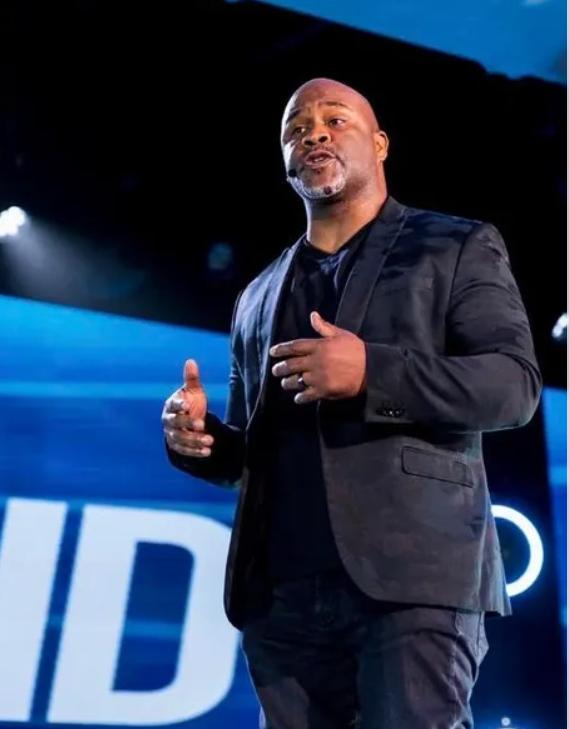
Edmond W. Davis is an American social historian, international speaker, and Amazon #1 author. He is a globally recognized authority on the Tuskegee Airmen. He serves as Founder and Executive Director of America’s only National HBCU Black Wall Street Career Fest, based in Little Rock, Arkansas. A Philadelphia native and former homeless youth, Davis has dedicated his career to education, social impact, and the empowerment of underrepresented communities.