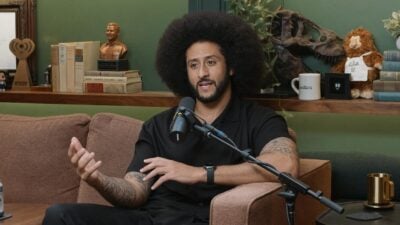
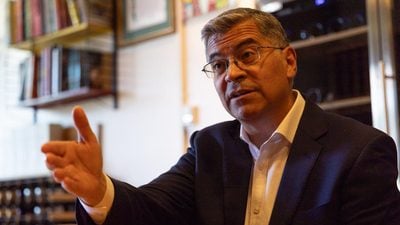
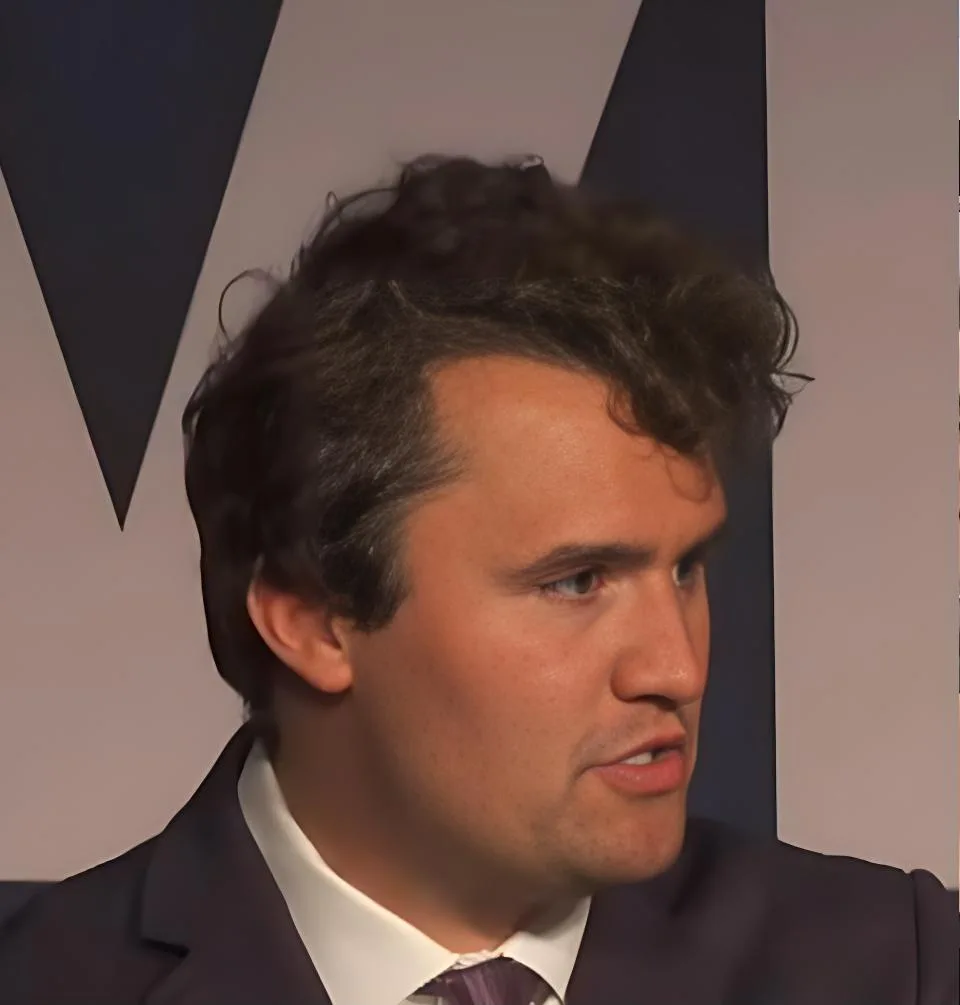
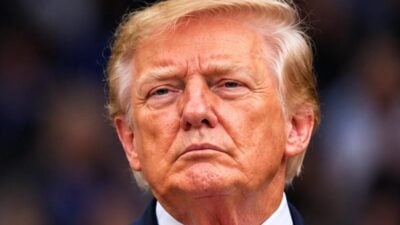
*On October 14, 2025—what would have been his 32nd birthday— President Donald Trump posthumously awarded Charlie Kirk the Presidential Medal of Freedom. The founder of Turning Point USA, Kirk was fatally shot last month while speaking at Utah Valley University, a killing that immediately became a lightning rod in America’s information wars.
The White House framed the award as recognition of a “fearless advocate for liberty,” while allies hailed him as a martyr of the conservative movement. AP News+2Reuters+2
To understand what this means for the medal’s legacy, it helps to zoom out. The Medal of Freedom is the nation’s highest civilian honor. There is no statutory checklist, no independent commission that must sign off; a president may select “any person” on his own initiative, which is precisely why the choices so often reflect the values—and the politics—of the Oval Office occupant. Congress.gov+1
How unusual is this pick—really?
If we look at the last 31 honorees (spanning late 2024 through early 2025 and now into late 2025), the pattern tilts toward decades-long contributions in public service, arts and culture, civil rights, science, or athletics. Earlier this year, for example, President Biden’s list included figures like Hillary Clinton, George Soros, and Denzel Washington—people whose careers, for supporters and critics alike, are measured in generations, not election cycles. The White House+1
Scroll to continue reading





Kirk’s résumé is of a different genre: a high-profile political organizer and media personality who, beginning as a teen, built a social-media—driven conservative youth apparatus (Turning Point USA/Action/Faith) that shaped discourse on campuses and at rallies. That’s influence, undeniably—but it is influence that is explicitly partisan, and it matured largely over the past decade. Honoring him so quickly after his death—barely a month—heightens the sense that the award is being used as an instrument of immediate politics rather than reflective gratitude. The Guardian+2Legacy+2
Does this dilute the medal?
It depends on your priors. Historically, the medal has honored not only statesmen and soldiers but also artists, activists, scientists, educators, and athletes: think Maya Angelou, Dolores Huerta, Katherine Johnson, John Lewis, Billie Jean King, Stephen Hawking, and Kareem Abdul-Jabbar. The common thread is broad, enduring contributions to national life—often transcending partisan identity. When honorees skew toward a president’s base or recent political allies, critics see “medal inflation.” But the legal framework makes the award elastic; presidents from both parties have stretched it to fit their narratives. Wikipedia
Kirk’s selection tests that elasticity. Measured against many of the last 31—whose careers span lifetimes—the case for “enduring national contribution” is, at best, contested. Measured against the immediate emotional and symbolic needs of a political movement, the case is clear: elevate a fallen standard-bearer, sanctify the brand, and signal the base. That doesn’t automatically “ruin” the medal. It does, however, reframe it more nakedly as a presidential storytelling tool.
“How does one earn one that was not even earned—so fast?”
The blunt answer: You don’t “earn” it by clearing a formal, merit-based hurdle; you receive it because a president chooses you. There is no transparent points system, no Senate confirmation. Administrations solicit suggestions (from staff, agencies, the public) and then the President decides. Rapid, posthumous awards have occurred before; speed is a political variable, not a procedural violation.

The Christian-nationalist current, the GOP, and Turning Point
Kirk’s activism fused electoral politics with culture-war Christianity, particularly through Turning Point Faith and allied media. In that ecosystem, honoring Kirk is catechesis: it sacralizes a style of politics that blends grievance, providence, and nation. The ceremony’s messaging—framing him as a “martyr for freedom”—converts a tragic killing into an origin story for mobilization, an especially potent narrative heading into an enforcement-heavy posture against perceived left-wing threats. (Notably, early official findings reportedly tied the suspect to no group—a reminder that reality is often more complex than rally rhetoric.) Reuters
For the GOP’s younger flank and the Turning Point network, the medal is a recruitment poster. It says: this is what our movement honors—organizational hustle, media reach, campus agitation, loyalty. For religious-right currents sometimes described as Christian nationalist, it’s further legitimation from secular authority.
Is this payback for a Nobel snub?
Some will read the move as compensatory—“if Oslo won’t, the White House will.” That’s speculation, not fact. But it’s true that presidents sometimes counterprogram international narratives with domestic honors. The framing here—amid a packed, triumphalist schedule and talk of future conservative recipients—invites that interpretation among supporters and critics alike. The safest ground is this: the Medal of Freedom is a stage the president controls; it’s a script he doesn’t need Stockholm or Oslo to approve. AP News
Who else has received it outside the military, politicians, and peacekeepers?
Plenty. Over the last 30+ years the roster includes artists (Meryl Streep, Stevie Wonder), athletes (Michael Jordan, Simone Biles), scholars/scientists (Toni Morrison, Grace Hopper), civil rights icons (John Lewis, C.T. Vivian), philanthropists and civic leaders (Oprah Winfrey, Fred Rogers). The breadth is intentional; the medal is meant to capture “significant public or private endeavors,” not just statecraft. Wikipedia
What does this mean for future honorees?
Expect more explicitly movement-aligned awards, left and right. Each turn of the partisan ratchet makes it easier for the next administration to respond in kind: honor our storytellers, our cultural combatants, our funders, our media architects. The long-term risk is not partisanship per se—it has always been present—but shortening the runway between notoriety and decoration, replacing reflection with reaction.
And the bigger question: “For doing what?”
It’s fair to ask that of every recipient. The most durable answers tend to be plural and provable across audiences: built institutions, created knowledge, expanded rights, healed bodies, elevated culture, saved lives. When the answer collapses into “for rallying our side,” the medal still functions—politically. Whether it still inspires across divides is another matter.
Kirk’s supporters will cherish the medal as righteous recognition. His critics will see it as desacralization. Both can be true in a country where the highest civilian honor is, ultimately, a presidential mirror. What we choose to see in that reflection—our heroes, our tribes, or our better angels—will decide the Medal’s meaning long after the news cycle ends.
Edmond W. Davis is a social historian, journalist, retired history professor, socioemotional intelligence expert, author of multiple historical texts, Arkansas’s first and only Tuskegee Airmen history textbook, and an international speaker. Davis had a role as a Shelby County Courtroom Jail Deputy on the NBC TV series Bluff City Law. He is a former director of the Derek Olivier Research Institute for the Prevention of Gun Violence. Davis is also the founder of the National HBCU Black Wall Street Career Fest and an Amazon #1 author. Contact him via www.edmondwdavis.com.

(If You Like/Appreciate This EURweb Story, Please SHARE it!)
MORE NEWS ON EURWEB.COM: Man Arrested for Urinating on Eternal Flame and Reflection Pool at King Center | Video
We Publish Breaking News 24/7. Don’t Miss Out! Sign up for our Free daily newsletter HERE.