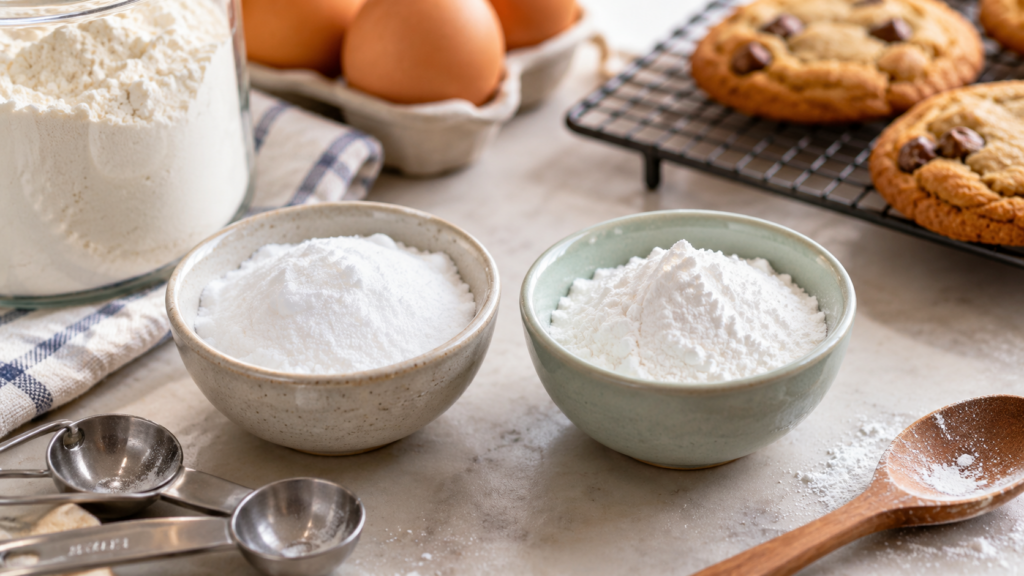
*Baking soda and baking powder might look alike sitting in the pantry, but swapping one for the other can throw off a recipe’s texture, rise, and flavor, according to Southern Living.
Both ingredients are leavening agents that produce the carbon dioxide bubbles that make baked goods rise. Baking soda, or sodium bicarbonate, is alkaline and needs an acidic ingredient to trigger the chemical reaction that creates carbon dioxide. That is why recipes calling for baking soda often include buttermilk, sour cream, lemon juice, or natural cocoa powder. The acid also helps offset baking soda’s slightly metallic taste.
Baking powder already contains its own acid, usually cream of tartar, along with a buffer like cornstarch. Once liquid is added, the reaction begins on its own. Double-acting baking powder reacts a second time when it hits oven heat.
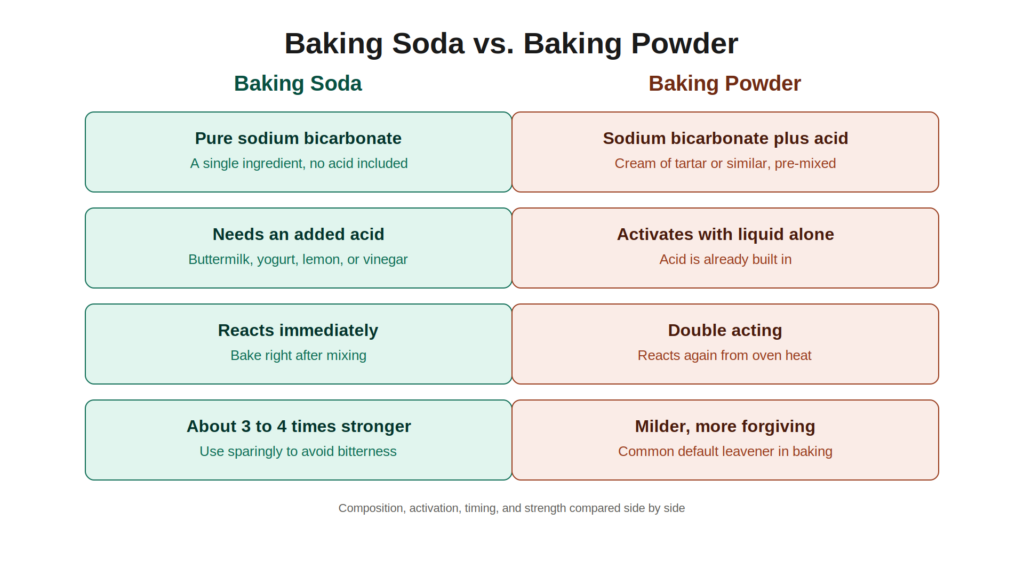
Some recipes call for both because each ingredient serves a different purpose. Chef and writer Shani Frymer told Southern Living that baking powder handles much of the rising, while baking soda helps neutralize acid in the batter. Buttermilk pancakes are one example. Frymer said the “swift reaction between the buttermilk and the baking powder and baking soda makes lofty, fluffy pancakes.”
Scroll to continue reading









That balance is also why precise measuring matters in baking. Frymer warned that too much baking soda can leave a harsh, alkaline taste and can change how cookies brown and spread. Too little of either leavener can leave baked goods flat and dense.
The simplest rule is to follow the recipe exactly. If it calls for baking soda, use baking soda. If it calls for baking powder, use baking powder. Southern Living also recommends checking expiration dates, since both products can lose potency over time, though they typically remain usable for up to six months after opening.
MORE NEWS ON EURWEB.COM: AAFCA Gives $25,000 to Help Preserve Black Cinema’s Legacy
We Publish Breaking News 24/7. Don’t Miss Out! Sign up for our Free daily newsletter HERE.