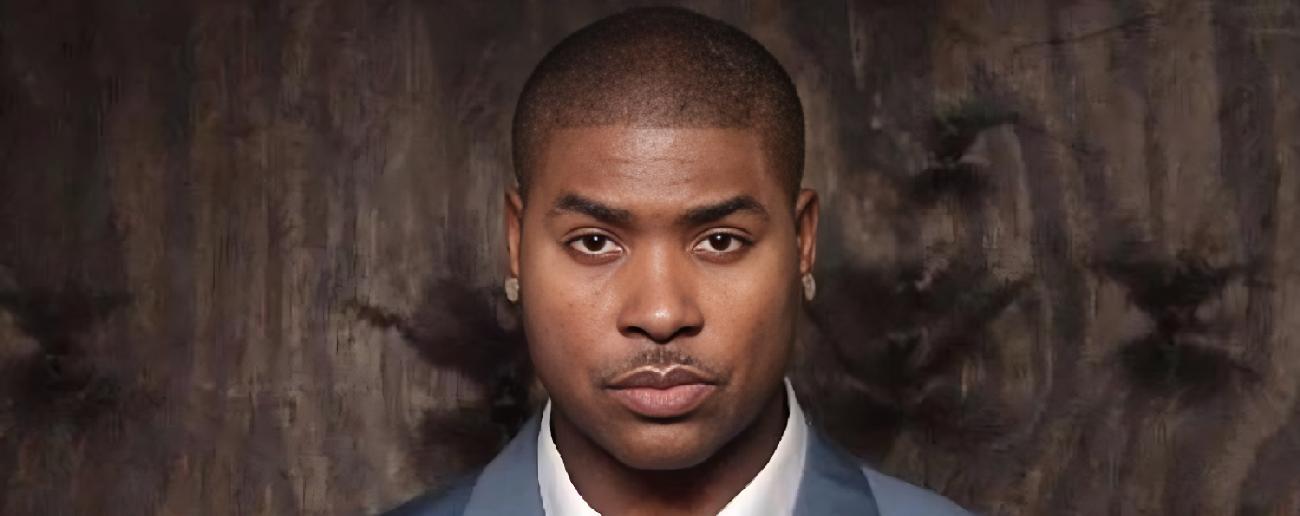
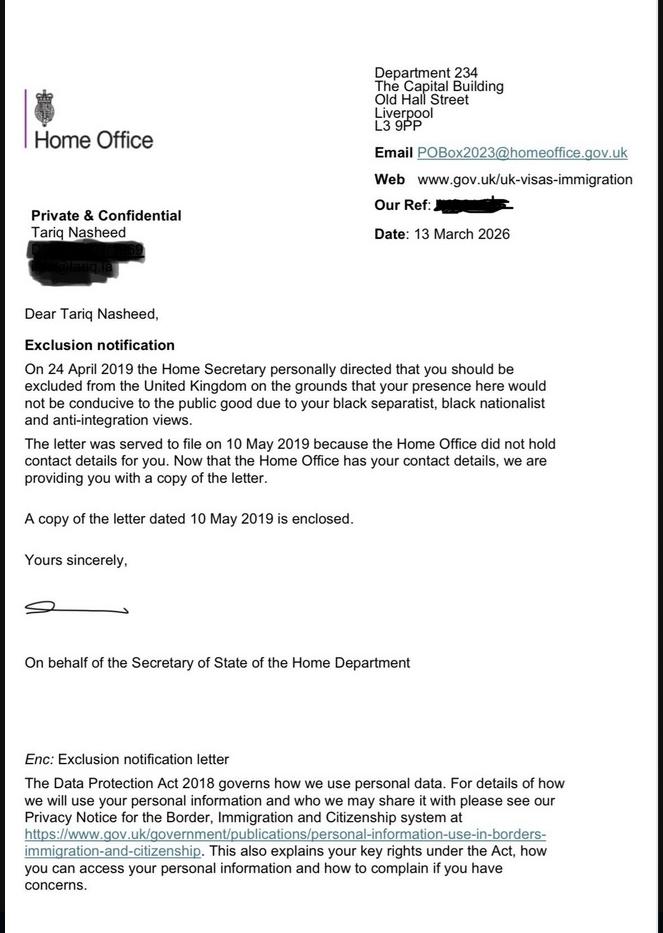
*Filmmaker, author, and commentator Tariq Nasheed revealed on March 16, 2026, that he remains banned from entering the United Kingdom, calling the UK government’s classification of him as a “Black separatist” absurd and undefined.
Nasheed posted on X (Twitter): “I’m still banned from entering the UK. What the hell is a ‘Black separatist?’ They won’t even define it. They just throw labels to keep certain voices out. This is how they silence dissent.”
Background on the Ban
When It Started: Tariq Nasheed has been denied entry to the UK since at least 2019–2020, when he was barred from speaking at events and conferences.
Reason Given by UK Home Office: He has been classified under the UK’s Prevent counter-extremism strategy and immigration rules as a potential threat due to “non-violent extremism” or promoting “separatist” views. The specific label “Black separatist” appears in some leaked or reported Home Office notes, though the UK government rarely releases full reasoning for individual bans.
Nasheed’s Response: He argues the term is a vague catch-all used to suppress Black nationalists, Pan-Africanists, or anyone advocating for Black self-determination, economic independence, or separation from systemic white supremacy—without ever committing violence or calling for illegal acts.
Scroll to continue reading

Context of “Black Separatist” Label
In the UK (and sometimes in the US) security/political contexts, “separatist” is applied to ideologies that advocate racial, ethnic, or cultural separation as a solution to oppression.
Nasheed has long promoted “Foundational Black American” (FBA) identity, reparations, and economic sovereignty for descendants of enslaved Africans in the US—ideas some governments view as “separatist” even though he frames them as self-determination and justice, not violence.
He has compared the label to how the US once targeted Marcus Garvey or the Nation of Islam.
Recent Activity & Reactions
Nasheed has been vocal on X, YouTube, and his Hidden Colors documentary series about the ban, calling it censorship and proof of institutional fear of Black self-reliance narratives.
Responses on X range from:
Supporters: “They ban truth-tellers” / “Black self-love is ‘extremism’ now?”
Critics: Accuse him of promoting division or grifting off controversy.
No new UK Home Office statement has been issued in 2026, and the ban remains in place.

The Bigger Picture
This situation fits into broader discussions about free speech, travel bans for political speech, and how Western governments label Black nationalist or Pan-Africanist voices. The term “Black separatist” carries historical weight, evoking images of the 1960s and 1970s when figures like Malcolm X and Stokely Carmichael were monitored and suppressed by government agencies.
Nasheed’s case raises uncomfortable questions: Who gets to define “extremism”? What constitutes a threat when the speech in question advocates not violence, but community autonomy and economic independence?
For Black thinkers who challenge the status quo, the line between “activist” and “separatist” often seems drawn by those in power, not by the communities they represent.
What are your thoughts on the “Black separatist” label and Tarik Nasheed’s ongoing UK ban? Scroll down to share your perspective in the comments below. ✊??️
(If You Like/Appreciate This EURweb Story, Please SHARE it!)
RELATED NEWS ON EURWEB.COM: Tariq Nasheed Offers Exclusive Insight into His New Documentary ‘Microphone Check’ About the ‘Real’ Pioneers of Hip Hop | EUR Video Exclusive
Sign Up for Our Free daily newsletter HERE