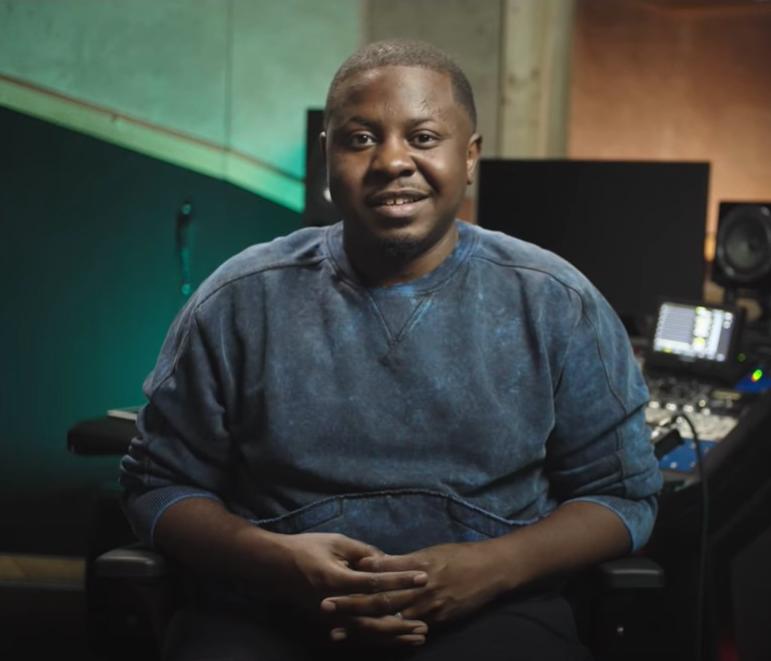
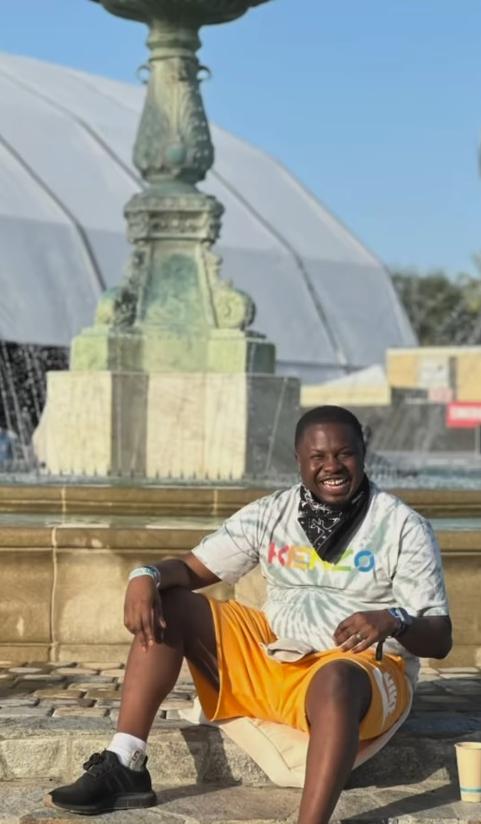
*He may not have decades in the music industry, but D’Mile (Dernst Emile II) has laid a foundation formed from persistence, knowing his hard work will pay of.
With back-to-back Grammy Awards, an Oscar and longstanding alliances made with modern day hitmakers Bruno Mars, Victoria Monét and Lucky Daye, the New York City-born music producer is a problem. In a good way.
Mentored by famed beatmaker Rodney “Darkchild” Jerkins, D’Mile elevated his game with songwriting and production credits for heavyweights like Janet Jackson, Justin Bieber and Usher, among others. Yet, there was no satisfaction for him in moving up the ladder of success.
“I was slaving away making five to 10 tracks a day,” the “Leave the Door Open producer confessed to Billboard. “But things weren’t moving at the pace I would have liked.” It wasn’t until 2008, when D’Mile stepped out with a pledge to do “what I love, and if it goes anywhere or doesn’t, it’s something I’m proud of.”
Fast forward ta few years and the tide shifted with aligning with Daye, who brought the California native alongside him to write and produce Daye’s 2019 debut album, Painted. A project that resulted in a Grammy nod for best R&B album. Aligned again with Daye, D’Mile collected another Grammy, best progressive R&B album, for 2022’s “Daye’s Table for Two, Daye’s third album, which he executive-produced. As Daye collects a Grammy nom for a third time with his work on Daye’s “Algorithm,” D’Mile chats with Billboard on his journey, being a chart-topper with the monster Bruno Mars and Lady Gaga collaboration “Die With a Smile” and the importance of an album versus a single. Below are a few of the questions from his interview:
Scroll to continue reading






How did “Die With a Smile” come together?
He had the hook, at least the lyrics or theme to the hook, about being next to someone if the world was ending. But we didn’t know how it should sound yet. So we worked on probably two or three different versions of it. And that was actually record-breaking because usually we do like 100 versions of a song. (Laughs.) But this one came pretty quick. One day, he came in with the chords, and a day later, he came up with the chords to the hook. Then things started taking off like, “Wait, this could be something.”
But by the time we got it to a certain place, he wasn’t so sure what to do with it. So he held on to it for a while; this was probably a year before it came out. [Producer] Andrew [Watt], who’s been working with Lady Gaga on her next album, reached out to Bruno, who told him to pull up so he could play the song. And Gaga loved it. And from there it just all came together. I was happy because I’d been on him about sleeping on a song that I knew was so good.
What was it like working with Gaga in the studio?
She got to the studio between 11 p.m. and midnight. And she did something that I’d never seen an artist do before: After hearing the song, she wanted to write out the sheet music. So we showed her what the chords were, and she wrote them out. After that, she got on the piano to play and sing, just to get the feel of it. And then we cut it right then and there. It was just so cool to see someone like her bring out a pen and paper and actually write out the chart.
Are albums still important?
They’re still the best way to shape who the artist is. Like with Kendrick Lamar — he had a great year with “Not Like Us,” which I love. But what first made me a fan was his early albums like good kid, m.A.A.d city and To Pimp a Butterfly. In hearing those, I really got a good idea of who this man could be and what he stands for. And I don’t think there’s a better way to do that than putting out an album. One song isn’t enough to know.
What do you feel is the secret behind your success as a songwriter and producer?
I always just try to bring out who the artist is by getting to know them. It could be a conversation that sparks something before we start or while we’re working together. Or I’ll hear a conversation between the artist and another songwriter, and I’m feeling the vibe, feeling them both out. I like to say that I don’t talk; I listen. And when I create, it’s like my interpretation of who the artist is.
For more of D’Mile’s interview with Billboard, click here.
MORE NEWS ON EURWEB: Lifetime Tells Lisa Lisa’s and Gloria Gaynor’s Tumultuous Journeys to Stardom | WATCH