*The music industry lost one of its most influential architects on June 22, 2026, when legendary record executive Clive Davis died at the age of 94. For more than six decades, Davis helped shape the soundtrack of America, discovering, mentoring, promoting, and sometimes controversially managing some of the greatest musical talents in modern history.
Whether one views him as a visionary, a corporate strategist, a kingmaker, or all three, there is little debate that Clive Davis changed popular music forever.
Born in 1932 in Brooklyn, New York, Davis did not begin his professional life as a musician. He was a gifted student who attended Harvard Law School and initially worked as an attorney. Yet fate would place him inside the music business, where his extraordinary ability to recognize talent earned him the nickname “The Man with the Golden Ear.”
As president of Columbia Records in the late 1960s and later founder of Arista Records and J Records, Davis became responsible for launching or revitalizing the careers of artists who would define generations. Among them were Whitney Houston, Bruce Springsteen, Janis Joplin, Barry Manilow, Alicia Keys, Santana, Aretha Franklin, and many others.
Yet like many powerful figures in entertainment history, Davis’ legacy was not without criticism.
Scroll to continue reading









Some critics accused him of exerting excessive control over artists’ creative directions. Others argued that corporate interests occasionally overshadowed artistic authenticity. In the case of Whitney Houston, some observers have long debated whether the industry’s pursuit of crossover success pushed her toward commercial expectations that sometimes conflicted with her personal artistic identity. Following Houston’s tragic death in 2012, critics revisited questions about the pressures surrounding superstardom and the responsibilities of executives toward vulnerable artists. Those criticisms remain part of the broader conversation about the music industry’s treatment of performers.
Still, history also records another side of Clive Davis.
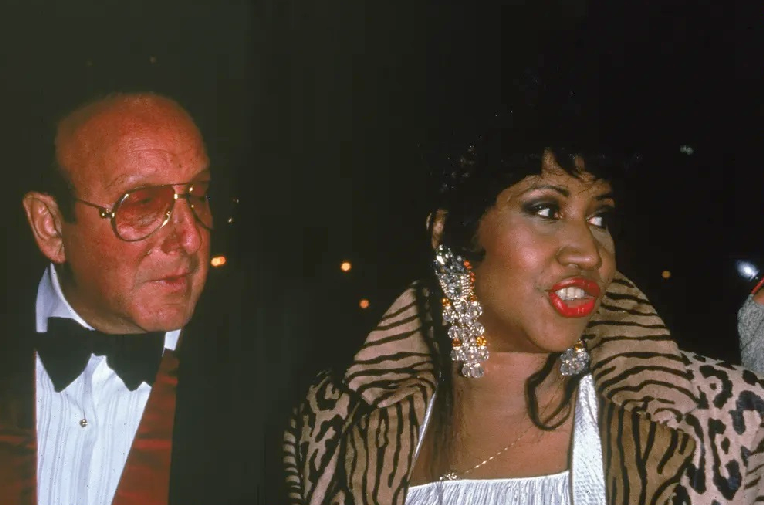
Many artists described him not simply as an executive but as a mentor who believed in them before anyone else did. Numerous careers that appeared stalled were revived through his guidance. He helped restore the prominence of Aretha Franklin during a critical phase of her career and gave opportunities to emerging artists who later became global icons.
Today, tributes continue pouring in from across the music world. Artists and industry leaders have remembered Davis as a visionary whose confidence changed their lives. Bruce Springsteen reflected on being signed by Davis as a young artist, while Alicia Keys described him as someone who transformed dreams into reality. Barry Manilow called their five-decade relationship more like family than business.
Reports today also indicated that music legend Stevie Wonder joined many others in honoring Davis’s contributions to the industry and the generations of music his leadership helped bring to audiences worldwide.
Perhaps Davis’s greatest accomplishment was his ability to recognize not just talent but timelessness.
Consider the lasting impact of recordings connected to artists he helped develop:
- I Will Always Love You
- Greatest Love of All
- Fallin’
- Smooth
- Mandy
- Piano Man
- Freeway of Love
These songs remain part of radio rotations, streaming playlists, sporting events, weddings, graduations, and cultural memory. Decades after their release, they continue generating revenue and inspiring new generations of musicians.
The Bible offers wisdom that seems fitting when reflecting on Davis’s life.
Proverbs 18:16 (NIV) states:
“A gift opens the way and ushers the giver into the presence of the great.”
Clive Davis possessed a rare gift: the ability to hear possibility before the rest of the world could hear it.
Likewise, Luke 12:48 (NIV) reminds us:
“To whom much is given, much will be required.”
Davis’s life illustrates both sides of that principle. Great influence brought extraordinary accomplishments, but it also invited scrutiny, responsibility, and difficult questions about power, profit, and stewardship.
In the final analysis, Clive Davis was neither a saint nor a villain. He was a complicated human being whose fingerprints remain all over American music. His story reflects the tension between commerce and creativity, ambition and mentorship, celebrity and humanity.
Few executives have ever shaped culture on the scale that Clive Davis did. Millions may never know his face, but they know the voices he helped bring into their lives.
And for generations to come, long after the boardrooms have forgotten his meetings and contracts, the music will continue to speak.
That may be the truest measure of his legacy.

ABOUT THE AUTHOR
Edmond W. Davis is a social historian, journalist, professor, and documentary host. Davis is the founder of the National HBCU Black Wall Street Career Fest. This native of Philadelphia, PA, his wife, and his son currently live in the Little Rock, Arkansas, area. Davis is committed to cultural empowerment and educational equity through storytelling and civic engagement. In 2026, Davis was a grand marshal at the 38th Annual African American History Month Celebration Parade, the largest in the U.S. during Black History Month.
(If You Like/Appreciate This EURweb Story, Please SHARE it!)
MORE NEWS ON EURWEB.COM: Clive Davis, Music Mogul Who Helped Launch Whitney Houston and Alicia Keys, Dies at 94
We Publish Breaking News 24/7. Don’t Miss Out! Sign up for our Free daily newsletter HERE.